The Quiet Poetry of Domestic Life
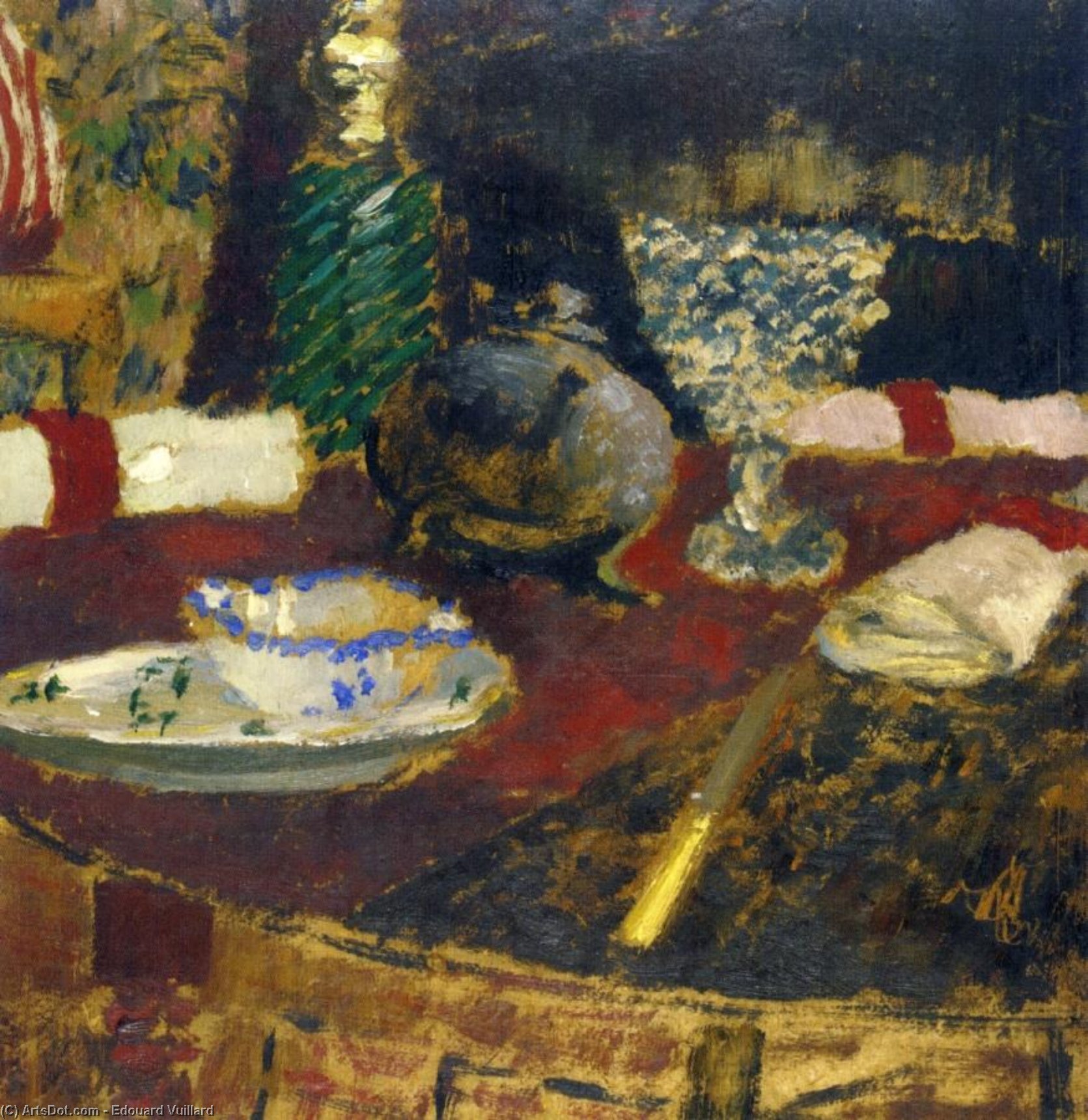
To gaze upon The Sauceboat is to step through a veil into a moment suspended in amber—a quiet breath taken within the intimate confines of a Parisian interior. This painting, executed by Jean Edouard Vuillard in 1897, transcends its humble subject matter; it becomes a meditation on domesticity itself. The scene unfolds around a simple table, laden with the artifacts of everyday sustenance: a central bowl, delicate cups catching the light, and a vase hinting at forgotten blooms. Yet, what grips the viewer most is not the arrangement of these objects, but the palpable sense of stillness that permeates every corner, inviting contemplation on the beauty found in the mundane.
Mastery of Intimism and Color
Vuillard’s signature style, deeply rooted in the movement known as Intimism, allows him to transform the ordinary into something profoundly resonant. He does not merely record a still life; he constructs an atmosphere. Observe how the colors interact—they are warm, enveloping, suggesting the soft glow of interior lamps rather than harsh daylight. The technique employed is masterful, allowing for rich textures on the tabletop and the subtle interplay between the painted surfaces of the chairs surrounding the scene. This careful handling of color and plane gives the work a comforting weight, as if the very air in the room has been rendered visible.
A Post-Impressionist Echo
Historically, The Sauceboat stands as a beautiful testament to the evolving currents of late 19th-century art. While it shares some concerns with Impressionism regarding light, Vuillard pushes beyond mere optical recording. As a key figure influenced by the avant-garde group Les Nabis, his work explores flattened planes and patterned color in a way that anticipates later modernist explorations. It is here that the painting gains its intellectual depth; it suggests an internal structure to reality, moving beyond the fleeting moment toward something more enduring and pattern-based.
Symbolism of Shared Space
The arrangement of the three chairs around the table subtly speaks to themes of companionship and memory. The objects—the sauceboat itself, the cups—are imbued with a quiet symbolism of shared meals, conversation, and the passage of time spent together. It is an ode to connection. For the collector or designer, this piece offers more than mere decoration; it provides a focal point for reflection, suggesting that the most profound beauty often resides not in grand gestures, but in the gentle rituals we share within our own walls.
Bringing History Home
Owning a reproduction of The Sauceboat is to invite a piece of Parisian artistic history into your personal sanctuary. Whether displayed above a console table or nestled within a gallery setting, its harmonious palette and evocative mood possess an immediate ability to soothe and ground any space. It serves as a timeless reminder that art can be found in the quiet poetry of everyday life.