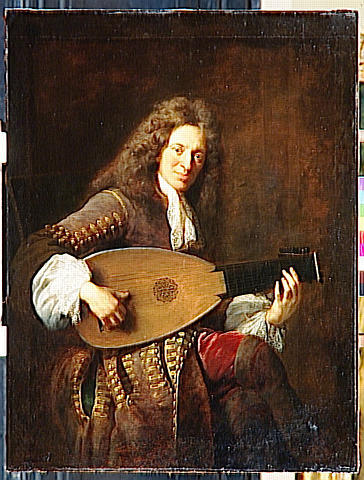
Admire Jean François de Troy's masterful portrait of Charles Mouton, capturing aristocratic elegance and musical sophistication with subtle color palettes and refined brushwork – a quintessential Baroque masterpiece.
Jean-François de Troy (1645-1730): French Rococo painter celebrated for elegant portraits, 'tableaux de mode,' and his service to exiled royalty. Explore his masterpieces!
Explore the Louvre Museum in Paris! Home to iconic masterpieces like the Mona Lisa & Venus de Milo, journey through art history from ancient Egypt to Renaissance icons. Plan your visit today!
A Portrait of Dignified Composure: Jean François de Troy’s Charles Mouton
The canvas holds an image steeped in aristocratic elegance – Jean François de Troy's portrait of Charles Mouton, completed circa 1720. More than just a depiction of a man’s appearance, it embodies the spirit of the Rococo era, capturing not merely likeness but also an aura of refined composure that speaks volumes about its subject and the artistic sensibilities of its time. Examining this masterpiece reveals layers of meticulous craftsmanship interwoven with profound symbolic resonance.
Composition and Technique: Mastering Light and Form
Troy’s masterful technique exemplifies the prevailing stylistic trends of his day. Employing oil paints on canvas, he achieved remarkable realism through a layered approach—thin glazes meticulously applied to build up subtle color transitions and create textures that convincingly mimic the qualities of fabric and skin. The artist skillfully utilized diffused lighting emanating from an unseen source on the left side of the frame, generating gentle chiaroscuro effects that sculpted form and accentuated depth. Notice how the light delicately illuminates Mouton’s face, highlighting his gaze—direct and confident—a hallmark of aristocratic portraiture intended to convey status and intellect. The positioning of Mouton slightly off-center contributes to visual balance while simultaneously drawing the viewer's eye into the core of the composition. Furthermore, the lute held by Mouton isn’t merely an accessory; it serves as a compositional element intersecting with his body, adding depth and complexity to the scene.
Historical Context: The Reign of Louis XV and Artistic Patronage
Painted during the reign of Louis XV (1723-1774), this portrait reflects the opulent tastes and intellectual currents of the French court. Troy’s work flourished amidst a period characterized by lavish celebrations, elaborate décor, and an obsession with beauty—traits that found their fullest expression in the Rococo style. Royal patronage fueled artistic innovation, encouraging artists like Troy to explore new avenues for conveying emotion and capturing the essence of their subjects. Mouton himself was a prominent diplomat and nobleman, representing the pinnacle of aristocratic achievement – his inclusion within this portrait underscores the importance of social standing and intellectual prowess during Louis XV’s era.
Symbolism: The Lute as Emblematic Instrument
The lute occupies a significant symbolic role within the painting. Traditionally associated with music and artistry, it signifies Mouton's cultivated intellect and refined sensibilities. Holding the instrument speaks to his engagement in pursuits beyond mere social obligation; it represents leisure, contemplation, and an appreciation for beauty—values highly esteemed by the aristocracy of the time. The lute’s placement diagonally across Mouton’s torso adds visual interest and reinforces its symbolic significance as a marker of cultural refinement.
Emotional Impact: Capturing Dignified Serenity
Ultimately, Troy's Charles Mouton transcends mere representation; it succeeds in conveying an emotion—dignified serenity—that lingers long after viewing the artwork. The artist’s careful attention to detail—the subtle folds of Mouton’s clothing, the delicate rendering of his hair curls—creates a palpable sense of realism and intimacy. More importantly, the sitter's gaze communicates confidence and composure, reflecting the idealized vision of nobility prevalent during Louis XV’s reign. This portrait serves as a testament to Troy’s ability to capture not just what Mouton looked like but also the inner spirit of a man embodying the virtues prized by his social milieu—a timeless achievement in artistic expression.