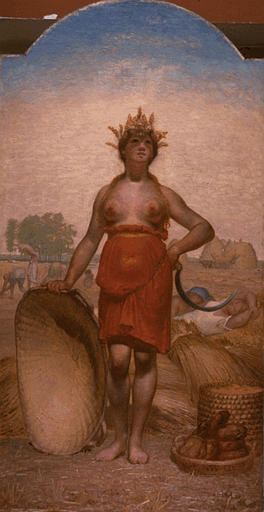
L'Été, Ceres: A Portrait of Rural Power
Jean-François Millet’s “L’Été, Ceres” (Summer, Ceres) is more than just a depiction of a woman in a pastoral setting; it’s a profound meditation on the dignity of labor, the enduring strength of ancient myth, and the very soul of rural France. Painted during a pivotal moment in French art history – the rise of Realism – Millet captures a timeless scene that speaks to the fundamental human connection between humanity and the land. The artwork presents a woman, likely Ceres herself, the Roman goddess of agriculture, standing proudly before a field, embodying both earthly power and serene grace.
- Subject Matter: The central figure is undoubtedly Ceres, rendered with a deliberate grandeur that elevates her status beyond a simple peasant woman. Her crown signifies her divine authority, while the shield and spear – symbols of protection and dominion – reinforce this impression.
- Setting: The backdrop of a field or pasture isn’t merely decorative; it's integral to the painting’s meaning. It represents the bounty of the earth, the source of sustenance, and the very foundation of Millet’s artistic vision.
- Composition: The carefully arranged figures – the warrior/queen, the supporting individuals, and the two horses – contribute to a dynamic composition that suggests both stability and movement, mirroring the cyclical nature of agricultural life.
Realism and Mythic Resonance
Millet’s artistic approach aligns perfectly with the tenets of Realism, which sought to depict everyday subjects and scenes with unflinching honesty. However, “L’Été, Ceres” transcends a purely realistic portrayal by incorporating elements of classical mythology. The figure's attire and posture evoke images of ancient goddesses and warrior queens, suggesting a continuity between the timeless struggles of humanity and the enduring power of nature. This fusion of realism and myth is characteristic of Millet’s work, reflecting his deep respect for rural life and his ability to imbue it with symbolic significance.
Born in 1814 in Gruchy, France, Millet's upbringing profoundly shaped his artistic perspective. His family were farmers, a fact that informed every aspect of his art. He sought to capture the lives of ordinary people – peasants, laborers, and rural workers – with an unwavering commitment to truth and authenticity. This dedication is evident in the painting’s meticulous detail and its ability to convey both the physical hardship and the inherent dignity of those who worked the land.
Technique and Color Palette
Millet employed a distinctive technique characterized by thick, textured brushstrokes – a hallmark of his style. This impasto effect not only adds visual interest but also emphasizes the materiality of the paint itself, further grounding the image in the tangible world. The color palette is dominated by earthy tones – ochres, browns, and greens – reflecting the colors of the landscape and reinforcing the painting’s connection to the earth. Subtle variations in tone and light create a sense of depth and atmosphere, drawing the viewer into the scene.
Symbolic Interpretation & Emotional Impact
"L'Été, Ceres" is a powerful statement about human resilience and the enduring relationship between humanity and nature. The woman’s stance exudes confidence and authority, suggesting a connection to ancient traditions and a deep understanding of the rhythms of life. The inclusion of the horses further emphasizes this theme, representing both power and fertility. The painting evokes a sense of quiet contemplation and reverence for the natural world – a sentiment that continues to resonate with viewers today. It’s a reminder of our roots, our connection to the land, and the timeless beauty found in simple, honest labor.