The Heart of the Barbizon School
Jean-François Millet’s “Maternal Solicitude,” painted in 1857, isn't merely a depiction of a scene; it’s a profound meditation on rural life, familial devotion, and the quiet dignity of labor. Emerging from the fertile soil of Gruchy, Normandy – a village that shaped his very being – Millet dedicated his artistic career to capturing the essence of the peasantry, a subject largely ignored by the art world of mid-19th century France. This wasn’t a romanticized portrayal; rather, it was an unflinching observation of everyday life, imbued with a remarkable empathy and realism that would soon define the Barbizon School. The painting immediately resonated with audiences, capturing a moment of profound tenderness within a landscape of hard work and simple existence.

A Study in Black Chalk and Quiet Strength
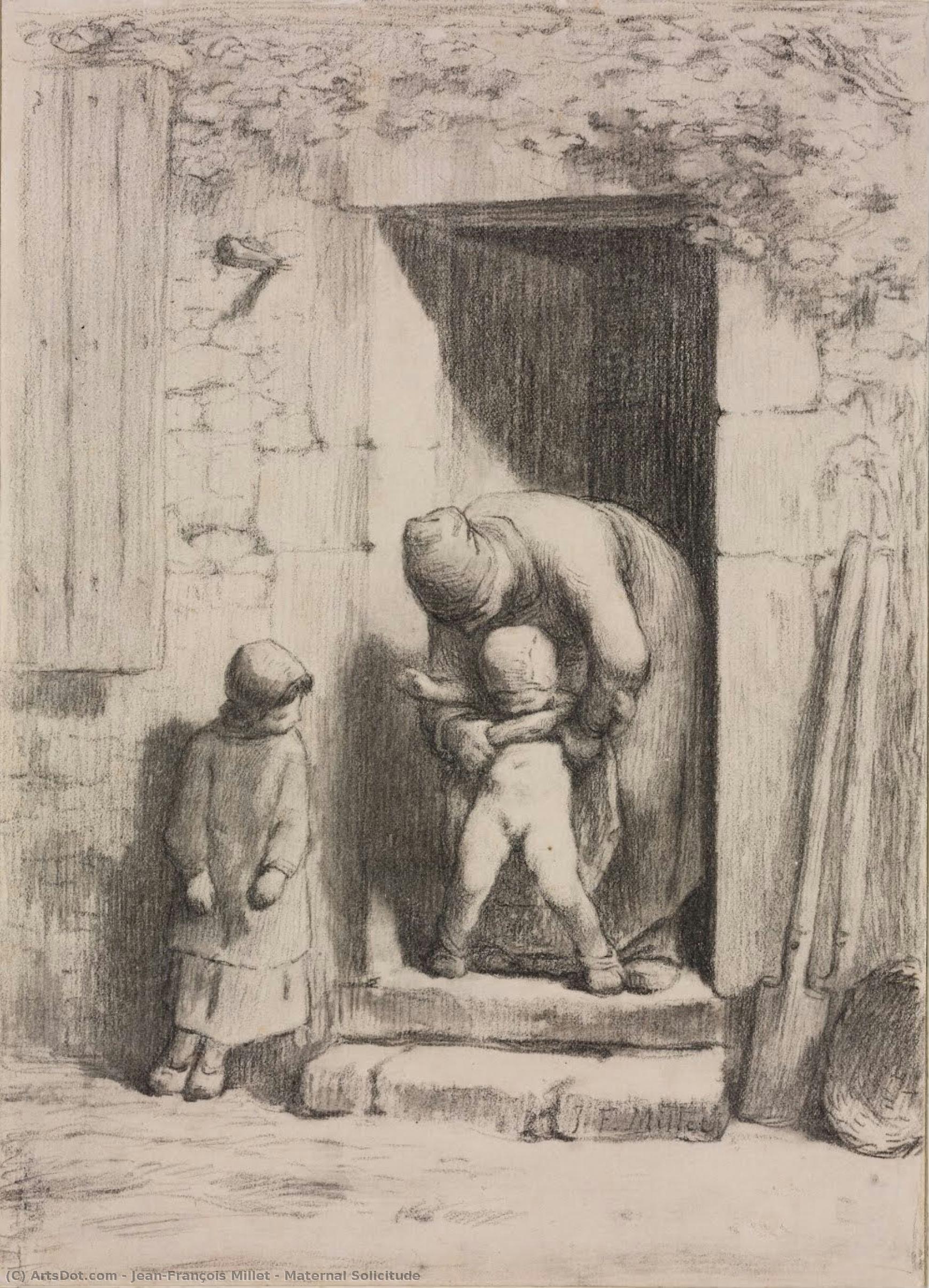
Executed primarily in black chalk on paper, “Maternal Solicitude” is a testament to Millet’s masterful draughtsmanship. The stark contrast of the dark lines against the white paper immediately draws the viewer into the scene, emphasizing the figures' solidity and presence. The composition is remarkably simple yet powerfully effective: a woman, her face partially obscured, cradles a child close to her chest, while a young man stands respectfully nearby. Millet’s technique isn’t about elaborate detail; it’s about capturing essence – the weight of responsibility on the mother's shoulders, the vulnerability of the infant, and the quiet support offered by the other figure. Notice how he uses hatching and cross-hatching to create volume and texture, particularly in the clothing and the child’s form. The deliberate simplification of features allows for a deeper emotional connection with the subjects.
- Technique: Black chalk on paper – a hallmark of Millet's approach, prioritizing line and tonal value over color.
- Composition: A carefully balanced arrangement emphasizing the intimacy of the scene.
- Line Work: Precise and deliberate hatching creates depth and texture.
Echoes of a Peasant World
To understand “Maternal Solicitude,” it’s crucial to recognize Millet's deep connection to his subject matter. Born into a farming family, he witnessed firsthand the rhythms of rural life – the planting, harvesting, and the constant demands on families. His assertion, "I was born a peasant and I remain one," encapsulates this profound identity. The painting isn’t simply a portrait; it's an embodiment of Millet’s lived experience. The scene evokes a sense of timelessness, reminiscent of medieval iconography – the mother and child are presented as symbols of faith, protection, and the continuation of life. The young man standing nearby likely represents community support, a vital element in the lives of rural families.
Symbolism and Emotional Resonance
Beyond its immediate depiction, “Maternal Solicitude” resonates with deeper symbolic meanings. It speaks to themes of vulnerability, strength, and the enduring bonds of family. The woman’s posture conveys a quiet dignity and unwavering devotion, while the child represents hope for the future. The painting's muted tones contribute to its somber yet comforting atmosphere, inviting contemplation on the realities of rural existence. It is a poignant reminder of the human spirit’s capacity for resilience and love amidst hardship – a timeless message that continues to resonate with viewers today. This artwork offers more than just a visual representation; it provides a window into a world often overlooked, revealing the beauty and dignity inherent in the lives of ordinary people.