Jean-François Millet’s Self-Portrait: A Window into Rural Realism
Jean-François Millet’s 1840 self-portrait stands as a cornerstone of French Realist art, offering more than just a depiction of the artist himself; it embodies the spirit of an era grappling with profound social and philosophical shifts. Born in Gruchy, Normandy, Millet's upbringing amidst the humble realities of rural farming instilled within him a singular dedication to portraying the lives of ordinary people—a commitment that would define his artistic legacy.
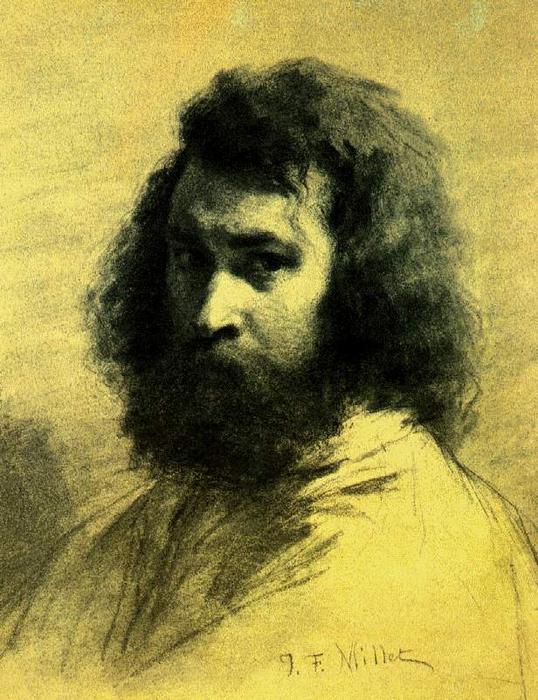
- Subject Matter: The portrait captures Millet at approximately 30 years old, presenting himself with quiet dignity against a muted backdrop. His gaze directs towards the viewer, establishing an immediate connection and inviting contemplation.
- Style & Technique: Executed in oil on canvas, Millet’s technique reflects the tenets of Realism—a rejection of idealized beauty in favor of honest representation. He employs subtle tonal gradations and meticulous brushwork to convey texture and depth, mirroring the weathered surfaces of peasant dwellings and agricultural tools – elements central to his artistic vision.
The painting’s historical context is inextricably linked to the burgeoning Realist movement that emerged in France following the turbulent years of 1848. Artists like Millet sought to challenge academic conventions, rejecting romantic notions of heroism and grandeur for a more grounded perspective on human experience. Influenced by Eugène Delacroix's dramatic landscapes and Gustave Courbet’s uncompromising depictions of labor, Millet aimed to capture the essence of rural life—the toil, the hardship, yet also the enduring beauty found in simplicity.
Symbolism: Beyond its biographical significance, Millet’s self-portrait carries symbolic weight. The muted palette – predominantly browns and ochres – echoes the earthy tones of the French countryside, emphasizing the artist's connection to his environment and his desire to portray it truthfully. Furthermore, Millet’s contemplative gaze speaks to a broader philosophical inquiry into human consciousness and the role of art in illuminating the complexities of everyday existence.
- Emotional Impact: The portrait exudes an aura of introspection—a quiet seriousness that resonates with viewers today. Millet's depiction isn’t merely aesthetically pleasing; it conveys a profound empathy for the struggles faced by rural laborers, reflecting a humanist sensibility that anticipates the concerns of later artistic movements.
Millet’s Self-Portrait remains an enduring testament to the power of Realism—a genre committed to portraying life as it is, without embellishment or sentimentality. It serves as a poignant reminder that art can illuminate not only visual beauty but also the deepest recesses of human emotion and intellect.