A Portrait of Rural Dignity
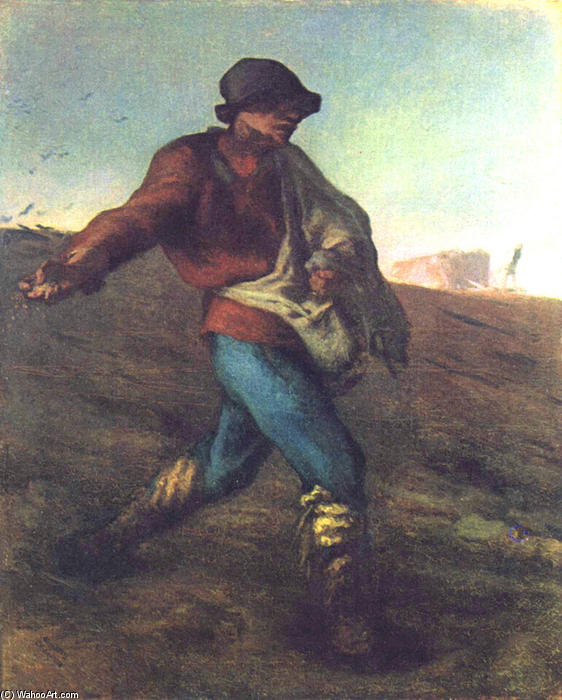
In the quiet grandeur of the mid-19th century French countryside, Jean-François Millet’s 1850 masterpiece, The Sower, emerges not merely as a landscape, but as a profound meditation on the human condition. The painting captures a moment of monumental significance within the mundane act of agricultural labor. At its heart is a solitary figure, a man whose very posture radiates a sense of purpose and unyielding perseverance. As he moves across the field with arms outstretched, scattering seeds into the furrowed earth, he becomes an icon of Realism. This is not a romanticized, idealized view of peasantry, but a gritty, honest tribute to the physical toil that sustains life. The composition, structured with a powerful pyramidal focus, draws the viewer’s gaze upward toward the central figure, ensuring that his struggle and his strength remain the undeniable focal point of the narrative.
The emotional weight of the piece lies in its ability to evoke a sense of timelessness. There is a rhythmic, almost liturgical quality to the sower's movement, suggesting a cycle of life that has remained unchanged for generations. For the collector or the interior designer, this artwork offers more than just visual beauty; it provides an anchor of stability and groundedness. The presence of the secondary figures—the wife and child—and the steadying presence of the animal in the background add layers of domestic tranquility and communal responsibility, making the scene feel like a complete, breathing ecosystem of faith and survival.
The Alchemy of Earth and Light
Millet’s technical mastery is found in his rejection of academic polish in favor of a tactile, visceral texture. Utilizing thick impasto brushstrokes, the artist captures the very physicality of the soil. The palette is deeply rooted in the earth itself, dominated by heavy pigments of ochre, umber, and sienna. These tones do not merely represent the field; they seem to emerge from it, creating a sensory experience where the viewer can almost feel the grit of the dirt and the weight of the damp air. This technique allows the light to play across the surface of the canvas in a way that sculpts the contours of the farmer's body, lending him a sculptural, heroic quality.
As a cornerstone of the Barbizon School, Millet utilized light and shadow to create a palpable atmosphere. The interplay of light is not used for mere decoration but serves to highlight the tension between the shadows of the furrowed earth and the bright promise of the seeds being cast. This mastery of chiaroscuro brings a dramatic depth to the work, making it an exquisite centerpiece for any space that seeks to balance atmospheric mood with structural strength. To possess a reproduction of such a piece is to bring the raw, unadorned beauty of the natural world into a contemporary setting.
A Legacy of Symbolism and Spirit
Beyond its surface realism, The Sower is rich with layers of spiritual and social symbolism. Many art historians interpret the sower as a Christ-like figure, an agent of divine providence scattering the seeds of life and regeneration across a barren world. This layer of meaning transforms a simple agricultural task into a sacred ritual of hope and rebirth. The act of sowing becomes a metaphor for faith—the belief that what is planted in darkness and toil will eventually rise in the light of harvest. This profound connection between humanity, nature, and the divine is what allows the painting to resonate so powerfully across different eras and cultures.
For those looking to curate a collection or design an impactful interior, The Sower offers a unique opportunity to introduce themes of resilience and continuity. It is a piece that commands respect through its quiet intensity. Whether placed in a sunlit gallery or a sophisticated study, the painting acts as a window into a world where labor is dignified, and every small action contributes to the grander cycle of existence. It remains an enduring testament to the beauty found in the most fundamental aspects of our shared human journey.