Jean-François Millet (1814-1875): French Realist painter of the Barbizon School, celebrated for poignant depictions of peasant life like 'The Gleaners' & 'The Angelus'. Explore his legacy.
Experience the grandeur of The Frick Pittsburgh through its iconic collection of masterpieces like Millet’s The Gleaner within the opulent Gilded Age mansion Clayton and discover a legacy of art and industry worth exploring.
The Sower: A Testament to Rural Dignity and Millet’s Vision of Realism
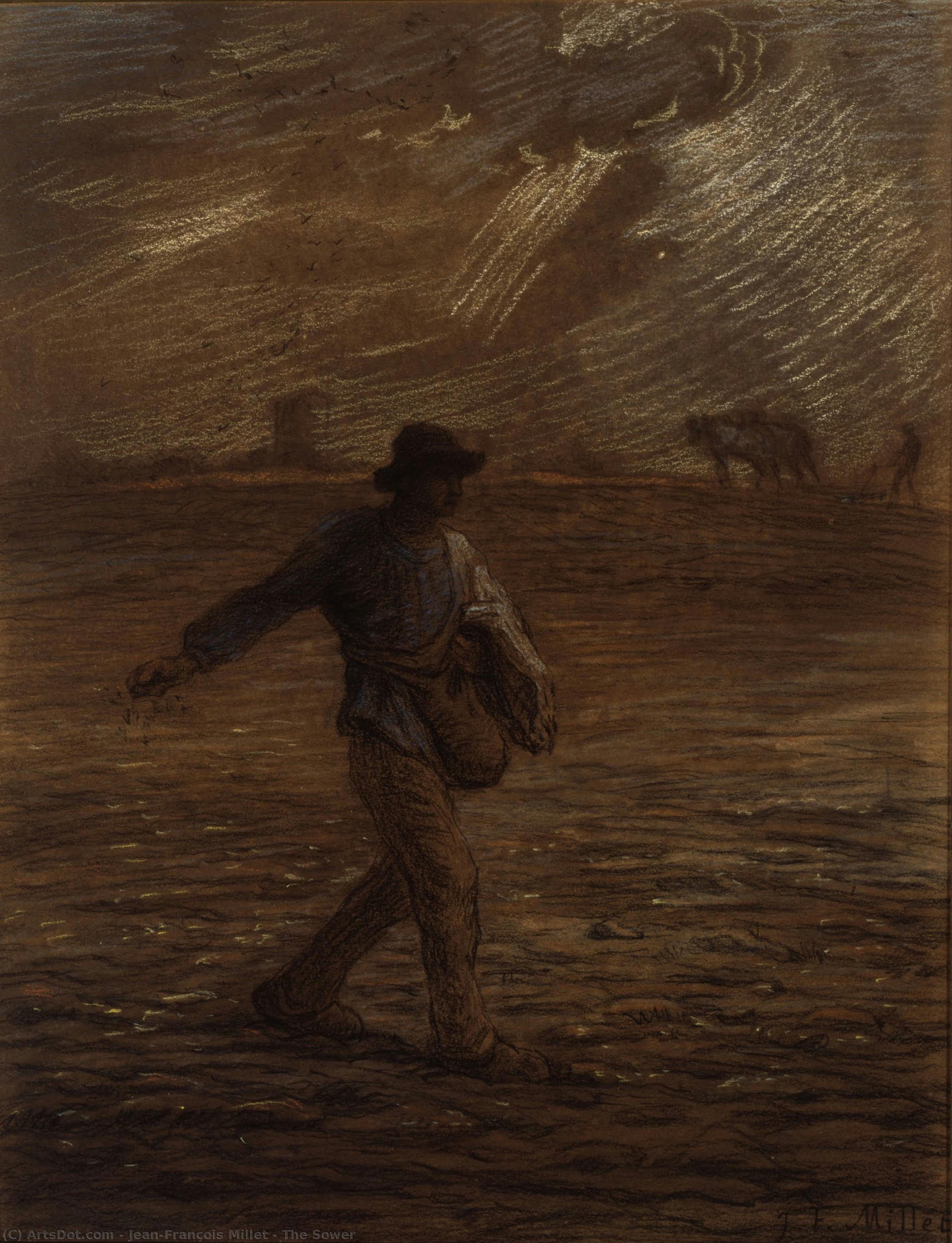
Jean-François Millet's *The Sower* transcends mere depiction; it embodies a profound philosophical statement about humanity’s connection to the earth and the enduring spirit of labor. Painted in 1857, this iconic oil painting resides within the Musée des Beaux-Arts de Boston, offering viewers an unparalleled glimpse into the artistic sensibilities of the Barbizon School—a movement dedicated to capturing the essence of rural landscapes with uncompromising honesty. The artwork’s stark monochrome palette – predominantly shades of grey and brown – immediately establishes a mood of solemn contemplation, mirroring the quiet perseverance of the central figure.
A Landscape Steeped in Symbolism
The scene unfolds against a backdrop of rolling hills dotted with cows, meticulously rendered with textured brushstrokes that convey both solidity and vulnerability. These bovine companions aren’t merely incidental elements; they represent fertility and sustenance—symbols deeply rooted in the agricultural traditions of Millet's native Normandy. The farmer himself, positioned diagonally across the canvas, is turned away from the viewer, fostering a sense of intimacy and inviting us to empathize with his solitary toil. His posture exudes resilience and determination, conveying not despair but acceptance of life’s hardships as integral to its beauty.
Technique and Artistic Influence
Millet's masterful technique exemplifies the Barbizon style—characterized by loose brushwork and a focus on capturing atmospheric effects rather than idealized representations. He eschewed academic conventions, prioritizing observation over preconceived notions about how nature *should* appear. The artist’s meticulous attention to detail is evident in the subtle gradations of tone achieved through layering thin glazes of pigment – a technique that lends depth and luminosity to the composition. Notably, Millet drew inspiration from Eugène Delacroix's monumental painting *Liberty Leading the People*, recognizing the importance of conveying emotion alongside visual accuracy. This influence can be seen in the expressive handling of paint and the overall sense of drama conveyed by the scene.
Historical Context: The Rise of Realism
*The Sower* emerged during a period of significant social upheaval in France—the Second Industrial Revolution was transforming urban life, prompting artists to reconsider their role in documenting the realities of everyday existence. Millet’s work stood apart from prevailing Romantic ideals, championing instead a humanist perspective that celebrated the dignity and perseverance of rural laborers. It resonated powerfully with audiences eager for art that reflected the complexities of modern society—a reaction against sentimentalized depictions of pastoral life.
Emotional Resonance: A Quiet Triumph
Ultimately, *The Sower* succeeds in capturing not just what is seen but what is felt. The painting’s understated grandeur speaks to a deeper truth about human experience – the quiet heroism found in embracing one's vocation and accepting the rhythms of nature. It remains a timeless masterpiece, prompting viewers to contemplate themes of labor, faith, and the enduring beauty of the natural world—a testament to Millet’s unwavering commitment to portraying life as it truly is.