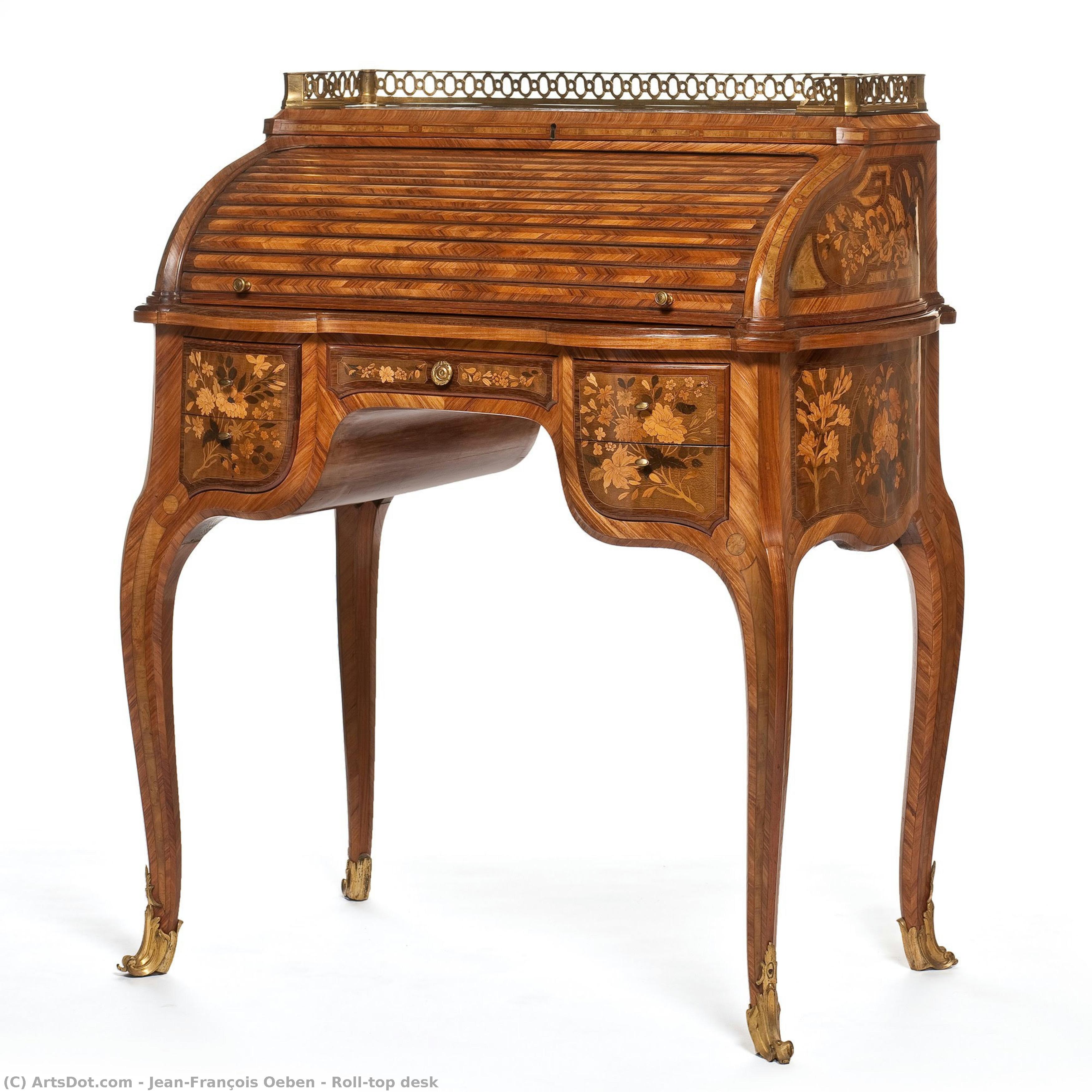
Jean-François Oeben’s “Bureau du Roi,” commissioned by Louis XV, exemplifies the pinnacle of Rococo craftsmanship. Featuring floral marquetry, geometric tiled patterns & gilded bronze embellishments, this desk reflects Madame de Pompadour's influence and marks a pivotal moment in decorative arts history.
The Bureau du Roi: A Testament to Rococo Elegance and Innovation
Jean-François Oeben’s roll-top desk, or “Bureau du Roi,” stands as a pinnacle of French Rococo craftsmanship—a masterpiece commissioned by Louis XV in 1761 and completed posthumously by his successor, Jean-Henri Riesener. More than just furniture; it embodies the opulent tastes of the era and represents a pivotal moment in the evolution of decorative arts.
- Subject Matter: The desk’s design centered around a beautifully crafted wooden top adorned with intricate marquetry depicting floral motifs—a stylistic hallmark of Oeben's time. These blossoms weren’t merely decorative; they symbolized fertility, beauty, and aristocratic refinement – values deeply ingrained in the sensibilities of Louis XV’s court.
- Style & Technique: Initially embracing the flowing lines and asymmetrical arrangements characteristic of Rococo, Oeben skillfully transitioned towards a more restrained geometric tiled pattern as his career progressed. The meticulous application of marquetry—a technique involving inlaying thin veneers of wood into a substrate—demonstrates unparalleled precision and artistry. Furthermore, the incorporation of gilded bronze accents elevates the desk’s grandeur, reflecting the lavish embellishments prevalent in aristocratic interiors.
A Patronage Affair: Madame de Pompadour's Influence
The desk’s significance extends beyond its aesthetic qualities; it was a favored piece among Madame de Pompadour, Louis XV’s influential mistress. Similar desks bearing her monogram—a tower—were produced by Oeben and Riesener, underscoring the importance of royal patronage in fostering artistic innovation. The commission itself speaks volumes about the desire to create spaces that mirrored the grandeur and sophistication of Versailles.
- Historical Context: Constructed during Louis XV’s reign (1743-1774), the Bureau du Roi coincided with a period of artistic experimentation. While Rococo continued its dominance, influences from Neoclassicism began to emerge—a subtle shift reflected in the desk's later designs.
- Symbolism: The floral marquetry wasn’t simply ornamental; it served as a visual shorthand for aristocratic ideals – grace, elegance, and an appreciation for natural beauty. These themes resonated deeply with the cultural values of the time and solidified Oeben’s reputation as a master craftsman who understood how to communicate artistic concepts effectively.
Legacy & Rediscovery: The Desk Today
Today, reproductions of the Bureau du Roi grace museums and private collections worldwide. Its enduring appeal lies in its exquisite craftsmanship—a testament to Oeben’s skill and vision—and its embodiment of a bygone era's aesthetic sensibilities. Examining this remarkable piece allows us to appreciate not only the beauty of art but also the complex interplay between artistic style, social patronage, and historical significance.
- Collection: The desk resides in the Musée des Arts Décoratifs in Paris, a testament to its enduring value as an exemplar of French decorative art.
- Reproductions: ArtsDot offers high-quality reproductions that allow enthusiasts to experience the splendor of Oeben’s masterpiece without the expense or logistical challenges of owning the original.