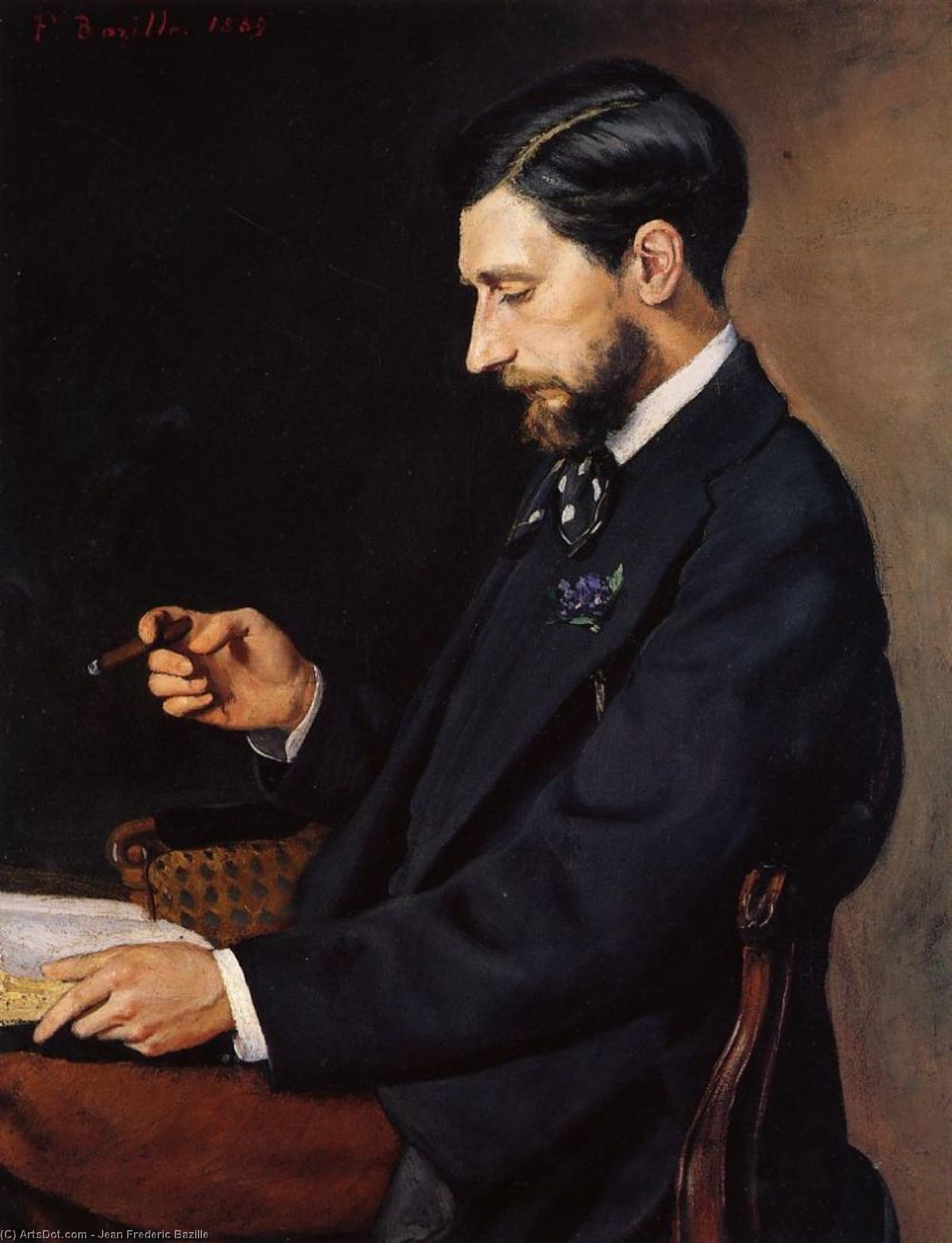
Admire Jean Frederic Bazille’s ‘Portrait of Edmond Maitre.’ A realistic 1869 oil painting showcasing intellect & melancholy. Explore this masterpiece's details & find similar art.
Discover Jean Frédéric Bazille (1841-1870), a key figure of Impressionism. Explore his vibrant landscapes, portraits & close ties to Monet, Renoir & Sisley. Find high-quality reproductions now!
Explore the National Gallery of Art in Washington D.C.! Discover masterpieces from Renaissance to modern art, including works by Raphael, Van Gogh & more. Free admission!
A Study in Quiet Dignity: Jean Frédéric Bazille’s ‘Portrait of Edmond Maitre’
Jean Frédéric Bazille's “Portrait of Edmond Maitre,” completed in 1869, stands as a testament to the burgeoning Realist movement within Impressionism – a fascinating confluence of artistic sensibilities that sought to capture the essence of human experience with unprecedented accuracy. Painted on canvas using oil paints, this artwork isn’t merely a depiction of a man; it's an exploration of intellect, solitude, and subtly conveyed melancholy, qualities deeply rooted in the artist’s own life circumstances. Bazille, tragically deceased just five years later at the age of 28 due to tuberculosis – a disease that ravaged Europe during this period – imbued his work with a palpable sense of vulnerability amidst formal grandeur.
Composition and Technique: Mastering Light and Shadow
The painting's composition is strikingly simple yet profoundly effective. Bazille centers the figure in profile, establishing a vertical axis that draws the viewer’s gaze upwards towards Maitre’s face—the focal point of the image. This deliberate arrangement reinforces the solemnity of the portrait and underscores the importance of visual hierarchy. The artist skillfully employs shading techniques to sculpt form and create depth, utilizing smooth brushstrokes to build up contours while subtly manipulating light to illuminate Maitre's features and clothing. Atmospheric perspective is achieved through hazy gradations in color, lending an air of realism and conveying a sense of space beyond the immediate frame. Notice how Bazille’s meticulous attention to detail—particularly on the textured fabric of Maitre’s coat—demonstrates his commitment to capturing material qualities with remarkable precision.
Historical Context: Impressionism's Pursuit of Truth
“Portrait of Edmond Maitre” emerged during a pivotal moment in art history – the rise of Impressionism. Artists like Bazille, Monet, Renoir, and Sisley rejected academic conventions favoring instead an observational approach that prioritized capturing fleeting moments of light and color. They moved away from idealized representations toward portraying subjects as they appeared to the eye, influenced by scientific discoveries regarding optics and color theory. This painting embodies the movement’s core ethos: a desire to depict reality without embellishment or sentimentality—a courageous stance against the prevailing artistic dogma of its time. Bazille's work reflects the broader intellectual climate of Paris during the Second Empire, where thinkers like Auguste Comte championed positivism and sought to understand the world through empirical observation.
Symbolism and Emotional Resonance: Beyond Mere Representation
The muted color palette—dominated by dark hues of black, navy blue, and grey—serves as more than just a stylistic choice; it contributes significantly to the portrait’s emotional impact. The inclusion of purple in Maitre's tie subtly hints at nobility and contemplation, while the solitary flower resting on his desk symbolizes resilience and beauty amidst adversity – mirroring Bazille’s own struggles with illness. The overall mood is one of quiet dignity tempered by melancholy—a reflection perhaps of Bazille’s awareness of mortality and the fragility of human existence. The painting invites viewers to contemplate not only Maitre's physical appearance but also his inner life, prompting introspection and fostering a connection with the artist’s artistic vision.
A Legacy of Quiet Observation
“Portrait of Edmond Maitre” remains an enduring masterpiece of Realist Impressionism—a remarkable achievement that exemplifies Bazille’s mastery of technique and his profound understanding of human psychology. Its understated elegance and evocative atmosphere continue to captivate audiences today, serving as a poignant reminder of the transformative power of observation and the beauty found in capturing the complexities of everyday life.