Discover Jean Frédéric Bazille (1841-1870), a key figure of Impressionism. Explore his vibrant landscapes, portraits & close ties to Monet, Renoir & Sisley. Find high-quality reproductions now!
Discover the Musée d'Orsay in Paris! Housed in a stunning former railway station, explore an unparalleled collection of Impressionist & Post-Impressionist masterpieces by Monet, Van Gogh & more.
A Moment Frozen in Light: Jean Frédéric Bazille’s Portrait of Renoir
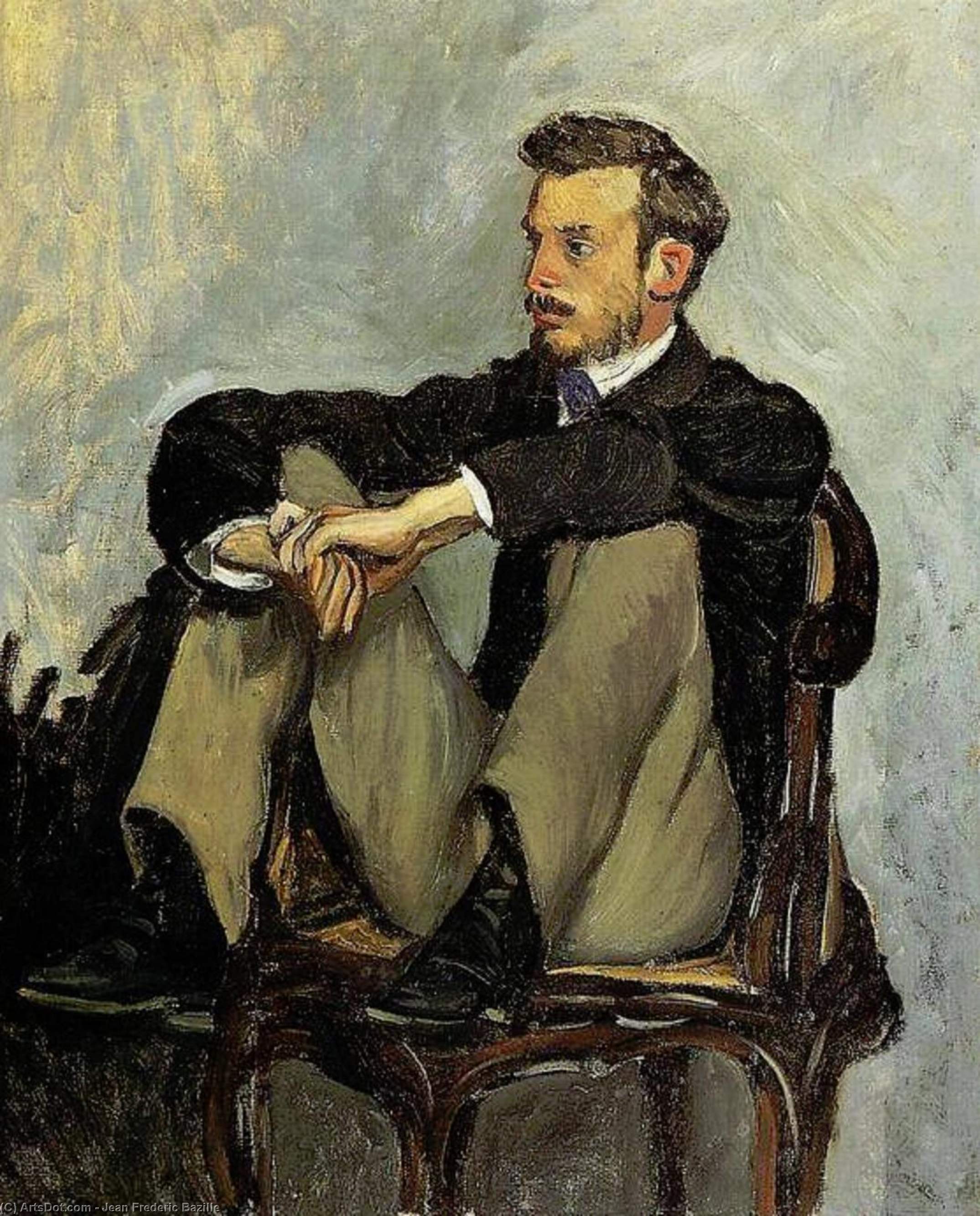
Jean Frédéric Bazille's “Portrait of Renoir” stands as a testament to the burgeoning Impressionist movement, capturing not merely an likeness but also a palpable sense of contemplative emotion. Painted in 1867, this unassuming canvas holds within it the echoes of a pivotal era in artistic history—a time when artists were actively rejecting academic conventions and embracing spontaneity, prioritizing observation and conveying fleeting impressions over meticulous detail.
The painting depicts Pierre-Auguste Renoir seated comfortably in a chair, crossed legs suggesting both repose and quiet deliberation. Bazille’s masterful use of color – primarily muted blues and grays – establishes a harmonious backdrop that subtly directs the viewer's gaze towards Renoir’s figure. The artist skillfully employs loose brushstrokes characteristic of Impressionism, layering pigment to create an ethereal quality reminiscent of sunlight filtering through foliage.
The Style of Observation: Impressionist Technique
Bazille’s technique embodies the core principles of Impressionism. Unlike traditional portraiture which aimed for idealized beauty and precise representation, he sought to capture the essence of Renoir's presence—his mood, his gaze—as if frozen in a single instant. The visible brushstrokes aren’t merely decorative; they are integral to conveying the texture and luminosity of the scene. Notice how Bazille captures the subtle nuances of light and shadow, creating depth and dimensionality without resorting to harsh contrasts.
A Collaboration Born From Shared Vision
This portrait is particularly significant because it portrays Renoir alongside Claude Monet and Alfred Sisley—the triumvirate who established Giverny as a hub for Impressionist experimentation. Bazille, himself deeply involved in the movement’s formative years, shared his studio with these luminaries, fostering an environment of intellectual exchange and artistic collaboration. The painting serves as a visual record of this influential group of artists, reflecting their commitment to capturing the beauty of everyday life.
Symbolism Beyond Appearance
Beyond its formal composition, “Portrait of Renoir” speaks to broader themes of friendship and artistic camaraderie. The contemplative expression on Renoir’s face invites contemplation about the artist's inner world—his thoughts, his passions—much like Bazille himself sought to convey in his own paintings. The muted palette reinforces this sense of serenity and introspection, aligning with the Impressionists’ desire to depict emotion rather than simply documenting visual reality.
Bringing Impressionist Beauty Home
A high-quality reproduction of “Portrait of Renoir” offers a captivating glimpse into the artistic spirit of 1867. ArtsDot.com presents meticulously crafted reproductions that faithfully capture Bazille’s masterful technique and luminous color palette, allowing you to experience the emotional resonance of this iconic Impressionist masterpiece in your own space.