Discover Jean Frédéric Bazille (1841-1870), a key figure of Impressionism. Explore his vibrant landscapes, portraits & close ties to Monet, Renoir & Sisley. Find high-quality reproductions now!
Discover the Musée Fabre in Montpellier through its magnificent collection of French and Italian masterpieces including works by Rubens and Courbet, offering an unmissable journey through art history that invites you to explore.
Jean Frédéric Bazille’s Intimate Portrait of Artistic Life
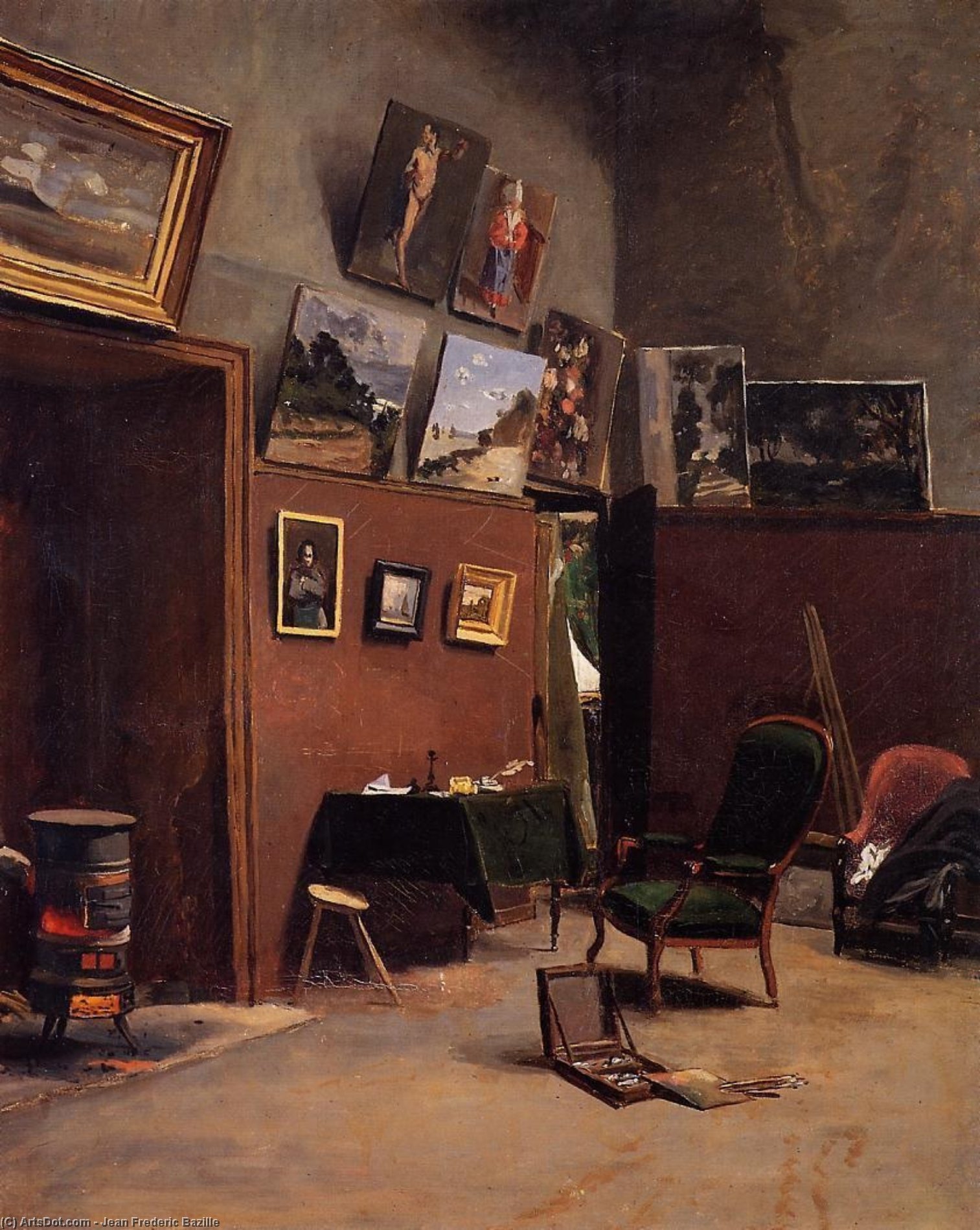
Studio on the Rue de Furstenberg, painted in 1865 by Jean Frédéric Bazille, is more than just a depiction of a Parisian studio; it's a poignant snapshot of a burgeoning artistic spirit and the quiet contemplation that fuels creative endeavor. This intimate scene, rendered with remarkable sensitivity to light and atmosphere, captures a moment frozen in time – a woman immersed within her workspace, surrounded by the tools and treasures of her passion. The painting’s immediate appeal lies in its ability to evoke a sense of calm and intellectual curiosity, inviting the viewer into a world where art and personal reflection intertwine seamlessly.
A Window into Impressionism's Early Days
Created during a pivotal moment in the development of Impressionism, Studio on the Rue de Furstenberg reflects Bazille’s own evolving artistic sensibilities. Born in Montpellier in 1841, he was part of a generation of artists challenging academic conventions and embracing a new approach to capturing fleeting moments and subjective experiences. The painting's loose brushwork, emphasis on color, and focus on the effects of light – hallmarks of the Impressionist style – demonstrate Bazille’s growing confidence in this revolutionary movement. The work was completed in 1866, marking a significant step in Bazille’s artistic trajectory.
Technical Mastery and Atmospheric Detail
Bazille's technique is characterized by a delicate handling of paint, achieved through meticulous layering and subtle gradations of color. The red wall, a bold statement against the muted tones of the room, serves not only as a backdrop but also as a focal point, drawing the eye towards the central figure. The artist skillfully employs broken brushstrokes to convey the play of light on the various objects within the studio – the books, the chairs, and the fireplace – creating an illusion of depth and volume. The use of warm tones in the fireplace and the overall composition suggests a desire to create a sense of warmth and comfort within the space.
Symbolism and Emotional Resonance
The woman depicted is not merely a subject; she embodies the spirit of artistic creation itself. Her posture, absorbed in her work, speaks volumes about dedication and focus. The scattered books suggest intellectual pursuits alongside artistic endeavors, while the carefully arranged objects hint at a cultivated aesthetic sensibility. Bazille’s ability to capture this quiet intensity elevates the painting beyond a simple portrait, transforming it into a meditation on the artist's life and the profound connection between art and human experience. The painting resonates with a sense of melancholy, reflecting Bazille’s own tragically short life – he died in 1870 at the age of 29.