Discover Jean Frédéric Bazille (1841-1870), a key figure of Impressionism. Explore his vibrant landscapes, portraits & close ties to Monet, Renoir & Sisley. Find high-quality reproductions now!
Discover the Musée Fabre in Montpellier through its magnificent collection of French and Italian masterpieces including works by Rubens and Courbet, offering an unmissable journey through art history that invites you to explore.
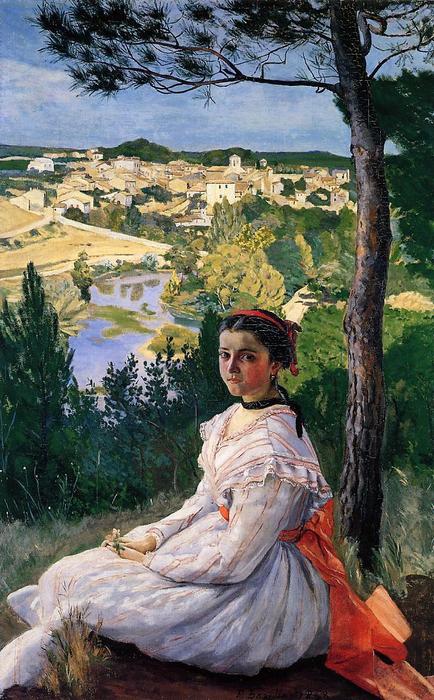
View of the Village – A Moment Frozen in Impressionist Light
Jean Frédéric Bazille’s “View of the Village,” painted in 1868, stands as a quintessential example of Impressionism—a movement that sought to capture fleeting impressions of light and color rather than meticulously detailed representations. More than just a picturesque landscape, it embodies Bazille's profound engagement with the artistic spirit of his time and offers a glimpse into the contemplative mood prevalent amongst Parisian artists exploring new visual vocabularies.
The painting depicts a serene valley scene dominated by a towering oak tree on the left side—a deliberate compositional choice designed to create vertical stability against the horizontal expanse of the landscape. At its center sits a woman, bathed in dappled sunlight, gazing out over the village nestled below. This figure isn’t merely observed; she embodies stillness and quiet contemplation – a characteristic theme within Impressionist art.
Bazille skillfully employs muted greens, blues, and whites as his primary color palette, accented by subtle oranges and browns. The sky is rendered in pale azure hues, conveying the diffused light of an afternoon sun. The valley floor is painted with shades of olive green and ochre yellow-brown, creating a harmonious blend that mimics the natural textures of foliage and earth.
- Technique: Bazille’s brushstrokes are loose and visible—a hallmark of Impressionist technique—allowing for an expressive rendering of light and atmosphere. Short, broken strokes build up layers of color, capturing the shimmering effects of sunlight filtering through the leaves.
- Composition: The tree trunk serves as a powerful vertical counterpoint to the horizontal vista, guiding the viewer’s eye across the canvas. Bazille's careful positioning of the woman ensures that she occupies a central role in conveying the painting's contemplative mood.
- Symbolism: The woman’s gaze towards the village can be interpreted as representing hope and longing—a yearning for connection with nature and perhaps, subtly, with something beyond the immediate visual experience.
“View of the Village” isn't simply a beautiful landscape; it’s a testament to Bazille’s artistic vision – a beautifully executed snapshot of a moment in time that continues to resonate with viewers today. Its understated elegance and luminous color palette exemplify the Impressionist ideal, inviting contemplation and capturing the essence of a tranquil outdoor scene.
This artwork is housed in Musée Fabre, Montpellier, France.