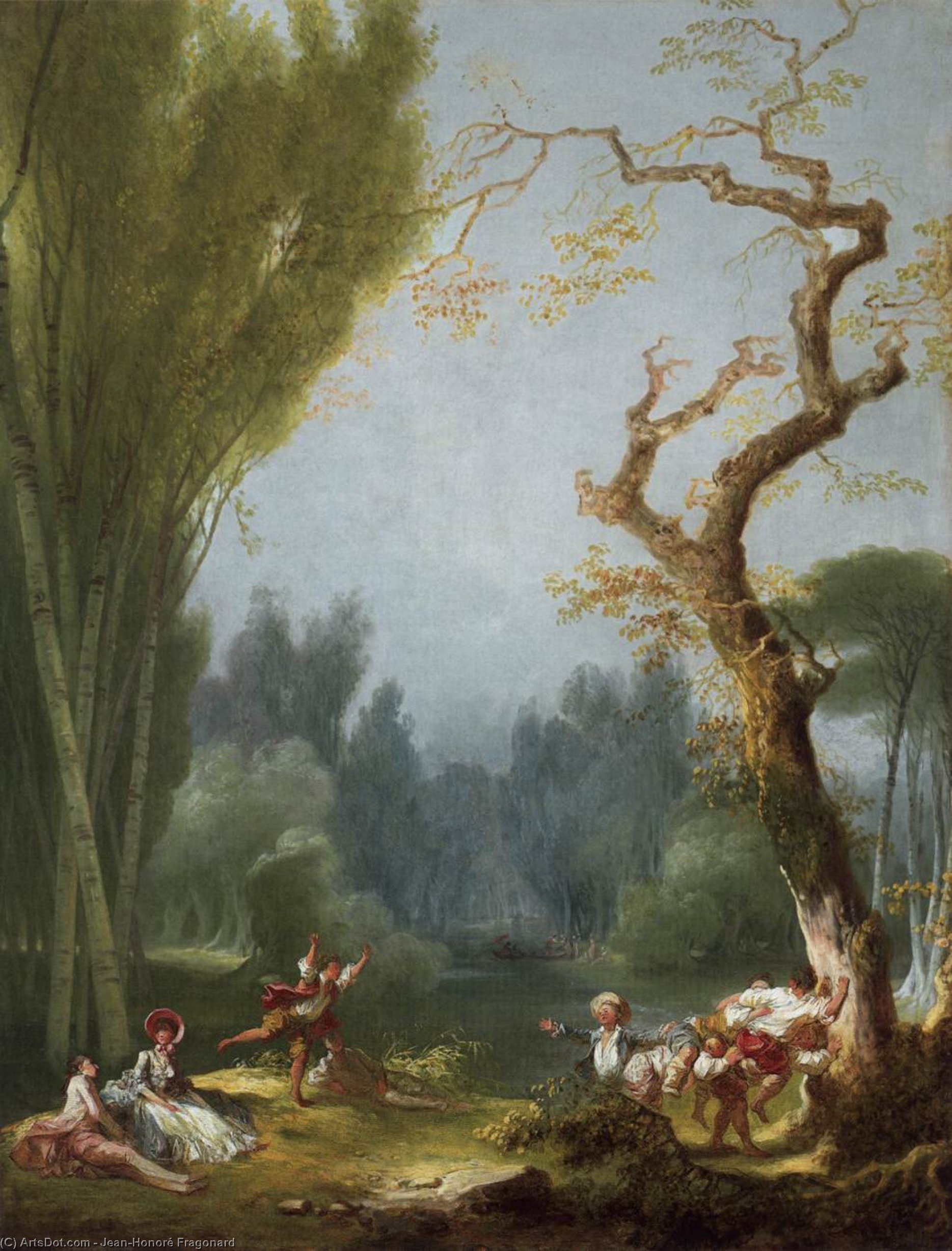
A Celebration of Leisure and Light: Exploring Jean Honoré Fragonard’s “A Game of Horse and Rider”
Jean Honoré Fragonard's "A Game of Horse and Rider," painted in 1775, stands as a quintessential emblem of Rococo artistry—a movement characterized by opulent decoration, playful frivolity, and an embrace of sensual pleasure. More than just a picturesque depiction of outdoor activity, this canvas embodies the spirit of its time, reflecting the aristocratic tastes and intellectual currents that shaped Enlightenment France.
- Subject Matter: The scene unfolds in a verdant park setting, populated by figures engaged in leisurely pursuits. A gentleman astride a horse dominates the composition, while another man delicately plays a musical instrument nearby—a subtle juxtaposition of movement and contemplation that speaks to the Rococo fascination with harmonious balance.
- Style & Technique: Fragonard’s masterful brushwork exemplifies the hallmark characteristics of Rococo painting. Delicate pastel hues bathe the landscape in soft light, creating an atmosphere of ethereal beauty. The artist employs a loose, fluid style—a departure from the rigid formalism of Neoclassicism—allowing for expressive handling of color and texture.
- Historical Context: Created during Louis XV’s reign, “A Game of Horse and Rider” captures the decadent grandeur of Versailles and the aristocratic salons where artists like Fragonard cultivated their reputations. The painting reflects a broader cultural preoccupation with pleasure, romance, and escapism—themes that resonated deeply within the upper echelons of French society.
The Influence of François Boucher: Shaping Fragonard’s Artistic Vision
Fragonard's formative years were spent under the tutelage of François Boucher, a titan of Rococo decoration and portraiture. Boucher instilled in him an unwavering devotion to graceful forms, luminous colors, and a penchant for capturing fleeting moments of emotion—principles that would permeate Fragonard’s entire oeuvre. Boucher’s emphasis on idealized beauty and theatrical presentation profoundly impacted Fragonard's stylistic choices, establishing him as one of the foremost interpreters of Rococo aesthetics.
Symbolism & Emotional Resonance: Capturing the Essence of Sensuality
Beyond its formal elegance, “A Game of Horse and Rider” resonates with deeper symbolic meanings. The horse itself represents nobility and power—yet it is rendered in a playful manner, suggesting an awareness of illusion and fantasy. Similarly, the musical instrument symbolizes artistic expression and intellectual refinement. Together, these elements contribute to the painting’s overall mood of carefree joy and sensual indulgence—a testament to Fragonard's ability to convey complex emotions through deceptively simple visual language.
A Legacy of Light & Color: Reproductions That Preserve Artistic Brilliance
Today, high-quality reproductions of “A Game of Horse and Rider” allow art enthusiasts worldwide to experience the splendor of Fragonard’s vision. ArtsDot.com offers meticulously crafted prints that faithfully capture the painting's luminous palette and expressive brushwork—bringing a touch of Rococo elegance into any interior space.