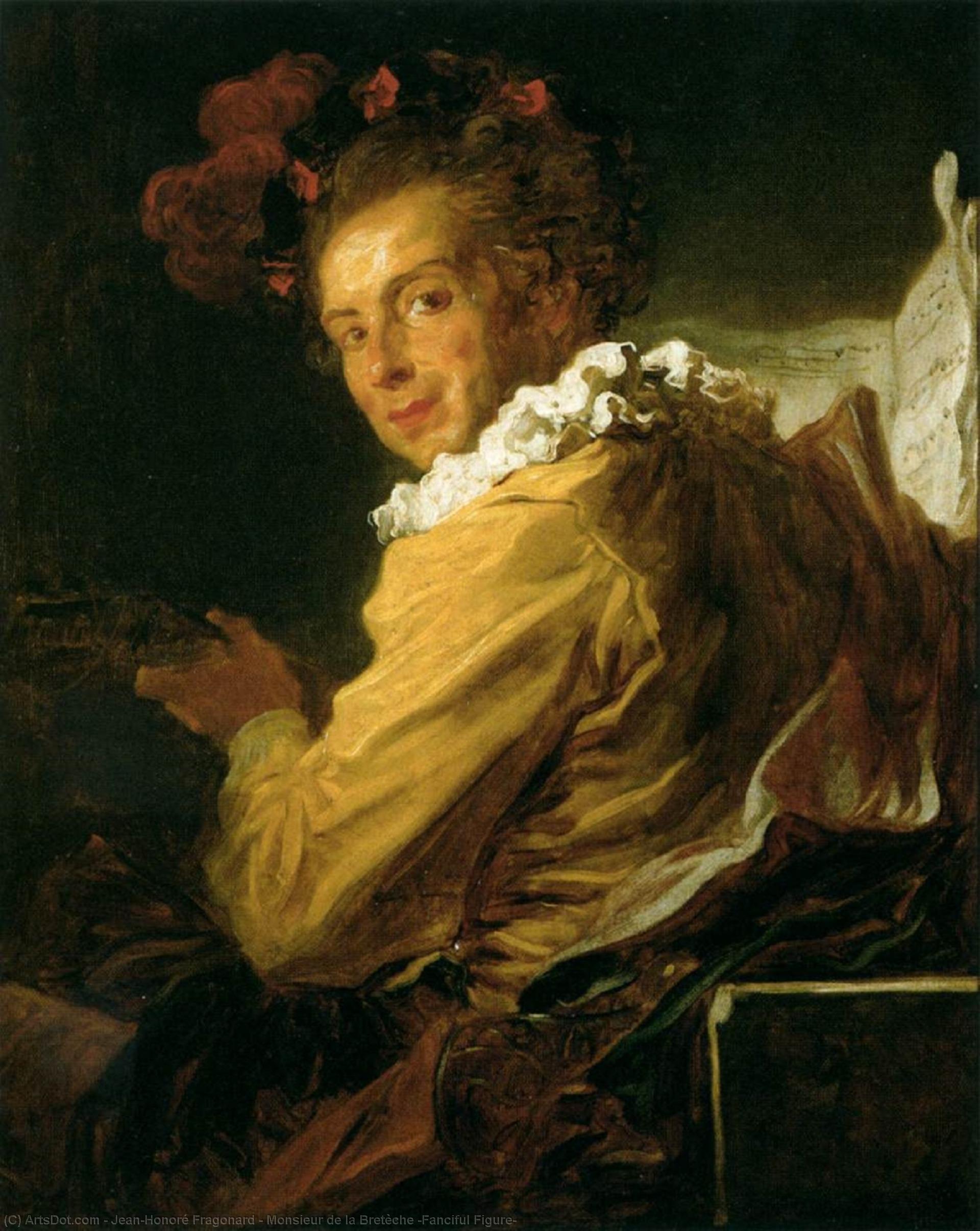
Jean-Honoré Fragonard’s “Monsieur de la Bretèche” – A Symphony of Pastel Light
Jean-Honoré Fragonard, born in Grasse, France, in 1732, stands as a cornerstone of Rococo art—a movement characterized by opulent ornamentation, playful elegance, and an embrace of sensual pleasure. His oeuvre is instantly recognizable for its delicate brushstrokes, pastel hues, and masterful depiction of aristocratic life during Louis XV’s reign.
“Monsieur de la Bretèche,” completed in 1769, exemplifies Fragonard's signature style perfectly. This portrait captures a gentleman seated at an easel, absorbed in his artistic pursuits—a deliberate gesture intended to elevate the sitter’s status and intellect within the social hierarchy of the time.
- Subject Matter: The painting portrays Jean-Baptiste François de Bretèche, a prominent French diplomat and art connoisseur. Fragonard skillfully captures his contemplative gaze and posture, conveying an aura of intellectual curiosity and refined taste.
- Style & Technique: Fragonard’s technique is defined by loose brushwork—a hallmark of Rococo—allowing for subtle gradations of color and creating a luminous effect that mimics natural light. He employs pastel pigments with exceptional precision, achieving remarkable tonal accuracy and capturing the nuances of skin texture.
- Historical Context: “Monsieur de la Bretèche” was created during a period of artistic flourishing in Paris, fueled by patronage from the royal court and a burgeoning interest in humanist ideals. The painting reflects the prevailing aesthetic sensibilities of the era—a desire for beauty, grace, and an idealized representation of human experience.
- Symbolism: Beyond its formal composition, “Monsieur de la Bretèche” carries symbolic significance. The easel itself represents creativity and intellectual endeavor, mirroring Bretèche’s passion for art. Furthermore, the inclusion of a violin subtly underscores the importance of music—a favored pastime among the aristocracy—and contributes to the painting's overall atmosphere of refined leisure.
- Emotional Impact: Fragonard succeeds in conveying a sense of serenity and contemplation. The soft pastel palette evokes feelings of tranquility and beauty, inviting viewers to immerse themselves in the scene’s idyllic setting. The portrait captures not merely Bretèche’s physical appearance but also his inner spirit—a testament to Fragonard's ability to translate emotion onto canvas.
As seen on WikiGallery (WikiGallery), this masterpiece continues to inspire admiration for its exquisite craftsmanship and timeless elegance.
This painting is a captivating glimpse into the artistic spirit of the Rococo period, demonstrating Fragonard’s mastery of pastel light and his profound understanding of human psychology. It remains a treasured example of French portraiture—a testament to beauty, intellect, and the pursuit of refined pleasure.