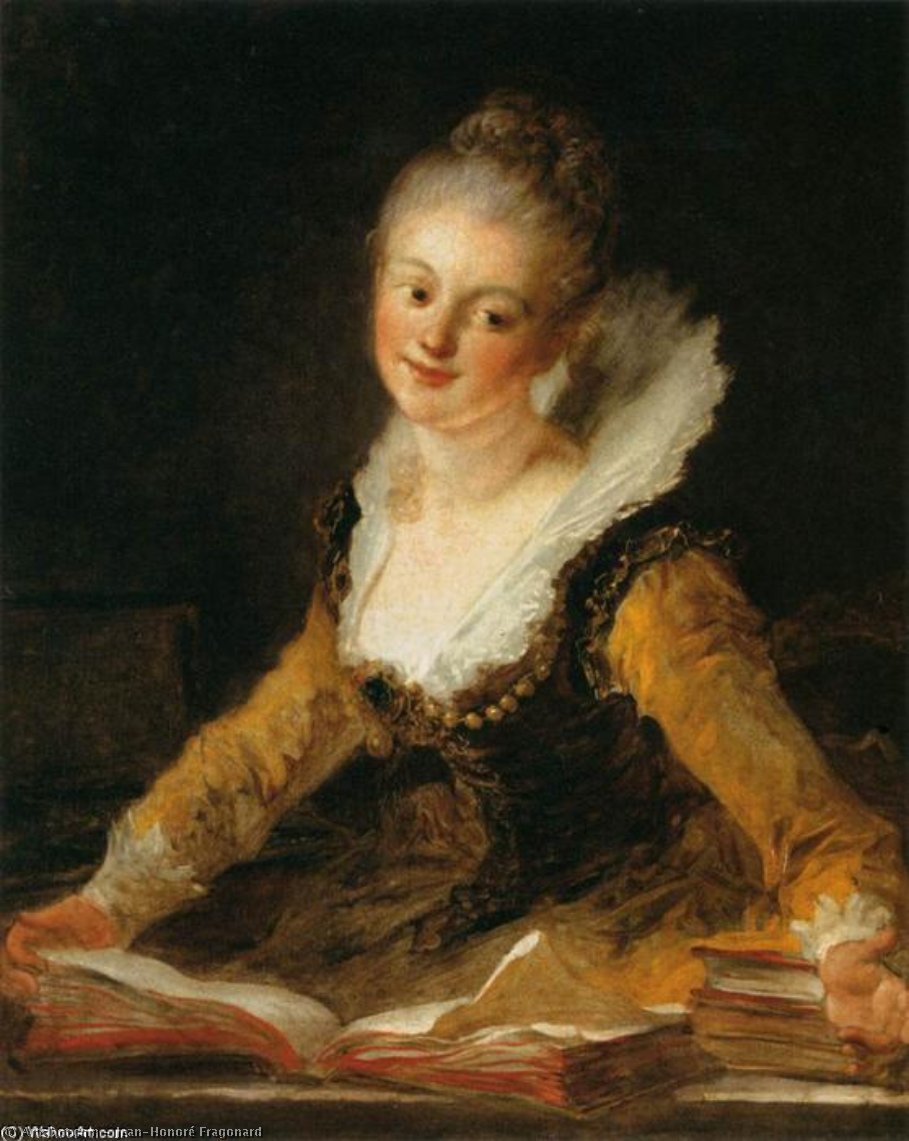
Jean-Honoré Fragonard’s *Study (Fanciful Figure)* – A Moment of Playful Grace
Captured in 1769, Jean-Honoré Fragonard's *Study (Fanciful Figure)* offers a captivating glimpse into the Rococo world, a realm defined by its exquisite charm and playful sensibility. This intimate portrait depicts a woman absorbed in the act of reading, a scene brimming with relaxed elegance and an undeniable sense of leisure. Measuring 82 x 66 cm, the painting’s scale invites viewers to step closer, drawn into the quiet moment captured within.
The subject, a young woman with flowing blonde hair, is rendered in Fragonard's signature style – characterized by soft brushstrokes, luminous colors, and an emphasis on graceful forms. She wears a vibrant yellow dress, a color frequently associated with joy and optimism during the period, further enhancing the painting’s cheerful mood. The details are meticulously observed: the slight curve of her smile, the delicate folds of her gown, and the scattered books that surround her, suggesting both intellectual pursuit and a comfortable domestic setting.
A Masterclass in Rococo Technique
Fragonard's technique is immediately recognizable. He employs a loose, almost impressionistic approach to color and form, prioritizing atmosphere and feeling over strict realism. Notice the subtle gradations of light and shadow, creating a sense of depth and volume within the figure. The use of pastel hues – particularly in the woman’s dress and hair – contributes significantly to the painting's ethereal quality. The artist skillfully utilizes glazing techniques, layering thin washes of color to build up richness and luminosity, a hallmark of his style.
The composition itself is deceptively simple, yet expertly balanced. The placement of the books—some foreground, some receding—creates a sense of spatial depth, while the chair provides a grounding element within the scene. This careful attention to detail reflects Fragonard’s training under François Boucher, who instilled in him a profound understanding of classical composition and decorative principles.
Symbolism and Context – A Window into 18th-Century Life
*Study (Fanciful Figure)* was created during a pivotal moment in Fragonard's career. Following his success at the Prix de Rome, he transitioned from painting grand historical scenes to exploring more intimate subjects—often depicting aristocratic leisure and flirtation. This work exemplifies this shift, offering a glimpse into the refined lifestyle of the French upper class.
The act of reading itself held symbolic significance during the 18th century, representing education, refinement, and intellectual engagement. The woman’s serene expression suggests contentment and an appreciation for knowledge. Furthermore, the presence of books subtly alludes to the burgeoning interest in Enlightenment ideas that were beginning to shape European thought.
Emotional Impact and Artistic Legacy
Ultimately, *Study (Fanciful Figure)* is a testament to Fragonard’s ability to capture fleeting moments of beauty and grace. The painting evokes a sense of tranquility, inviting the viewer to share in the woman's peaceful contemplation. It remains a quintessential example of Rococo art – a celebration of pleasure, elegance, and the joys of simple pursuits. This exquisite reproduction offers an unparalleled opportunity to own a piece of Fragonard’s genius, bringing a touch of timeless charm into any setting.