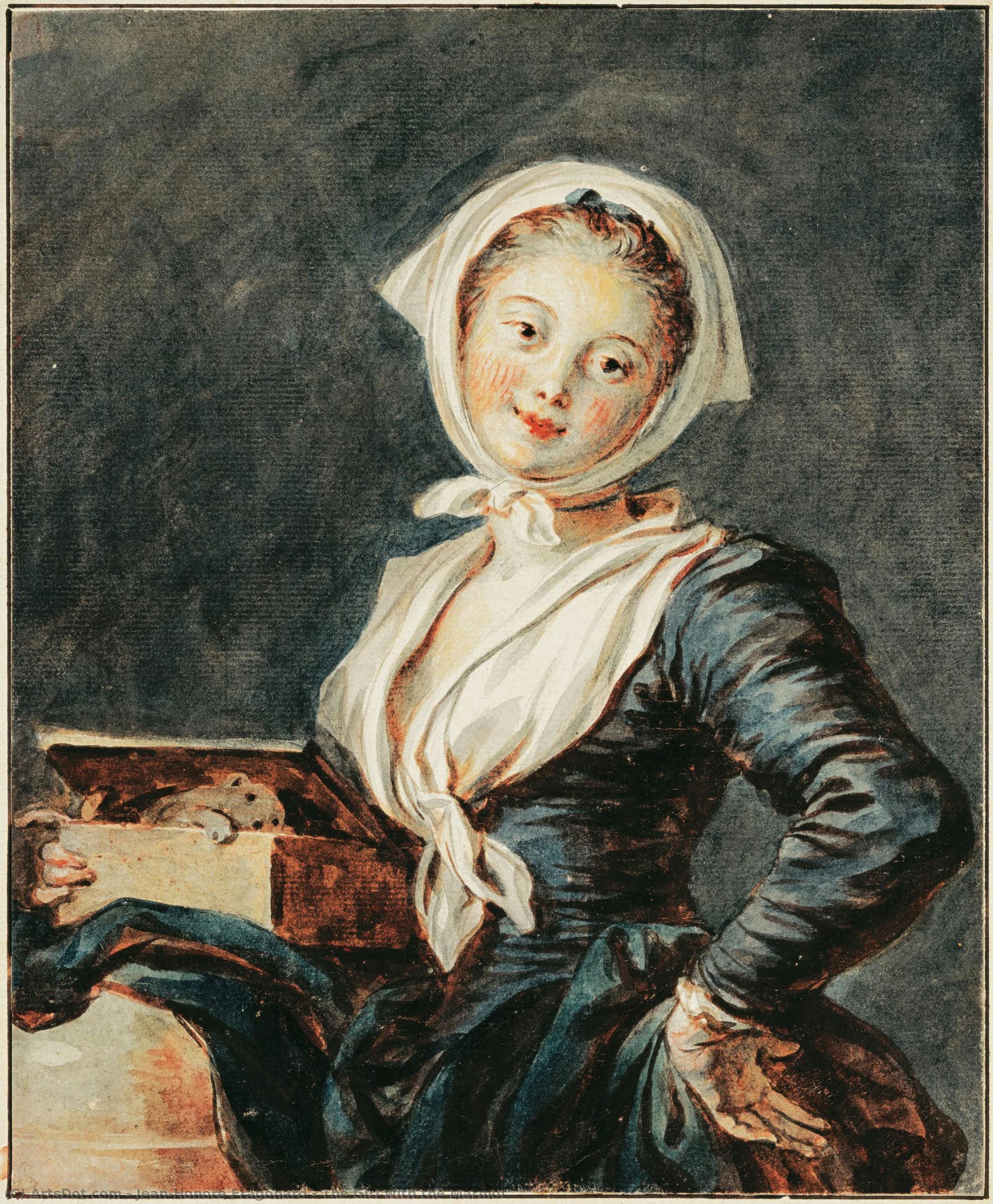
A Delicate Dance Between Light and Shadow: Exploring Jean-Honoré Fragonard’s “The Girl with the Marmot”
Jean-Honoré Fragonard’s “The Girl with the Marmot,” painted circa 1768, is more than just a portrait; it's an exquisitely crafted distillation of Rococo aesthetics—a genre characterized by opulent ornamentation, pastel hues, and a preoccupation with pleasure and frivolity. This captivating artwork resides within the Musée Fabré Gaspard in Lyon, France, where its ethereal beauty continues to enchant visitors.
Style and Technique: Embracing Pastel Perfection
Fragonard’s masterful technique exemplifies the Rococo style's commitment to illusionistic painting. He employed a delicate pastel palette—primarily shades of pink, peach, and lemon yellow—creating an atmosphere of airy lightness that contrasts sharply with the darker tones used for drapery and shadows. The artist skillfully utilized glazing techniques, layering thin washes of color over each other to achieve luminous effects and subtle gradations of tone. This meticulous approach ensured that every brushstroke contributed to the overall impression of grace and refinement.
Historical Context: Versailles and the Pursuit of Sensuality
“The Girl with the Marmot” emerged during Louis XV’s reign, a period marked by extravagant royal patronage and a fervent embrace of aristocratic hedonism. The painting reflects the prevailing cultural mood—a desire to escape the constraints of formal etiquette and indulge in sensual pleasures. Fragonard's work aligns perfectly with the artistic sensibilities of Versailles, where artists like Boucher and Watteau sought to capture fleeting moments of beauty and romance.
Symbolism: Marmots and Hidden Meanings
The inclusion of a marmot—a rodent known for its burrowing behavior—adds an intriguing layer of symbolism to the composition. Traditionally associated with fertility and prosperity, the marmot’s presence subtly underscores themes of fecundity and hidden desires. Its gaze directs towards the girl, suggesting that she possesses a secret awareness or perhaps anticipates romantic encounters. The marmot's posture is deliberately nonchalant, mirroring the carefree spirit of the Rococo era.
Emotional Impact: Capturing Transient Beauty
"The Girl with the Marmot" succeeds in conveying an overwhelming sense of serenity and delight. Fragonard’s masterful depiction captures a fleeting moment of youthful exuberance—a scene brimming with unspoken emotion. The girl's radiant smile, combined with the soft pastel colors and delicate brushwork, evokes feelings of warmth, optimism, and romantic anticipation. It is precisely this ability to distill complex emotions into visual form that secures “The Girl With The Marmot”’s place as a cornerstone of Rococo art.