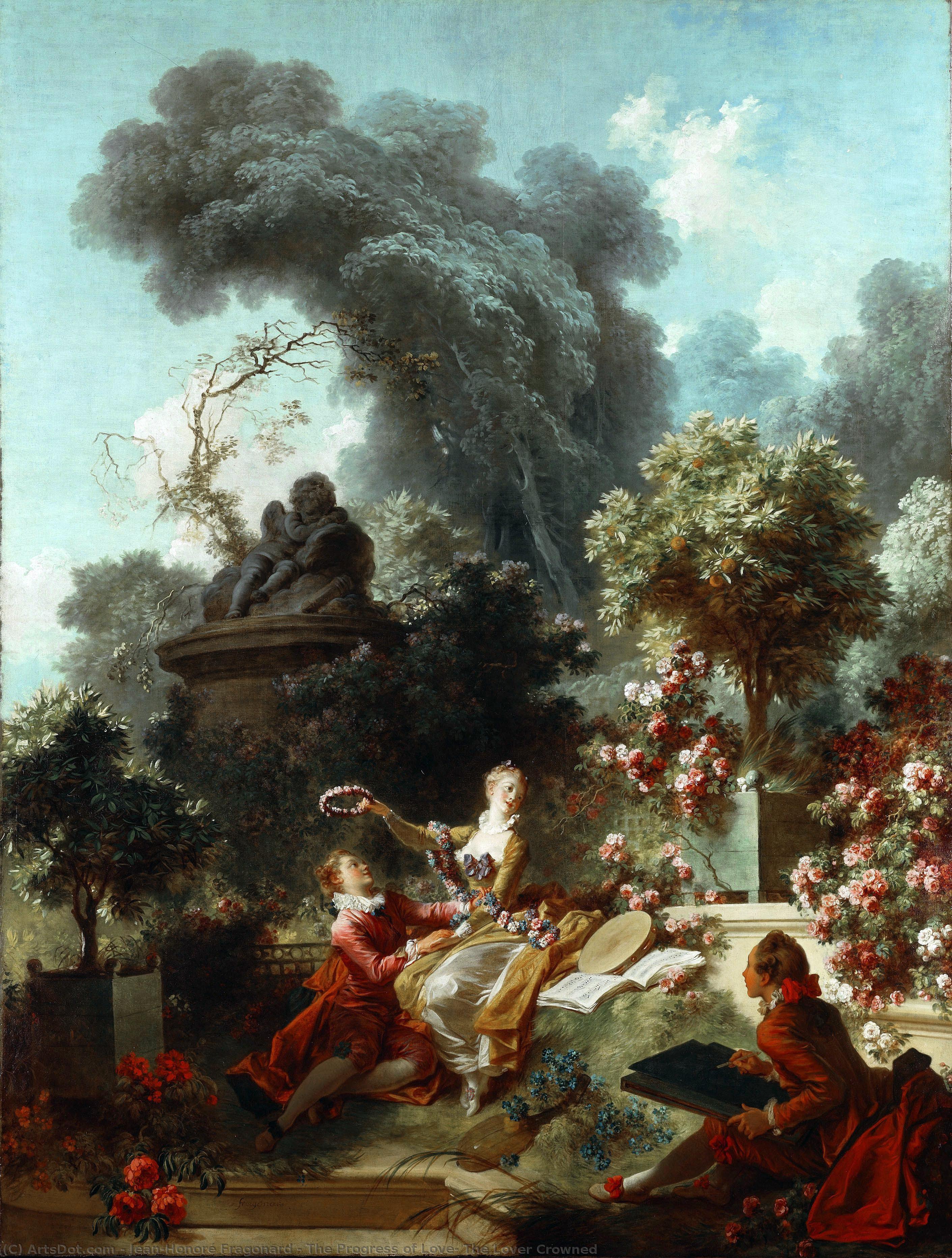
The Progress of Love: The Lover Crowned – A Rococo Reverie
Jean-Honoré Fragonard’s “The Progress of Love: The Lover Crowned,” completed in 1771, stands as a quintessential emblem of the Rococo artistic movement and a poignant reflection on the complexities of courtship during Louis XV's reign. Commissioned by Madame du Barry, the flamboyant mistress of the King, this monumental oil painting – measuring an impressive 318 x 243 cm – resides within the esteemed Frick Collection in New York City, offering visitors a privileged glimpse into a world steeped in opulent beauty and veiled sensuality.
- Composition & Setting: The canvas depicts a serene outdoor tableau featuring two lovers seated upon a stone bench adorned with an abundance of roses—a deliberate visual cue referencing the central theme of the series “The Progress of Love.” Surrounding them is a lively garden scene populated by figures engaged in animated conversations and activities, creating an atmosphere brimming with joy and celebration.
- Style & Technique: Fragonard’s masterful brushwork characterizes his distinctive Rococo style—characterized by loose, flowing lines and delicate pastel hues—a stylistic departure from the rigid formalism of Neoclassicism that dominated artistic circles at the time. The artist skillfully employs chiaroscuro (light and shadow) to sculpt form and imbue the scene with depth and realism, capturing the ephemeral beauty of a fleeting moment.
- Historical Context: “The Progress of Love” is part of a larger quartet commissioned by Madame du Barry, intended to chronicle the four stages of romantic affection—proposal, meeting, consummation, and blissful union. The series reflects the prevailing social mores of the era, where aristocratic courtship involved elaborate rituals and symbolic gestures designed to solidify bonds of affection.
- Symbolism & Imagery: The crowning gesture performed by the woman symbolizes not merely physical intimacy but also spiritual unity—a testament to the transformative power of love. Roses, universally recognized as emblems of passion and devotion, permeate the composition, reinforcing the painting’s overarching message.
- Emotional Impact: “The Progress of Love” transcends mere visual representation; it evokes a profound emotional response in viewers—capturing the tenderness, vulnerability, and exhilaration inherent in the pursuit of romantic happiness. Its enduring appeal lies in its ability to transport us back to a bygone era while simultaneously resonating with timeless themes of desire and connection.
Provenance & Legacy
The painting’s journey through history began with its initial creation for Madame du Barry, subsequently returning to Fragonard's atelier before finding its permanent home in the Wallace Collection in London. Its subsequent acquisition by J. Pierpont Morgan solidified its place as a cornerstone of American art heritage. Today, “The Progress of Love” continues to inspire artists and collectors alike—serving as a poignant reminder of the enduring beauty and expressive power of Rococo artistry.
Reproductions & Appreciation
ArtsDot offers meticulously crafted oil painting reproductions that faithfully capture the intricate details and vibrant colors of Fragonard’s masterpiece, allowing art enthusiasts to experience its splendor firsthand. These reproductions are produced using archival-quality materials—ensuring their longevity and preserving the original artwork's aesthetic integrity. Explore “The Progress of Love” – a timeless testament to romantic passion and artistic brilliance – at ArtsDot today!
Further Exploration
For deeper insights into Jean-Honoré Fragonard’s life and oeuvre, visit Jean-Honoré Fragonard: The Progress of Love: The Lover Crowned on ArtsDot. Additionally, delve into scholarly analyses examining the painting's stylistic innovations and its contribution to the broader artistic landscape of the Enlightenment period.