A Moment Frozen in Rococo Grace: Exploring Jean-Honoré Fragonard’s “The Souvenir”
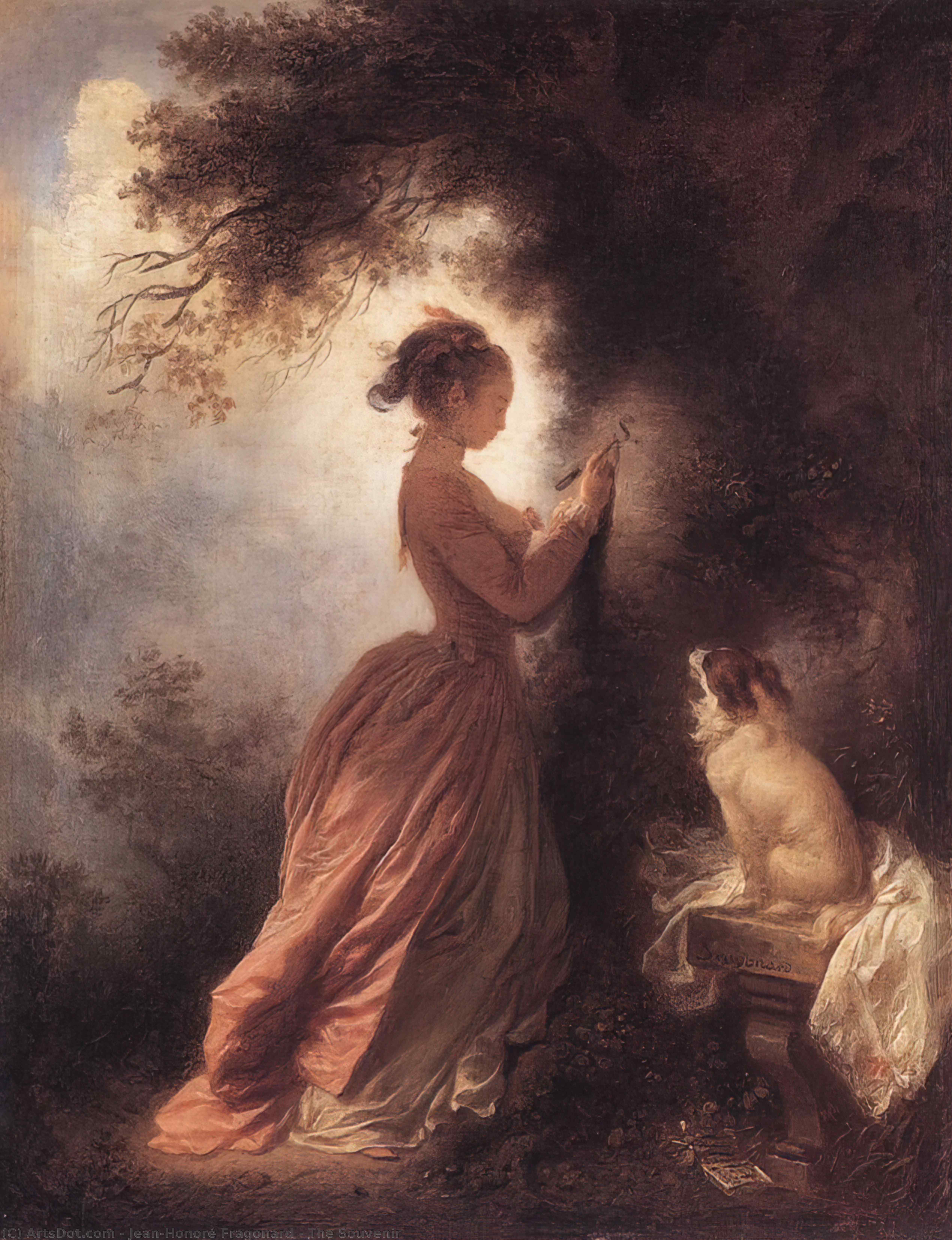
“The Souvenir,” painted by Jean-Honoré Fragonard in 1775, isn't merely a depiction of a woman and her dog; it’s an exquisitely crafted distillation of the Rococo aesthetic—a style that championed frivolity, elegance, and a celebration of sensual pleasure during Louis XV’s reign. Currently residing within the Wallace Collection’s hallowed halls in London, this unassuming canvas – measuring 25 x 19 cm – belies its profound artistic significance.
The Scene Unfolds: Observation and Illusion
Fragonard's masterful technique—characterized by loose brushstrokes and a luminous palette—immediately draws the viewer into a world of shimmering light and airy color. The composition centers around a young woman seated on a bench, her gaze fixed downwards as she holds a sparrow delicately in her hand. Beside her sits a dog, seemingly oblivious to the woman’s contemplative posture. This isn't simply a portrait; it’s an exercise in illusionistic painting—a technique perfected by artists of the era that aimed to create convincing representations of three-dimensional space on a two-dimensional surface. The dark tree trunk and branches serve as a dramatic backdrop, emphasizing the brightness of the woman and bird figures.
Symbolism Woven into Fabric
Beyond its visual beauty lies a rich tapestry of symbolism. The sparrow, often associated with springtime and renewal, represents hope—perhaps a longing for connection or remembrance. The woman’s downward gaze speaks to introspection, inviting contemplation on themes of solitude and inner peace. The bench itself symbolizes comfort and repose, reinforcing the painting's serene atmosphere. Furthermore, the inclusion of the bird suggests an awareness of nature’s beauty and its ability to inspire wonder.
Rococo’s Legacy: A Celebration of Sensuality
“The Souvenir” embodies the core tenets of Rococo art—a reaction against the formality and grandeur of Neoclassicism that preceded it. Artists like Fragonard sought inspiration from antiquity, but they rejected its rigid moral precepts in favor of a more sensual and playful approach. The delicate drapery of the woman’s dress, rendered with meticulous attention to detail, exemplifies Rococo's obsession with ornamentation and luxurious fabrics. It reflects a desire to escape the constraints of societal expectations and embrace pleasure—a sentiment that resonates powerfully even today.
A Timeless Appeal: Emotional Resonance
Ultimately, “The Souvenir” succeeds in capturing an elusive emotion—a quiet moment of beauty and contemplation amidst the bustle of aristocratic life. Fragonard’s ability to convey serenity and tenderness elevates this painting beyond mere visual spectacle; it invites viewers to share in its contemplative spirit. Its enduring appeal lies not only in its exquisite craftsmanship but also in its profound exploration of human experience—a testament to the power of art to transcend time and connect us to our deepest selves.
- Artist: Jean-Honoré Fragonard
- Year: 1775
- Location: Wallace Collection, London
- Dimensions: 25 x 19 cm
- Style: Rococo