A Symphony of Rococo Delight
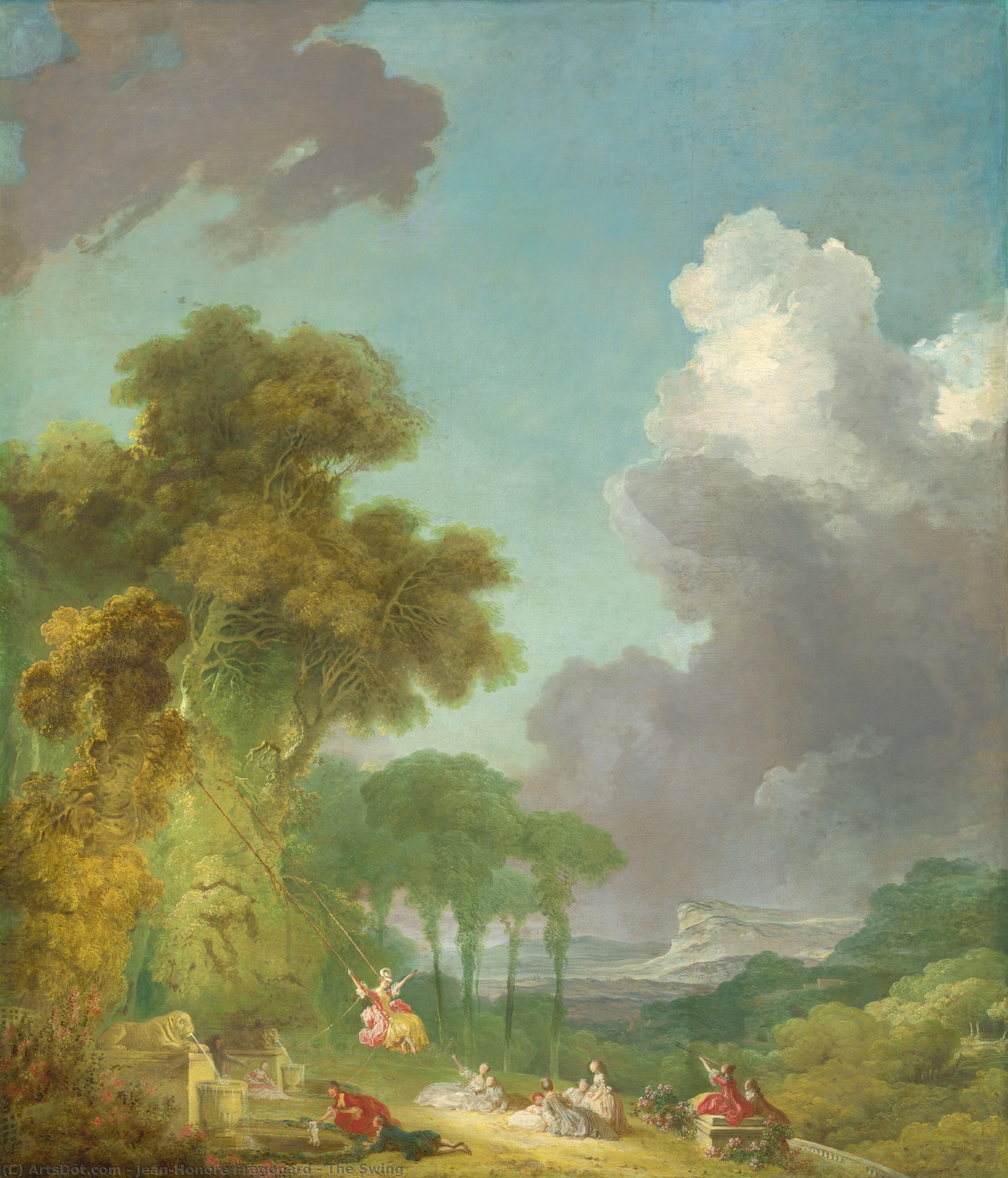
In the pantheon of French Rococo, few images capture the ephemeral essence of pleasure and play as exquisitely as Jean-Honoré Fragonard’s The Swing. This masterpiece serves as a window into an era of aristocratic indulgence, where the boundaries between nature and artifice blur into a dreamlike spectacle. As one gazes upon the canvas, the eye is immediately swept upward by the kinetic energy of a woman in a luminous, butter-pink gown, soaring through the air on a swing. The composition is a masterful dance of movement and light, set within a lush, verdant sanctuary that feels both intimately secluded and grandly theatrical. The palette, dominated by soft avocado greens, celestial aquamarine, and delicate straw yellows, creates an atmosphere of weightless enchantment, inviting the viewer to lose themselves in a moment of pure, unadulterated joy.
The technique employed by Fragonard is nothing short of virtuosic, characterized by a fluid, painterly touch that breathes life into every leaf and fold of silk. His brushwork is energetic and spontaneous, eschewing rigid lines in favor of soft, feathered edges that suggest the rustle of wind through the trees and the shimmering movement of water. This impressionistic quality predates the formal Impressionist movement by decades, showcasing a profound ability to capture light as it filters through a dense canopy. The interplay of shadow and luminosity—where sunlight pierces through heavy, ash-gray clouds to illuminate the central figure—creates a dramatic chiaroscuro effect that adds depth and a sense of theatrical staging to the garden scene.
Beyond its surface beauty, the painting is steeped in the subtle, often playful symbolism characteristic of the 18th-century French court. The lush, overgrown landscape acts as a metaphor for unbridled passion and the untamed nature of desire. Every element, from the stone lions guarding the garden entrance to the figures peering through telescopes, suggests a world of voyeurism and secret delights. The presence of the small white dog and the scattered groups of elegantly dressed onlookers adds layers of social narrative, hinting at the complex etiquette and hidden romances of the era. For the discerning collector or interior designer, this piece offers more than mere decoration; it provides a focal point of profound emotional resonance, evoking a sense of nostalgia for a lost age of elegance and grace.
Integrating a high-quality reproduction of The Swing into a contemporary space allows for a sophisticated dialogue between historical grandeur and modern aesthetics. Whether placed in a sun-drenched morning room to enhance a sense of airy lightness, or used as a bold statement piece in a formal dining hall, the painting commands attention through its vibrant color story and narrative complexity. It is an investment in atmosphere, bringing the timeless, romantic spirit of Fragonard’s genius into the heart of the home, transforming any interior into a sanctuary of cultured beauty and whimsical charm.