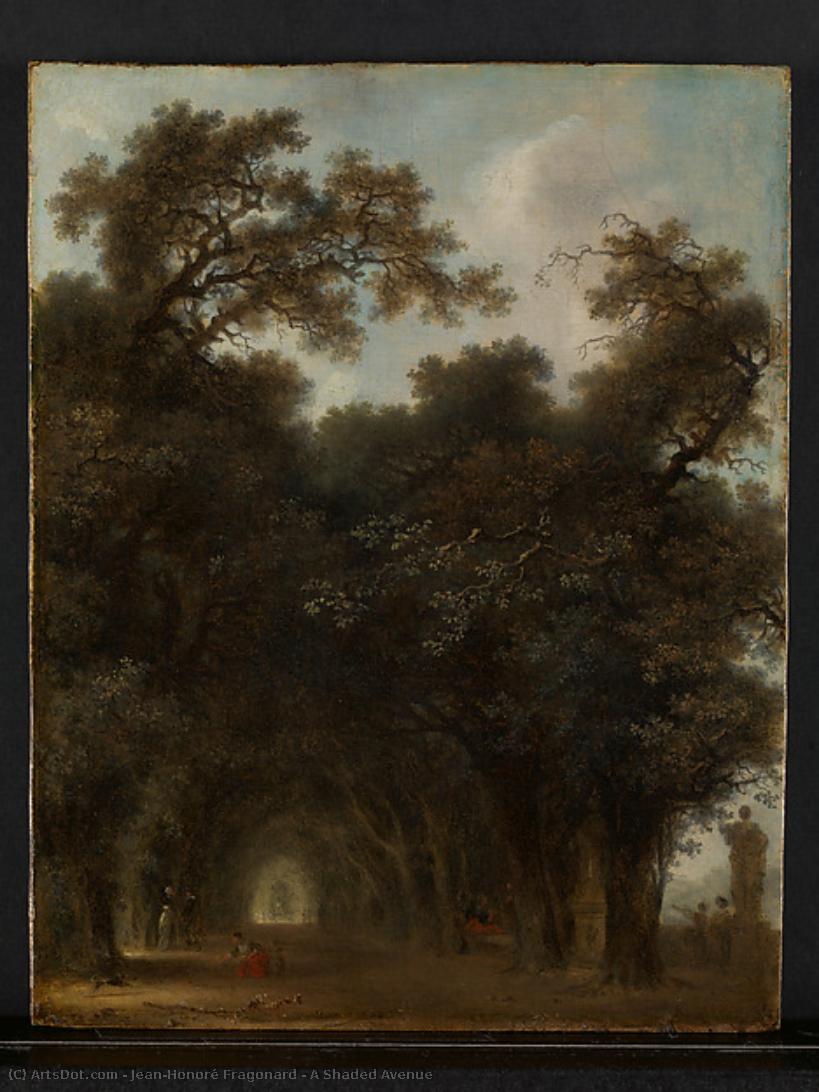
A Whisper of Forest Serenity: The Soul of Fragonard’s Monochrome Vision
In the vast tapestry of the Rococo era, where gold leaf and opulent grandeur often dominated the visual landscape, Jean-Honoré Fragonard’s "Untitled (D2X67J)" emerges as a profound breath of quietude. Executed in 1775, this masterpiece transcends the mere depiction of a French woodland; it serves as an intimate window into a world of tranquil contemplation. While many of his contemporaries sought to overwhelm the viewer with theatricality, Fragonard invites us into a space of stillness. The painting captures a moment where time seems to suspend itself among the trees, offering a sanctuary of peace that remains as captivating today as it was in the late eighteenth century. For the discerning collector or interior designer, this piece offers more than just visual beauty; it provides an emotional anchor, a sense of serenity that can transform any sophisticated space into a meditative retreat.
The technical brilliance of this work lies in Fragonard’s masterful command over a restrained palette. Though often associated with the pastel flourishes of the Rococo, here he utilizes a primarily monochrome approach to sculpt light and shadow with surgical precision. Through the delicate application of hatching and cross-hasting, the artist breathes life into the rugged textures of tree trunks and the soft, dappled light filtering through the canopy. Subtle, strategic washes of green and brown are woven into the composition, providing just enough vitality to suggest the lushness of the forest without disrupting the dominant, elegant monochromatic aesthetic. This interplay of light and dark creates a rhythmic depth, guiding the eye along winding pathways where figures wander, lost in their own quiet narratives.
Historical Echoes and the Allure of the Pastoral
To understand the impact of "Untitled (D2X67J)," one must look toward the historical backdrop of Louis XV’s France. During an age defined by the extravagant celebrations of Versailles, Fragonard’s focus on a pastoral, almost monastic stillness offered a compelling counterpoint to the era's outward decadence. The painting taps into the deep-seated cultural preoccupation with pastoral ideals—the romanticized longing for a simpler, more natural existence away from the rigid structures of court life. The figures scattered throughout the woods are not mere decorations; they represent the human desire for connection with nature and the pursuit of refined, understated pleasure.
For those looking to integrate fine art into modern interiors, this work offers a unique versatility. Its sophisticated use of black, white, and muted earth tones allows it to harmonize seamlessly with both classical and contemporary decor. Whether placed in a minimalist gallery-style room or a richly textured traditional study, the painting acts as a focal point of understated luxury. It does not demand attention through loud colors, but rather earns it through its profound atmospheric depth and the timeless elegance of Fragonard’s hand. Owning a reproduction of such a significant work is an opportunity to possess a fragment of history—a piece that celebrates the enduring power of nature and the quiet beauty found in the shadows of the forest.