A Window Into Versailles: The Grandeur of Rousseau’s Vision
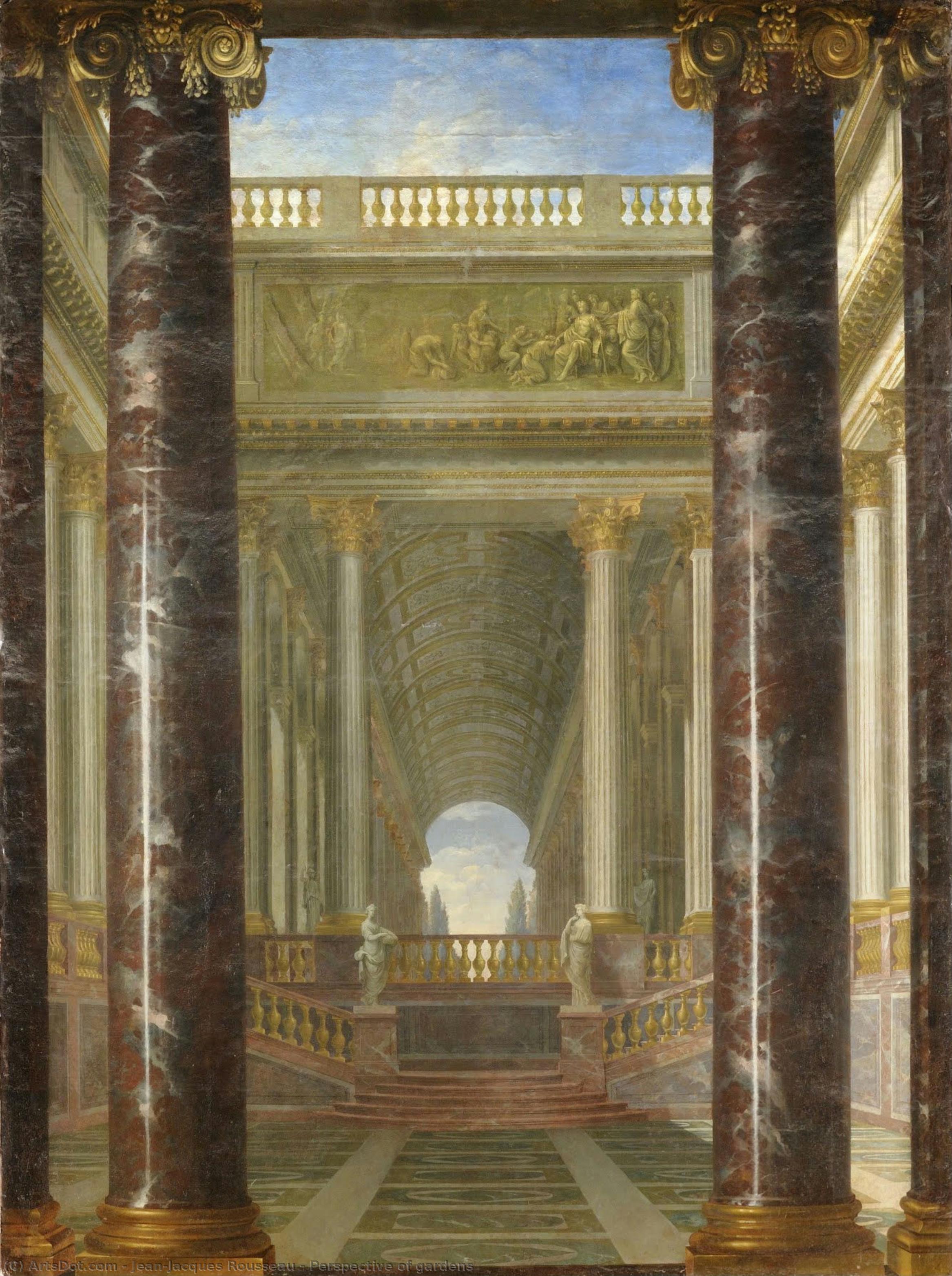
In the heart of the French Baroque era, few works capture the intersection of royal absolute power and the sublime beauty of nature as profoundly as Jean-Jacques Rousseau’s "Perspective of gardens." Painted circa 1674, this monumental oil on canvas serves as more than a mere landscape; it is an immersive portal into the meticulously orchestrated splendor of Versailles. As one gazes upon the composition, they are immediately drawn into a long, majestic hallway lined with imposing columns that frame a breathtaking vista. The painting does not simply show a garden; it invites the viewer to walk through a threshold of architectural triumph, where the structured elegance of man-held stone meets the untamed vitality of the verdant world beyond.
The atmosphere is one of profound sophistication and quiet opulence. Scattered throughout the scene, classical statues and intricate sculptures stand as silent sentinels of history, lending an air of mythological importance to the landscape. A subtle inclusion of a clock within the hallway serves as a poignant reminder of the passage of time, grounding the eternal beauty of the gardens in the fleeting reality of human existence. For the discerning collector or interior designer, this piece offers a sense of timelessness, making it an ideal centerpiece for spaces that demand a touch of classical dignity and intellectual depth.
Mastery of Light and Baroque Elegance
Rousseau’s technical prowess is on full display through his masterful use of chiaroscuro. By manipulating the dramatic interplay between deep shadows and brilliant highlights, the artist sculpts the garden vista with a three-dimensional intensity that feels almost tactile. The light does not merely illuminate; it directs the eye, dancing across the textured foliage and reflecting off the surfaces of water features to create a sense of rhythmic movement. Each thick, deliberate brushstroke contributes to a dynamic energy, capturing the rustle of leaves and the shimmering quality of light filtering through the architectural colonnades.
This technique is quintessential to the Baroque style, designed to evoke an emotional response of awe and wonder. The meticulous attention to detail—from the weathered texture of the stone columns to the delicate rendering of the distant greenery—reflects a fascination with illusionistic perspective. This ability to create depth and scale allows the artwork to transform any room, providing a visual expansion that breathes life and grandeur into contemporary or classical interiors alike.
Symbolism and the Harmony of Existence
Beyond its aesthetic brilliance, "Perspective of gardens" is steeped in the philosophical tensions of its time. During the reign of Louis XIV, the gardens of Versailles were engineered as instruments of propaganda, symbolizing the monarch's divine ability to impose order upon the natural world. Rousseau captures this tension between control and freedom, presenting a landscape where the rigid geometry of architecture and the organic flow of nature exist in a delicate, harmonious balance. The statues, likely representing allegorical virtues or mythological deities, further reinforce this narrative of a world governed by both intellect and instinct.
For those seeking to adorn their homes with art that speaks to the soul, this painting offers a rich tapestry of meaning. It is a meditation on the relationship between humanity and the environment, a celebration of order, and an invitation to contemplate the sublime. Owning a high-quality reproduction of this masterpiece allows one to bring the intellectual fervor of the Enlightenment and the breathtaking majesty of the French Baroque into the modern living space, fostering an environment of inspiration, peace, and enduring elegance.