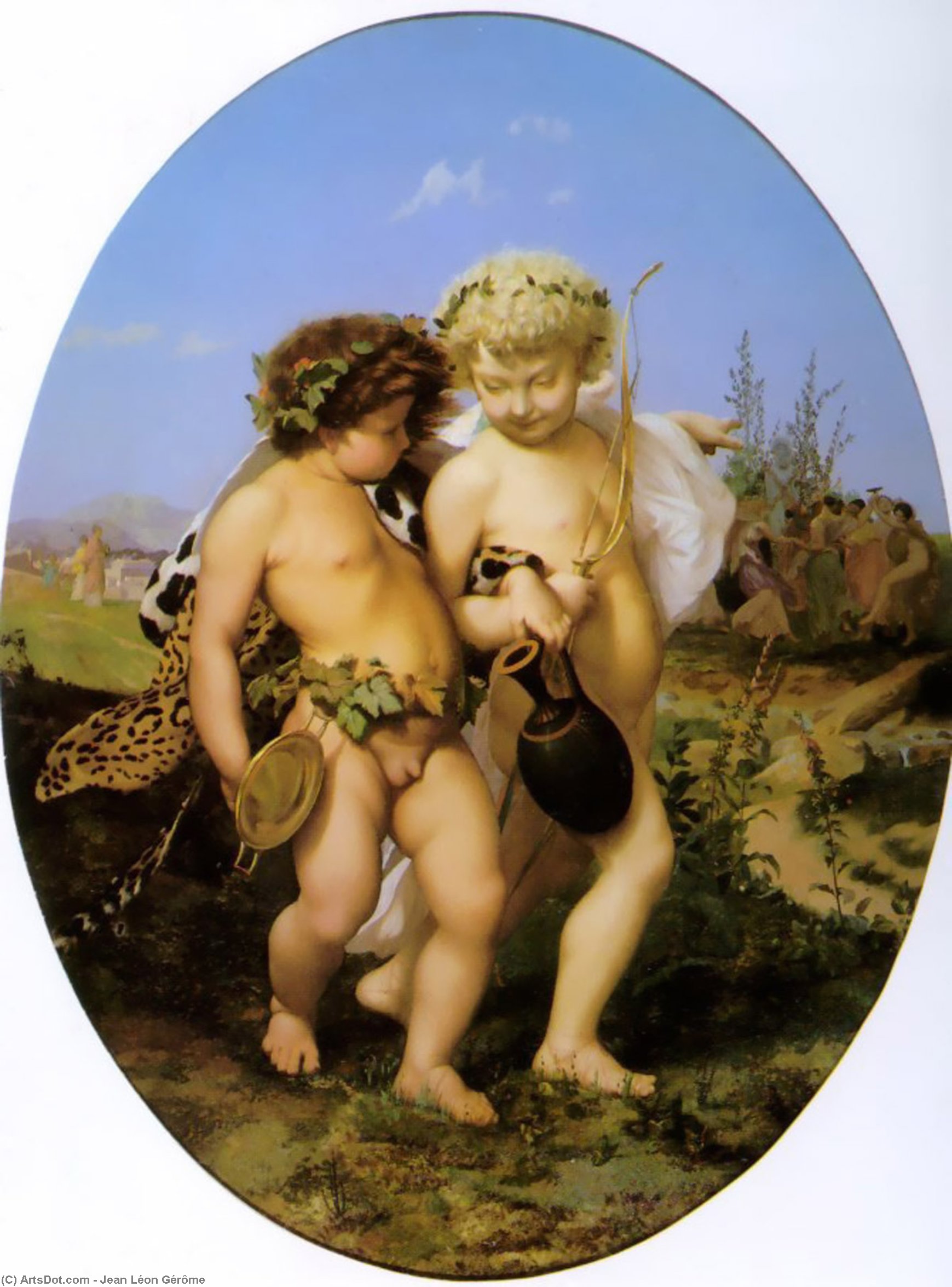
The Drunken Bacchus and Cupid: A Celebration of Myth and Academic Mastery
Jean Léon Gérôme’s “Drunken Bacchus and Cupid,” painted in 1850, is more than just a depiction of the Greek god Dionysus indulging with his divine counterpart, Cupid. It's a meticulously crafted testament to the enduring power of Neoclassical ideals within the vibrant landscape of 19th-century French art. This oil on canvas masterpiece, currently residing in the Musée des Beaux-Arts de Bordeaux, offers a captivating glimpse into a world where mythology and artistic skill converged to create an image of unparalleled detail and emotional resonance.
- Subject Matter: The painting’s core narrative revolves around the iconic pairing of Bacchus (Dionysus), god of wine and revelry, and Cupid, the embodiment of love. Their playful interaction – a scene of apparent intoxication and shared joy – immediately draws the viewer into a world of ancient mythology.
- Style & Technique: Gérôme’s approach firmly anchors this work within the Academicism style, a movement characterized by its commitment to historical subjects, precise realism, and masterful brushwork. The smooth, polished surfaces achieved through meticulous layering of oil paint demonstrate an exceptional command of technique. Notice the subtle gradations in color, creating a sense of volume and depth that is characteristic of the era’s most accomplished artists.
- Composition: The circular composition directs the eye across the scene, emphasizing the central figures while subtly incorporating a distant landscape – a common feature in academic paintings designed to evoke a sense of vastness and timelessness.
Decoding Symbolism and Narrative
Beyond its immediate visual appeal, “Drunken Bacchus and Cupid” is rich with symbolic meaning. The depiction of Bacchus, often associated with excess and liberation, speaks to the human desire for pleasure and escape from societal constraints. Cupid, ever present, represents not just romantic love but also the capricious nature of fate and divine intervention. The lush landscape surrounding the figures – a carefully rendered representation of idealized beauty – further reinforces this sense of idyllic harmony. Floral wreaths adorning their heads are potent symbols of divinity and grace, elevating the scene to a realm beyond mere earthly revelry.
- Color Palette: Gérôme’s masterful use of color contributes significantly to the painting's emotional impact. Rich reds, golds, and browns dominate, evoking warmth, sensuality, and the intoxicating effects of wine.
- Light & Shadow: The soft, diffused lighting creates a sense of atmosphere and drama, highlighting the figures’ forms and enhancing their expressions.
Historical Context and Artistic Significance
Created in 1850, “Drunken Bacchus and Cupid” reflects the broader artistic trends of its time – a period marked by a renewed interest in classical antiquity and a desire to emulate the achievements of the Old Masters. Jean-Léon Gérôme was one of the most celebrated artists of his era, renowned for his ability to capture historical scenes with breathtaking realism and dramatic flair. His work served as an important bridge between Neoclassicism and Romanticism, demonstrating a commitment to both traditional techniques and innovative storytelling. The painting’s enduring appeal lies in its ability to transport viewers to another time and place, inviting them to contemplate the timeless themes of love, pleasure, and divine intervention.
ArtsDot.com offers meticulously crafted hand-painted reproductions of this iconic artwork, allowing you to bring a piece of art history into your home or office. Each reproduction is created using archival quality materials, ensuring that it will retain its beauty and vibrancy for generations to come.