Discover Jean-Léon Gérôme (1824-1904), a master of 19th-century French painting renowned for detailed historical & Orientalist scenes, dramatic narratives, and influence on artists like Sargent & Cassatt.
Explore world-class art at the Museum of Fine Arts, Boston! Discover masterpieces spanning cultures & centuries in this iconic institution's stunning collection and historic building.
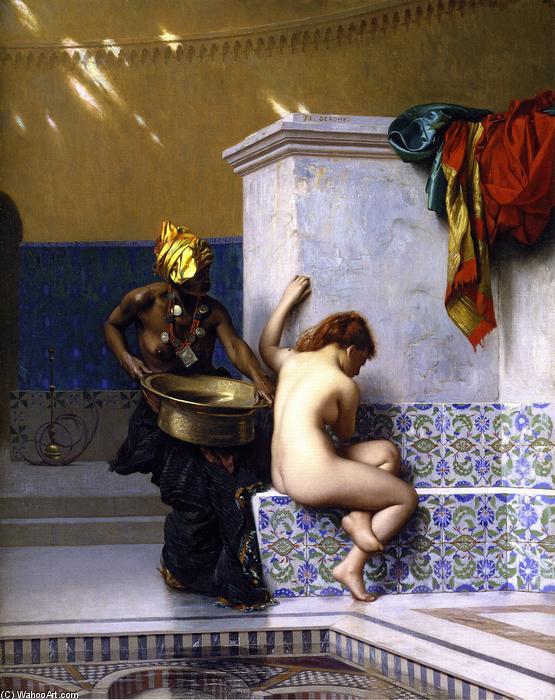
Moorish Bath (also known as Lady of Cairo Bathing) – A Window Into Victorian Exoticism
Jean Léon Gérôme’s *Moorish Bath*, completed in 1872, stands as a cornerstone of Academic Impressionism and a testament to the artist's unparalleled ability to distill the grandeur and allure of Oriental culture into meticulously rendered visual form. More than just a depiction of daily life—it’s an invitation to step back in time and contemplate the societal values and artistic conventions that defined Victorian Europe.
- Historical Context: Painted during the height of Orientalism, a movement fueled by European fascination with the East, *Moorish Bath* reflects anxieties about gender roles and colonial expansion alongside romanticized visions of opulent harems. The painting emerged from a period marked by intense scientific inquiry into anatomy and physiology—Gérôme’s anatomical precision underscores his commitment to realism while simultaneously serving as a conduit for broader cultural debates about representation.
- Artistic Style: Gérôme's approach aligns perfectly with Academic Impressionism, prioritizing accuracy and detail over fleeting impressions. However, unlike Impressionists who sought to capture atmospheric effects, he meticulously recreated the textures of tile, fabric, and skin—a deliberate choice designed to convey a sense of tangible presence and evoke emotional response.
- Composition & Technique: The painting utilizes oil on canvas with masterful brushstrokes that illuminate the interplay of light and shadow within the bathhouse interior. Gérôme’s meticulous attention to detail extends beyond mere representation; he employs subtle gradations of color and texture to create a palpable atmosphere of warmth, luxury, and tranquility.
- Symbolism: Beyond its surface beauty, *Moorish Bath* operates on multiple symbolic levels. The bathing ritual itself represents purification and social propriety—values central to Moorish culture as perceived by Victorian observers. Furthermore, the positioning of the figures—the woman at the center, attended by servants—reinforces hierarchical structures characteristic of the era.
- Emotional Impact: Gérôme’s work transcends mere visual spectacle; it evokes a profound sense of nostalgia for a bygone age and prompts contemplation about cultural differences. The painting's serene setting contrasts sharply with the anxieties surrounding colonialism, inviting viewers to consider the complexities of European engagement with Eastern cultures.
A Detailed Examination of Gérôme’s Method
Gérôme’s artistic process was characterized by exhaustive research and painstaking preparation. He consulted anatomical atlases and ethnographic studies to ensure accurate depictions of human anatomy and Moorish customs. Sketches and photographs served as invaluable guides for capturing the nuances of light and texture—techniques honed through years of experience. The artist skillfully employed chiaroscuro, manipulating tonal values to sculpt form and create dramatic depth within the composition.
- Anatomical Precision: Gérôme’s anatomical knowledge is evident in the graceful posture of the woman bathing and the careful rendering of musculature—a hallmark of Academic training.
- Texture Rendering: The artist meticulously recreated the textures of tile, fabric, and skin using layering techniques and subtle brushstrokes—resulting in a surface that feels remarkably tactile.
- Light & Shadow Play: Gérôme’s masterful use of chiaroscuro enhances the painting's dramatic impact, casting warm light on the woman’s face and highlighting the contours of her body.
The Legacy of *Moorish Bath* – Inspiration Beyond Its Time
Despite its historical context—and its problematic representations of gender and race—*Moorish Bath* continues to captivate audiences today. Its influence can be seen in countless artistic reproductions and, notably, in the film *Gladiator*, where Commodus’s gesture mirrored Gérôme's iconic pose. The painting serves as a powerful reminder of the enduring fascination with exotic cultures and the transformative potential of art to convey complex ideas about identity and social values. Its meticulous realism and evocative atmosphere solidify its place as an unforgettable masterpiece of Victorian Art.