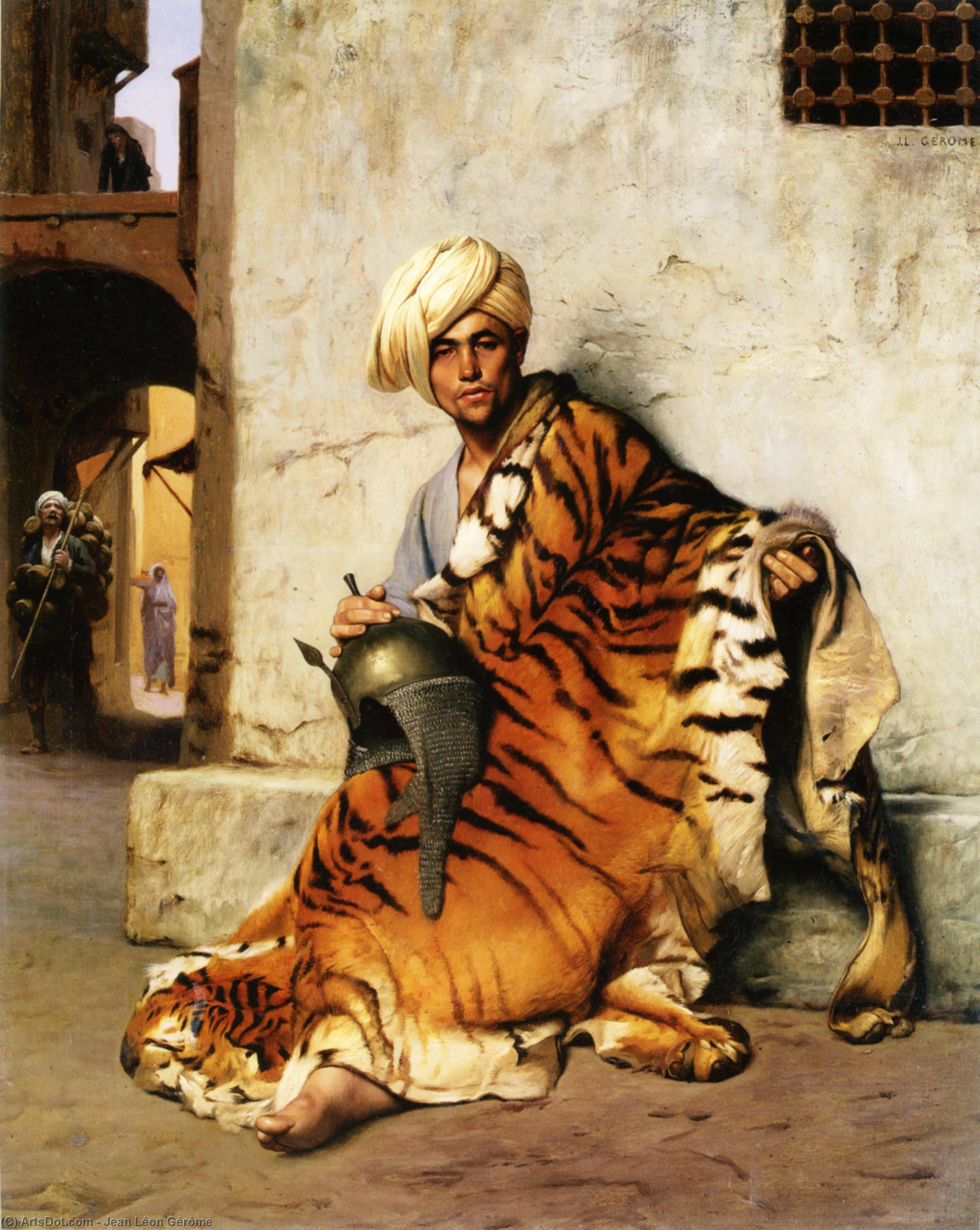
Jean-Léon Gérôme’s Pelt Merchant transports viewers into 19th-century Egypt with breathtaking detail—a masterful Academic painting depicting a pelt merchant and majestic tiger amidst bustling marketplaces, inviting you to explore this iconic masterpiece.
Discover Jean-Léon Gérôme (1824-1904), a master of 19th-century French painting renowned for detailed historical & Orientalist scenes, dramatic narratives, and influence on artists like Sargent & Cassatt.
A Window Into Ancient Egypt: Jean Léon Gérôme’s Pelt Merchant
Jean Léon Gérôme's *Pelt Merchant, Cairo*, painted in 1880, isn’t merely a depiction of an Egyptian marketplace; it’s a masterful distillation of the Academic style—a deliberate choice that speaks volumes about the artistic sensibilities of its time and continues to resonate with viewers today. The painting immediately draws the eye into a meticulously crafted tableau, transporting us back to the bustling streets of Victorian Egypt, fueled by Gérôme's extensive expeditions during which he absorbed the sights and sounds of this fascinating civilization.
Composition and Setting: Drama Encapsulated
The artist’s compositional genius lies in its ability to convey both grandeur and intimacy simultaneously. At the center sits a pelt merchant, positioned cross-legged on the ground—a posture that subtly communicates humility amidst opulent surroundings. Beside him rests a magnificent tiger, symbolizing power and majesty, yet rendered with astonishing realism thanks to Gérôme's unwavering commitment to observation. The background is populated by figures engaged in everyday activities – traders haggling, travelers observing – creating a palpable sense of atmosphere and immediacy. Notably, a horse is strategically placed near the right edge, anchoring the composition and adding another element of visual interest.
The Academic Technique: Precision and Illusion
Gérôme’s technique exemplifies the tenets of Academic painting. He employed oil paints on canvas with painstaking detail, layering pigments to achieve textures that convincingly mimic the appearance of fur—a feat accomplished through meticulous blending and glazing. The artist skillfully utilized chiaroscuro – dramatic contrasts between light and dark – to sculpt form and heighten emotional impact. This masterful manipulation of light creates an illusionistic depth, pulling the viewer into the scene and fostering a profound connection with the depicted environment.
Historical Context: Inspiration from Exploration
Gérôme’s fascination with Egypt stemmed from his voyages undertaken between 1855 and 1860. These expeditions provided him with invaluable visual material—photographs, sketches, and artifacts—which served as inspiration for his artistic endeavors. *Pelt Merchant,* Cairo isn't simply a record of observation; it’s infused with symbolic meaning. The tiger represents royalty and dominance, mirroring the hierarchical structure of Egyptian society. Furthermore, the merchant embodies shrewdness and practicality – qualities valued in both historical narratives and contemporary art appreciation.
Legacy and Relevance Today
Works by Jean Léon Gérôme hold a prominent place in museum collections globally, including The Museum Syracuse University Art Collection in the United States. Reproductions of *Pelt Merchant,* Cairo offer collectors and interior designers alike an opportunity to experience the enduring beauty and intellectual depth of Academic art. Its dramatic composition, masterful technique, and evocative portrayal of Egyptian culture continue to inspire admiration and provide a captivating glimpse into a bygone era—a testament to Gérôme’s artistic vision and its lasting impact on the history of painting.