A Glimpse into the Artist's Soul: Analyzing Self-Portrait Painting The Ball Player
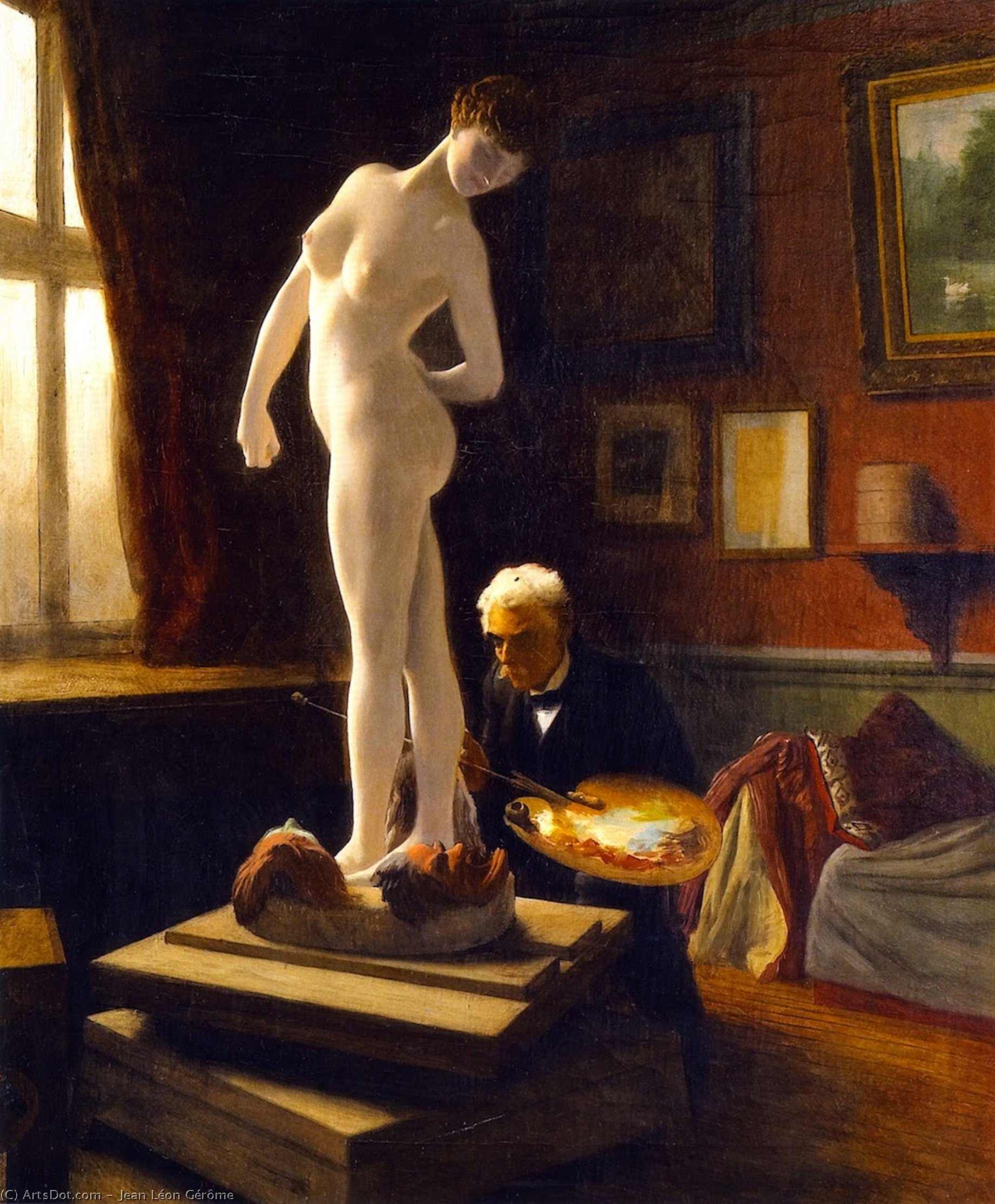
To stand before Jean Léon Gérôme’s Self-Portrait Painting The Ball Player is to step directly into the vibrant, yet intensely focused, atmosphere of a nineteenth-century Parisian atelier. This oil on canvas from 1902 is far more than a mere record of an artist at work; it is a profound meditation on creation itself. Gérôme, whose career spanned the height of academic painting, gifts us here not only with his masterful technique but also with an intimate glimpse into the very process of artistic genius. The composition immediately draws the eye to the central figure—the self-portraitist—who stands in thoughtful contemplation beside a classical statue of a nude woman. His posture suggests a moment suspended between observation and inspiration, holding a brush as if it were an extension of his own intellect.
Mastery of Detail and Light: Technical Brilliance
Gérôme’s signature strength, the meticulous rendering of detail, is on full display here. The application of oil paint lends a palpable depth to every surface, from the sheen on the polished floor to the subtle musculature suggested by the marble statue. One can almost feel the texture of the canvas beneath the layers of pigment. Notice how the light interacts with the various elements: it catches the curve of the statue’s form, illuminates the concerned expressions of the surrounding figures—some observing, some perhaps waiting their turn—and settles softly upon the artist's own hands. This masterful handling of chiaroscuro is what elevates the piece from a simple genre scene to a work of enduring technical brilliance.
The Allure of the Artistic Environment and Symbolism
The setting itself speaks volumes about the culture that nurtured Gérôme. The presence of the classical sculpture, juxtaposed with the contemporary figures and the scattered art supplies near the base, creates a rich dialogue between antiquity and modern endeavor. The nude statue often symbolizes idealized beauty or the muse herself—the unattainable standard against which all art is measured. By placing himself in this context, Gérôme subtly positions himself within a grand tradition of Western art history. It suggests that his own act of painting is not merely decoration, but an intellectual engagement with timeless themes of form, beauty, and human experience.
An Emotional Resonance for the Modern Collector
For the contemporary collector or designer, this piece offers more than just aesthetic appeal; it offers narrative depth. It speaks to the universal struggle and triumph inherent in any creative pursuit. Owning a reproduction allows one to bring the sophisticated drama of Gérôme’s world into your own space. Whether placed in a formal drawing-room where history is appreciated, or in a study dedicated to contemplation, Self-Portrait Painting The Ball Player serves as a powerful reminder that art requires both rigorous skill and an open heart. It invites viewers not just to look at the painting, but to participate in its quiet, thoughtful drama.