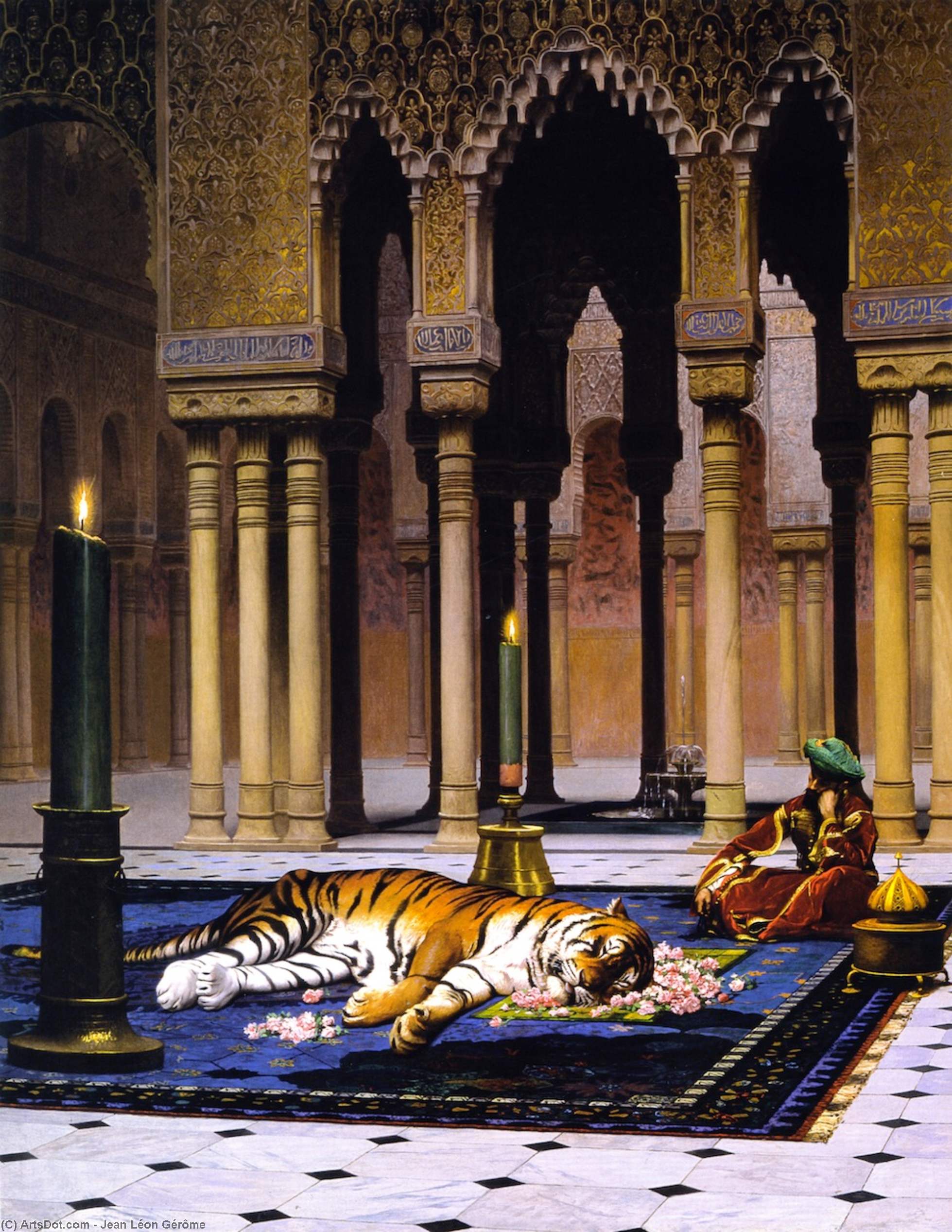
Jean-Léon Gérôme’s *The Pasha’s Sorrow* (Dead Tiger): A Window into an Exotic World
“The Pasha’s Sorrow,” also known as “Dead Tiger,” is more than just a painting; it's a meticulously crafted portal to the 19th century, a testament to Jean-Léon Gérôme’s mastery of Orientalist art and his ability to evoke profound emotion through detailed observation. Created in 1885, this oil on canvas work, now residing within the esteemed collection of the Joslyn Art Museum in Omaha, continues to captivate viewers with its dramatic narrative and evocative atmosphere. Gérôme, a pivotal figure in French academic painting, wasn't simply depicting a scene; he was constructing an experience – one steeped in the exoticism and perceived mystery of the Middle East.
A Study in Realism and Narrative
Gérôme’s style is immediately recognizable: characterized by an almost obsessive attention to detail. He achieved this through rigorous training at the École des Beaux-Arts, absorbing the classical principles of composition and perspective while forging his own path. *The Pasha's Sorrow* exemplifies this approach. The tiger itself – a symbol of power, ferocity, and even royalty – is rendered with astonishing realism, its fur meticulously brushed, its posture conveying both lethargy and a lingering dignity. Notice how the artist doesn’t shy away from portraying death; it’s not romanticized but presented with stark honesty. This commitment to realism was crucial to Gérôme's success, allowing him to create scenes that felt utterly believable, transporting the viewer directly into the heart of the depicted world.
Symbolism and Context within Orientalist Art
The painting’s setting is equally significant. The opulent room – complete with a richly patterned rug, towering pillars, and flickering candles – speaks to the wealth and power associated with the Pasha, a title often used for Ottoman governors. This was a period of intense fascination with the Middle East within European art circles, fueled by colonial expansion and romanticized notions of “the Orient.” Orientalist art, as a genre, frequently explored themes of adventure, exoticism, and the clash between Eastern and Western cultures – though it’s important to acknowledge that these depictions were often filtered through a European lens, sometimes perpetuating stereotypes. The presence of the person observing the tiger adds another layer of interpretation; are they a grieving relative? A scholar studying the animal? The ambiguity invites contemplation.
Technique and Emotional Impact
Gérôme’s masterful use of oil on canvas allows for an incredible depth of color and texture. The subtle gradations in tone create a sense of volume, particularly evident in the tiger's fur and the folds of the rug. The candlelight casts dramatic shadows, intensifying the scene’s melancholic mood. The overall effect is profoundly moving – a poignant meditation on mortality, loss, and perhaps even the tragic beauty of a creature brought low. The painting’s enduring appeal lies not just in its technical brilliance but also in its ability to evoke a powerful emotional response.
Own a Piece of History: Hand-Painted Reproductions Available
At ArtsDot.com, we are proud to offer meticulously crafted, hand-painted oil painting reproductions of *The Pasha’s Sorrow*. These reproductions capture the essence of Gérôme's original masterpiece, allowing you to bring this iconic work into your home or office. Explore other exceptional works by Jean-Léon Gérôme and discover a world of artistic beauty – visit ArtsDot.com or explore related works on Wikipedia.org for further insights.