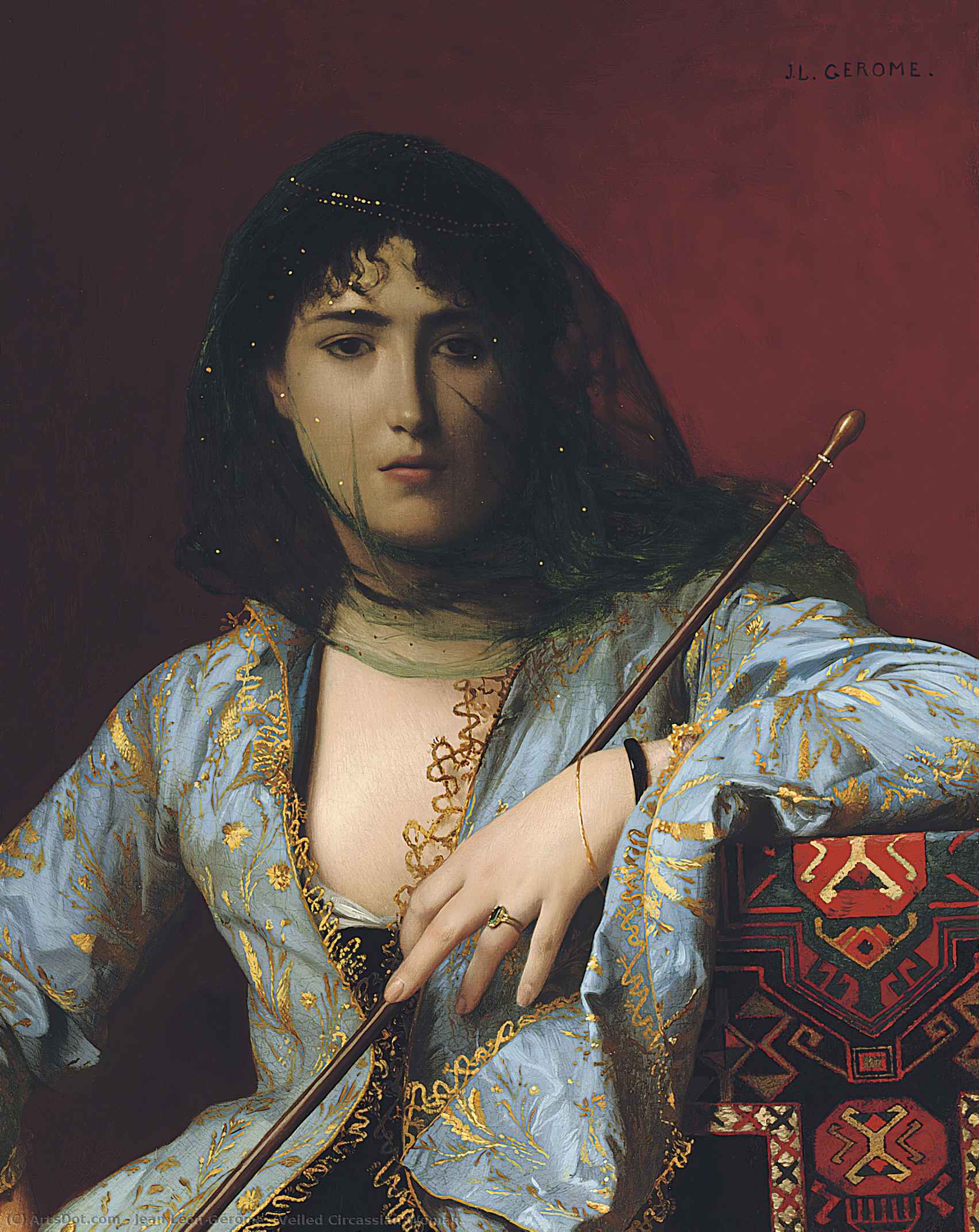
A Portrait of Elegance and Melancholy: Jean-Léon Gérôme’s Veiled Circassian Woman
Jean-Léon Gérôme stands as a titan amongst the luminaries of French Academic painting, an artist whose unwavering dedication to meticulous detail transformed historical narratives into breathtaking visual experiences. Born in Vesoul in 1824, his artistic apprenticeship began with Claude-Basile Cariage, fostering a talent that would blossom into a career marked by unparalleled acclaim. Moving to Paris at sixteen, he honed his skills under the tutelage of Paul Delaroche, absorbing the foundational tenets of classical training before forging his own distinctive path within the École des Beaux-Arts. Unlike many contemporaries who sought merely to replicate established conventions, Gérôme championed a revolutionary approach—a masterful fusion of realism and dramatic storytelling that cemented his reputation as one of the era’s foremost artists.
- Early Recognition: His breakout success with *The Cock Fight* in 1847 immediately propelled him to prominence, establishing him as a force within the Parisian art scene.
- Delaroche's Influence: Studying under Delaroche instilled in Gérôme a profound understanding of historical painting’s conventions—a knowledge he skillfully adapted and expanded upon.
The Narrative Power of Detail: Artistic Technique and Composition
Gérôme’s artistic brilliance resided not just in his technical prowess but also in his compositional genius. He meticulously crafted scenes imbued with palpable emotion, utilizing a technique characterized by layering thin glazes of paint to achieve luminous effects—a hallmark of Academic painting's pursuit of idealized beauty. The artwork itself, *Veiled Circassian Woman*, exemplifies this approach perfectly. Observe the painstaking rendering of fabric folds, jewelry embellishments, and facial contours; each element contributes to an overwhelming sense of realism. Lines are strategically deployed to guide the viewer’s eye across the canvas, emphasizing depth and creating a captivating interplay between light and shadow. The directional lighting—originating from above and slightly to the left—casts dramatic shadows that heighten the subject's presence and underscore the artwork’s melancholic mood.
Historical Context: Exoticism and Romantic Idealization
The painting emerged during the height of Romantic idealism, a period captivated by fascination with distant lands and cultures – specifically the Ottoman Empire. Gérôme skillfully captured this spirit, presenting a portrait of Circassian nobility—women renowned for their beauty and modesty—within a richly ornamented interior. This deliberate choice reflects the broader artistic trends of the time: artists sought to elevate subjects through idealized representations, often incorporating symbolic elements that conveyed moral lessons or evoked emotional responses. The inclusion of a violin serves as a poignant reminder of artistic expression and adds another layer of meaning to the composition.
Symbolism Beyond Surface Beauty
Beyond its visual splendor lies a wealth of symbolism. The veil itself represents not merely concealment but also reverence for tradition and spiritual purity—themes central to Romantic sensibilities. Simultaneously, the woman’s gaze directs the viewer's attention inward, prompting contemplation on themes of femininity, vulnerability, and inner grace. These subtle gestures contribute to the artwork’s enduring emotional impact, inviting viewers to engage with its narrative depth.
A Legacy of Artistic Excellence: Gérôme’s Enduring Influence
Jean-Léon Gérôme's *Veiled Circassian Woman* remains a testament to the transformative power of artistic dedication and innovation. His masterful technique—characterized by meticulous realism combined with dramatic storytelling—continues to inspire artists today, securing his place as one of France’s greatest painters and ensuring that his vision of beauty and narrative will endure for generations to come.