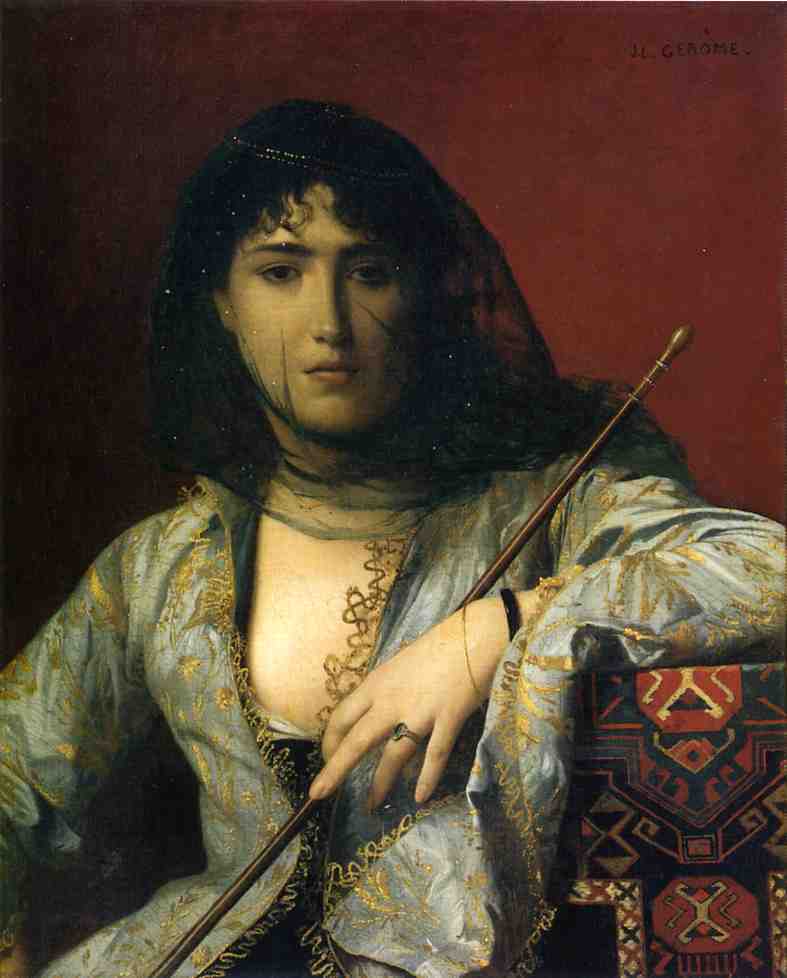
The
Veiled Circassian Woman is a stunning oil on canvas painting by the renowned French artist
Jean Léon Gérôme, created in 1876. This exquisite piece is a prime example of Orientalist art, a genre that fascinated European artists during the 19th century. The painting is now housed at the
Orientalist Museum in Qatar.
The Artist and His Inspiration
Jean Léon Gérôme was a prominent figure in the French art scene, known for his meticulous attention to detail and his ability to capture the essence of exotic cultures. His travels to the Middle East and North Africa inspired many of his works, including the
Veiled Circassian Woman. This painting is a testament to his skill in conveying the mystery and allure of the Oriental world.
The Painting's Significance
The
Veiled Circassian Woman is more than just a beautiful portrait; it represents a cultural and historical moment in time. The veil, a symbol of modesty and secrecy, adds an air of intrigue to the subject, while the intricate clothing and accessories showcase the artist's attention to detail. This painting is a prime example of
Orientalism, a genre that often blurred the lines between reality and fantasy.
- The Veiled Circassian Woman is characterized by its use of rich colors and textures, creating a sense of depth and dimensionality.
- The painting's composition, with the subject seated and looking directly at the viewer, creates a sense of intimacy and connection.
- The artist's use of light and shadow adds to the overall sense of drama and tension in the piece.
Handmade oil paintings reproductions of the
Veiled Circassian Woman are available at https://ArtsDot.com, allowing art lovers to own a piece of history. For more information on
Jean Léon Gérôme and his works, visit /art/list/?Filter=8BWSAA-Jean-Leon-Gerome-Veiled-Circassian-Woman. The
Orientalist Museum in Qatar is also a valuable resource for those interested in learning more about the art and culture of the region.
The
Veiled Circassian Woman is a masterpiece that continues to captivate audiences with its beauty, mystery, and cultural significance. As a work of Orientalist art, it represents a unique moment in history, one that showcases the fascination of European artists with the exotic cultures of the Middle East and North Africa.