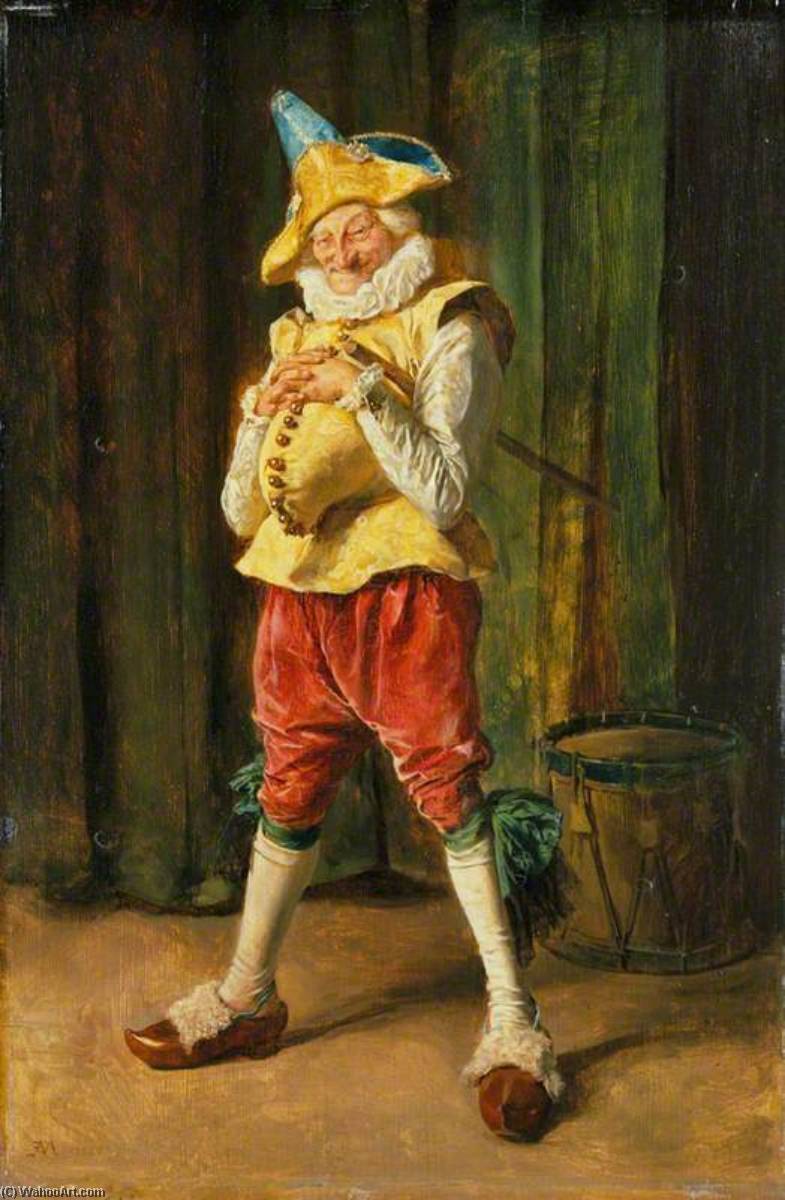
Experience the meticulous detail of Jean-Louis Ernest Meissonier's 'Polichinelle,' a captivating 1860 painting depicting a mischievous jester from the Belle Époque era. Explore Napoleonic history and French artistry.
Discover Jean-Louis Ernest Meissonier's meticulous world! Master of French classicism, famed for detailed historical & military scenes, and miniature painting.
Step back to Georgian elegance at The Wallace Collection! Explore stunning French art, exquisite furniture & arms in a historic townhouse – a jewel box of 18th-century London.
A Window into Napoleonic Grandeur: Meissonier’s “Polichinelle”
Jean-Louis-Ernest Meissonier's "Polichinelle," painted in 1860, isn’t merely a depiction of a jester; it’s a meticulously crafted portal into the vibrant and often theatrical world of 19th-century France. This diminutive masterpiece, measuring just 55 x 36 centimeters, belies its small scale with an astonishing level of detail and a captivating narrative that draws the viewer into a moment frozen in time. The painting immediately commands attention through its rich palette – the vibrant yellows and reds of the jester’s costume contrast sharply against the deep, almost velvety black of his background, creating a dramatic visual tension. Meissonier's signature style is on full display here: an obsessive commitment to realism that borders on hyperrealism, achieved through painstaking layering of oil paint and an unparalleled ability to render textures – from the rough weave of the jester’s tunic to the polished gleam of his bells.
The Jester as Symbol: A Study in Contrasts
“Polichinelle,” whose name translates roughly to “Punch” or “Fool,” is a character deeply rooted in Italian commedia dell'arte, known for his mischievous antics and satirical commentary on society. Meissonier’s choice of subject isn’t arbitrary; the jester embodies a complex set of symbolic meanings within the context of mid-19th century France. He represents both harmless amusement and subversive critique – a reminder that even in an era of rigid social hierarchies, laughter and dissent could find expression. The jester's exaggerated features—the bulbous nose, the painted white face—are not simply comical; they are deliberate distortions designed to heighten his theatricality and underscore his role as a trickster figure. Furthermore, the jester’s drum and tambourine suggest a performance, a deliberate disruption of the established order, hinting at a critique of authority through humor.
A Masterclass in Miniature Realism
Meissonier's technique is truly remarkable when considering the painting’s diminutive size. He employed what he termed “microscopic painting,” meticulously building up layers of paint to create an illusion of incredible depth and texture. The level of detail is astonishing; one can almost feel the weight of the jester’s bells, discern the individual strands of his white stockings, and trace the contours of his painted face. This dedication to realism was influenced by his study of Dutch masters like Gabriel Metsu and Gerard Douw, who were renowned for their intimate scenes of everyday life. Meissonier's ability to capture such minute details within a small format is a testament to his exceptional skill and patience. The lighting, too, is masterful – carefully sculpted shadows and highlights create a sense of three-dimensionality, bringing the jester to life on the canvas.
Historical Context & The Wallace Collection
“Polichinelle” was originally part of a larger panel that adorned the wall of Apollonie Sabatier’s Parisian apartment, a salon frequented by prominent artists and intellectuals. Sabatier herself was a celebrated muse, known for her beauty and her role in fostering artistic creativity. The painting's origins within this vibrant cultural milieu add another layer of significance to the work. It is now housed in the Wallace Collection in London, a testament to its enduring quality and historical importance. Examining related research reveals Meissonier’s fascination with capturing fleeting moments of everyday life, often imbued with social commentary – a characteristic that aligns him with the broader trends of Realism and Social Commentary within 19th-century art. Further investigation into his work alongside artists like Jean-Louis Forain highlights shared interests in depicting Parisian society with wit and realism.
Bringing “Polichinelle” to Your Space
Today, high-quality reproductions of "Polichinelle" offer a beautiful way to bring this captivating scene into your home or office. The painting’s vibrant colors and intricate details will add a touch of theatrical charm and historical depth to any space. Consider pairing it with complementary furnishings – perhaps rich velvet upholstery in deep reds and golds, or antique wooden accents—to create an atmosphere that echoes the spirit of 19th-century France. Whether you are an art collector, an interior designer, or simply someone who appreciates exquisite craftsmanship, “Polichinelle” is a timeless masterpiece that continues to captivate viewers with its beauty, symbolism, and technical brilliance.