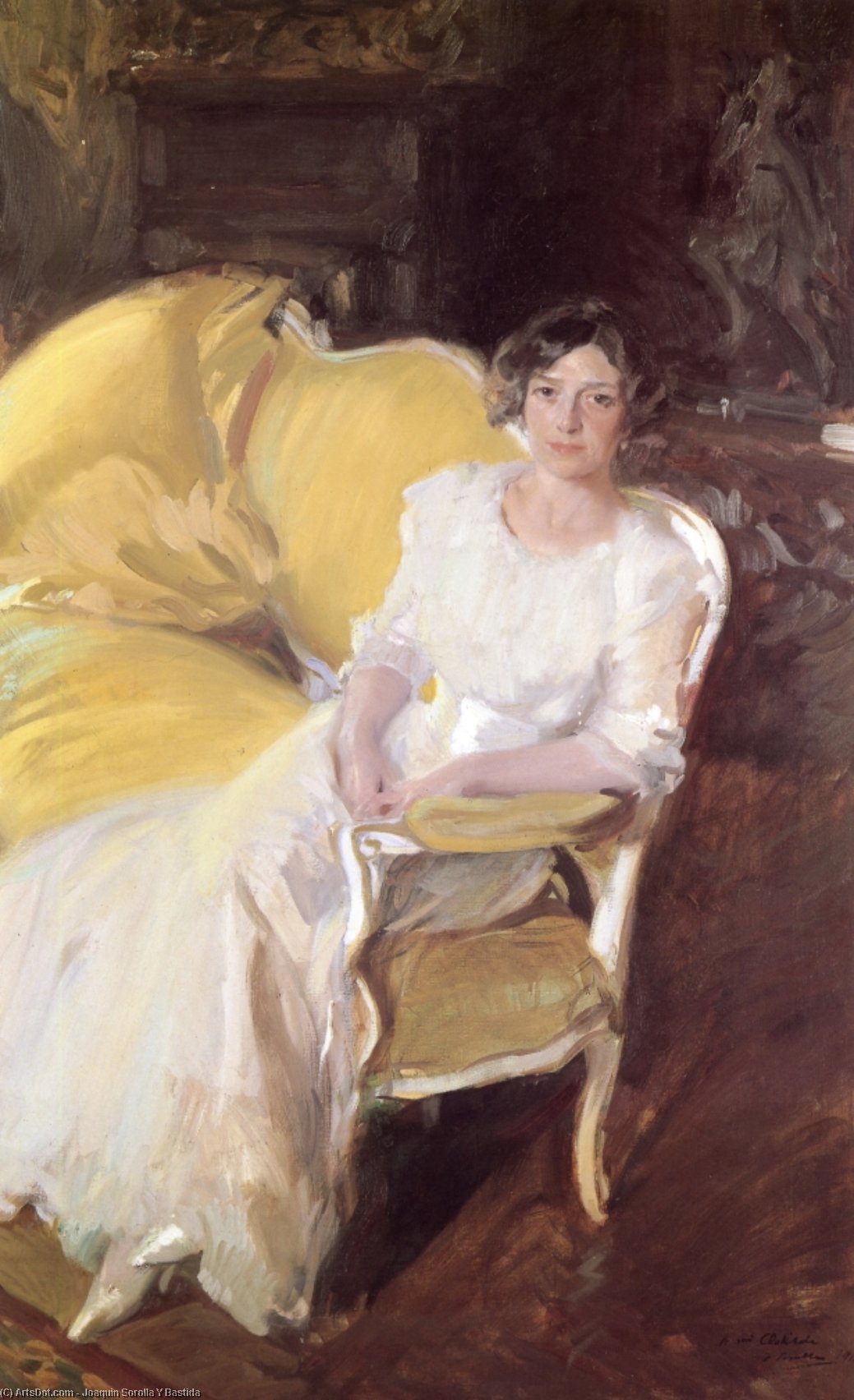
A Moment Captured: Sorolla’s ‘Clotilde Sitting on the Sofa’
Joaquin Sorolla y Bastida's “Clotilde Sitting on the Sofa,” painted in 1910, is more than a simple portrait; it’s an exquisite distillation of light, atmosphere, and human connection. This oil-on-canvas masterpiece, measuring 180 x 110 cm and currently residing within the Museo Sorolla in Spain, exemplifies the artist's signature style – a vibrant celebration of Impressionism infused with a distinctly Spanish sensibility. The painting immediately draws the viewer into an intimate scene: Clotilde, a woman of quiet grace, occupies a plush sofa bathed in the warm glow of imagined sunlight, her posture relaxed and inviting.
- Subject & Composition: Sorolla masterfully captures a private moment, portraying Clotilde not as a formal subject but as a relatable figure engaged in an everyday activity. The composition is carefully balanced, utilizing the sofa and fireplace to create depth while the crossed legs of the sitter add a subtle dynamism to the scene.
- Color & Light: As with much of Sorolla’s work, color plays a crucial role. He employs a palette dominated by warm tones – ochres, creams, and golds – that evoke a sense of comfort and tranquility. The artist's manipulation of light is particularly noteworthy; it isn't merely representation but an active element contributing to the painting's emotional resonance.
The Impressionist Technique of Sorolla
Sorolla’s technique is characterized by loose, confident brushstrokes – a hallmark of his Impressionistic style. He eschews meticulous detail in favor of capturing the *impression* of light and form. This approach results in a shimmering surface that seems to vibrate with energy. The artist's focus on capturing the play of light on surfaces—particularly evident in the reflections on the sofa and the subtle highlights on Clotilde’s skin—is central to his artistic vision. Notice how he builds up layers of paint, creating texture and depth without resorting to heavy glazing. This technique contributes significantly to the painting's luminous quality.
- Brushwork: The visible brushstrokes are not haphazard; they contribute to the overall sense of movement and vitality within the scene.
- Color Mixing: Sorolla’s masterful color mixing creates a rich, nuanced palette that is both vibrant and harmonious.
Historical Context & Symbolism
"Clotilde Sitting on the Sofa" was created during a period of significant artistic innovation in Spain. Sorolla's work reflects the broader trends of Impressionism while simultaneously retaining a distinctly Spanish identity, rooted in his Valencian heritage. The inclusion of details like the books and vase subtly adds to the narrative – perhaps suggesting intellectual pursuits or domestic tranquility. The setting itself—a comfortable, well-appointed room—reflects the rising middle class’s desire for beauty and refinement at the turn of the 20th century.
Provenance: The painting's current location within the Museo Sorolla provides a valuable opportunity to appreciate it within the context of the artist’s broader oeuvre. Its creation in 1910, following his successful time in Rome, marks a pivotal moment in his artistic development, solidifying his commitment to capturing light and atmosphere with unparalleled skill.
Emotional Impact & Artistic Value
Ultimately, “Clotilde Sitting on the Sofa” transcends its status as a simple portrait. It’s an evocative portrayal of domestic serenity, inviting viewers to contemplate themes of comfort, beauty, and fleeting moments. Sorolla's ability to translate these intangible qualities onto canvas is a testament to his artistic genius. This painting represents a significant work within Sorolla’s body of work, offering a profound insight into the artist’s masterful technique and enduring legacy.