A Moment Suspended in Light: The Soul of Don Pio Baroja
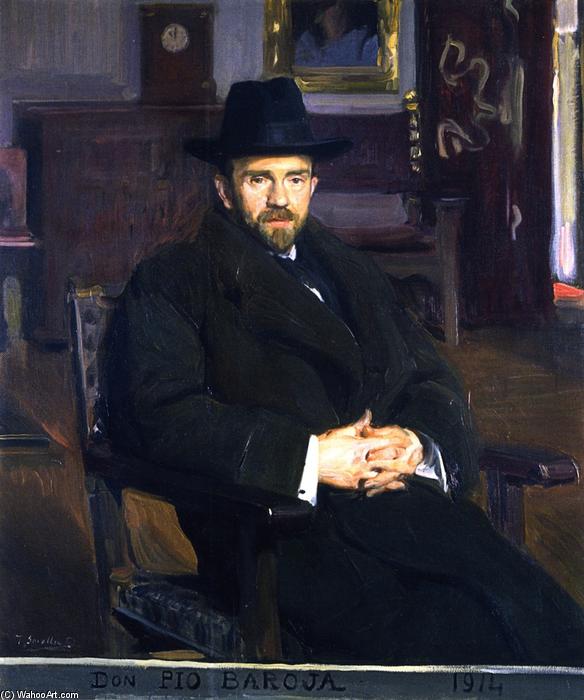
In the realm of Impressionism, few artists possessed the ability to capture the ephemeral dance of light as masterfully as Joaquín Sorolla y Bastida. His 1914 masterpiece, Don Pio Baroja, is not merely a portrait of a man; it is an exquisite distillation of atmosphere and human presence. When one gazes upon this canvas, there is an immediate sense of stepping into a moment suspended in time. The subject, a prominent figure of Spanish society, sits with a quiet, contemplative dignity that transcends the formal boundaries of traditional portraiture. Through Sorolla’s lens, we do not just observe a gentleman in a suit and tie; we feel the weight of his thoughts and the stillness of the room around him.
The painting serves as a profound testament to the Belle Époque era, reflecting the elegance and sophisticated cultural milieu of early 20th-century Spain. While the setting—a dining room suggested by the presence of a table and chairs in the background—hints at a structured, formal life, Sorolla imbues the scene with an ethereal quality. There is a subtle tension between the rigidity of the man's attire and the fluid, luminous energy that seems to radiate from the canvas itself, inviting the viewer to move beyond simple observation and into an intimate encounter with the subject’s inner world.
The Alchemy of Color and Technique
To understand the brilliance of Don Pio Baroja, one must look closely at Sorolla’s technical virtuosity. Moving away from the stiff academic conventions of his predecessors, Sorolla employed a technique characterized by meticulous layering and the artful use of glazing. By applying successive layers of translucent oil paint over a thin underpainting, he achieved a depth of color that allows light to appear as if it is emanating from within the canvas itself. This method is particularly evident in the subtle variations of shade across the man’s coat, where the artist demonstrates a masterful command of texture and tonal harmony.
His brushwork, often described as broken and vibrant, recreates the luminosity of a Mediterranean afternoon. Even within the controlled environment of an indoor portrait, one can sense the influence of the sun-drenched Spanish coast. The way light interacts with the surfaces in the room—the soft glint on a clock or the gentle shadows cast by the furniture—showcases Sorolla’s ability to use color as a language of its own. For collectors and enthusiasts, this technical mastery offers a sensory experience that remains as captivating today as it was at the moment of its completion.
An Invitation to Timeless Elegance
For the discerning art lover or interior designer, a reproduction of Don Pio Baroja offers more than just aesthetic beauty; it brings a sense of historical depth and emotional resonance to any space. The painting’s ability to balance formal dignity with an impressionistic softness makes it a versatile centerpiece for sophisticated interiors. It possesses a unique power to anchor a room, providing a focal point that encourages quiet reflection and conversation.
Choosing to display such a work is an homage to the enduring legacy of Joaquín Sorolla. It is an invitation to surround oneself with the warmth of the Spanish sun and the profound beauty of a life captured in light. Whether placed in a private study, a grand salon, or a contemporary gallery setting, this portrait continues to breathe with the vibrant, rhythmic energy of a master who truly knew how to paint the soul of his era.