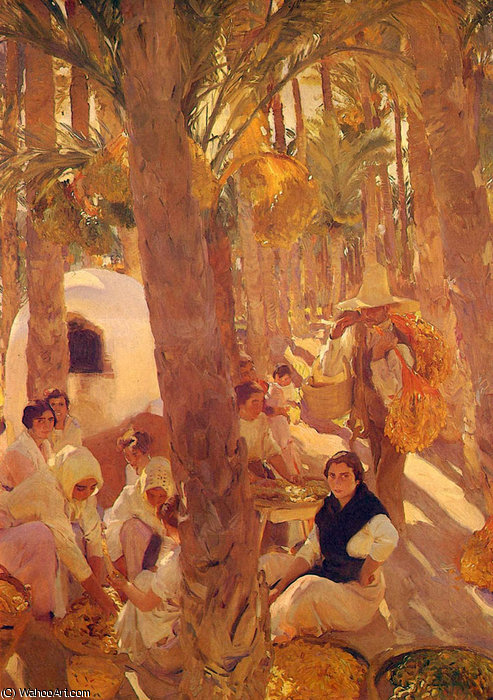
Experience the radiant light and joyful atmosphere of Joaquín Sorolla’s ‘El Palmeral,’ a captivating Spanish painting depicting a village gathering under shady trees. This vibrant scene captures the essence of life and leisure, perfect for art lovers seeking a timeless masterpiece to own.
A Moment of Spanish Sunlight: Exploring "El Palmeral" by Joaquín Sorolla
Joaquín Sorolla’s “El Palmeral” is more than just a depiction of a village gathering; it's an immersion into the very essence of Spanish life, captured with a masterful command of light and color. Painted during his most prolific period – roughly between 1905 and 1923 – this work exemplifies Sorolla’s signature style: a vibrant celebration of warmth, leisure, and the profound connection between humanity and nature. The scene unfolds within a typical Valencian palm grove, or *palmeral*, a ubiquitous feature of the region's landscape and deeply ingrained in its cultural identity. The painting immediately draws the viewer into a palpable sense of summer afternoon, where time seems to slow down as figures engage in quiet conversation and shared enjoyment.
Technical Brilliance: Sorolla’s Impressionistic Technique
- Broken Color: Sorolla employed a technique known as “broken color,” meticulously applying small, separate strokes of pure pigment to create an illusion of shimmering light and texture. This method is particularly evident in the dappled sunlight filtering through the palm fronds, producing a dynamic and almost vibrating effect.
- Loose Brushwork: Unlike the smoother surfaces favored by some of his contemporaries, Sorolla’s brushstrokes are deliberately loose and expressive, contributing to the painting's sense of movement and spontaneity. This technique was heavily influenced by his time in Rome, where he studied the works of artists like Claude Monet.
- Outdoor Painting: Sorolla famously painted *en plein air* – directly outdoors – a practice that allowed him to capture the nuances of natural light with unparalleled accuracy. The resulting immediacy and freshness are hallmarks of his style.
Symbolism and Social Context: A Portrait of Valencian Life
“El Palmeral” offers a poignant glimpse into the social fabric of early 20th-century Valencia. The scene depicts a group of men and women, likely from the middle class, enjoying an afternoon together in the *palmeral*, a traditional gathering place for relaxation and socializing. The umbrella, a key element of the composition, not only provides shade but also subtly suggests protection from the intense Mediterranean sun – a recurring motif in Sorolla’s work reflecting his concern with human well-being. The presence of a dining table hints at shared meals and convivial conversation, reinforcing the theme of community and connection. Sorolla's paintings were deeply rooted in the burgeoning Spanish Modernista movement, yet he retained a distinctly regional sensibility, celebrating the beauty and traditions of his homeland.
Emotional Resonance: Light, Leisure, and Life’s Simple Joys
Ultimately, “El Palmeral” resonates with viewers through its ability to evoke a profound sense of tranquility and joy. Sorolla's masterful use of light transforms the scene into an almost ethereal experience, inviting us to share in the simple pleasures of life – conversation, companionship, and the beauty of nature. The painting’s warmth and optimism are timeless qualities that continue to captivate audiences today. It is a testament to Sorolla’s ability to capture not just a visual image, but also the very spirit of a moment.