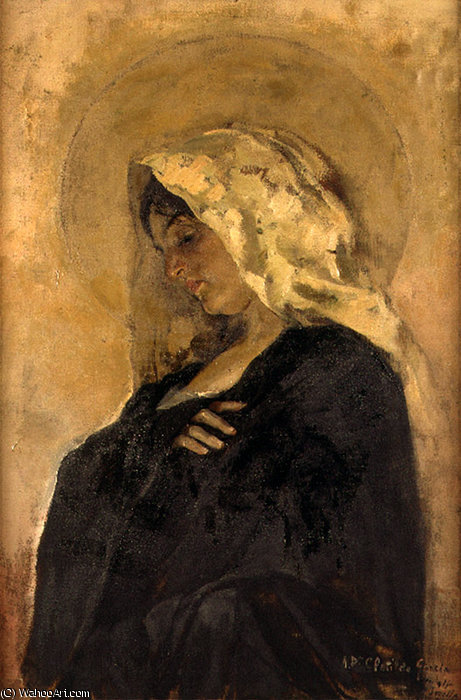
Experience the radiant light and serene beauty of Joaquín Sorolla’s "La Virgen María," a captivating portrait of the Virgin Mary rendered in his signature style. This Spanish masterpiece, painted around 1900, showcases Sorolla's masterful use of color and texture. Discover or own this iconic work today.
A Portrait of Grace: Joaquín Sorolla’s ‘La Virgen María’
Joaquín Sorolla y Bastida's “La Virgen María” is more than simply a depiction of the Virgin Mary; it’s an embodiment of the Spanish artist’s signature style – a luminous, almost palpable celebration of light and human emotion. Painted during his most prolific period, this work exemplifies Sorolla’s mastery of capturing fleeting moments and imbuing them with profound spiritual resonance. The painting immediately draws the eye to the central figure, Mary herself, presented in a remarkably naturalistic pose with her hands clasped before her chest – a gesture that speaks volumes about serenity, contemplation, and maternal devotion. Her long hair, rendered with loose brushstrokes that suggest movement and volume, cascades down her shoulders, adding to the sense of grace and timelessness.
The Painter’s Light: Technique and Style
Sorolla's technique is instantly recognizable – a bold departure from the academic conventions prevalent at the time. He employed rapid, loose brushstrokes, often applying paint directly from the tube, creating a shimmering effect that mimics the play of sunlight. This “alla prima” (wet-on-wet) approach, perfected during his Roman studies, allowed him to capture the ephemeral quality of light with breathtaking accuracy. The yellowish hue of the background isn’t merely an aesthetic choice; it subtly suggests age and reverence, hinting at the centuries of devotion associated with Mary's image. Notice how he uses broken color – small, distinct strokes layered upon each other – to build up form and create a sense of depth and atmosphere. This technique is particularly evident in the rendering of her drapery, which appears almost translucent, further enhancing the painting’s luminous quality.
Symbolism and Context: Valencia's Golden Age
Created in Valencia, Sorolla was deeply rooted in the city’s rich artistic heritage, a period often referred to as Spain’s “Golden Age.” His work reflects this cultural vibrancy, drawing inspiration from both classical antiquity and the traditions of Spanish religious painting. The presence of the two smaller figures flanking Mary – one on the left and another on the right – adds layers of complexity to the composition. These secondary figures may represent angels or other devout individuals, emphasizing the universality of faith and the Virgin’s role as a central figure in Christendom. Sorolla's work aligns with the broader artistic movement of *luminismo*, which sought to capture the beauty of light and atmosphere, reflecting a renewed interest in naturalism and emotional expression.
Emotional Resonance: A Timeless Icon
"La Virgen María" transcends its status as a mere religious icon; it’s a profoundly moving portrayal of grace, serenity, and maternal love. Sorolla's ability to capture the vulnerability and dignity of Mary resonates deeply with viewers, inviting contemplation and offering a moment of quiet reflection. The painting’s luminous quality and masterful technique combine to create an image that is both timeless and intensely personal. A hand-painted reproduction offers the opportunity to bring this exquisite artwork into your home or office, allowing you to experience its beauty and emotional power every day.