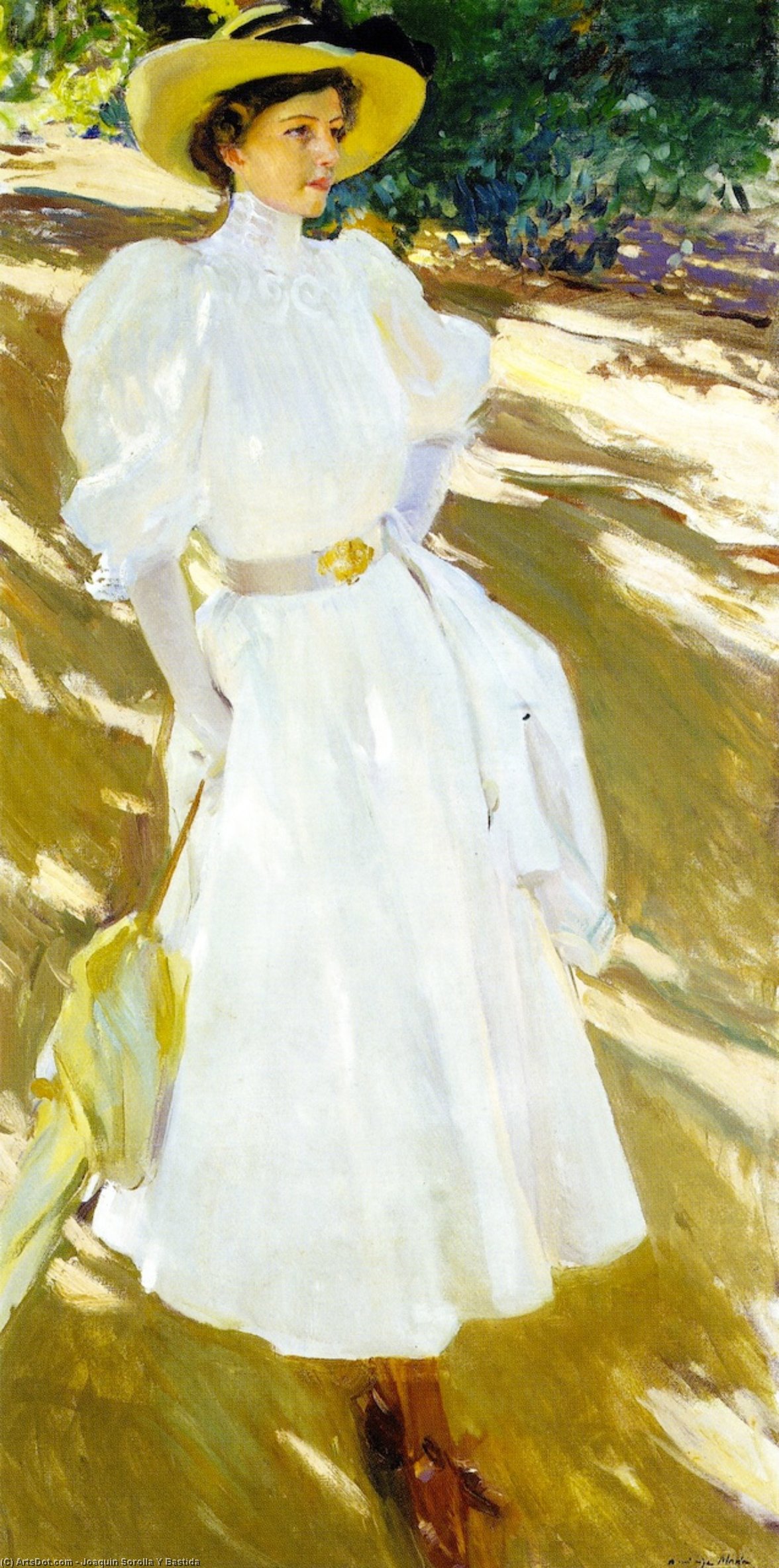
A Moment of Tranquility: Sorolla’s ‘Maria at La Granja’
Joaquín Sorolla y Bastida's “Maria at La Granja” (1907) is more than a simple depiction of a woman enjoying a sunny afternoon; it’s a masterful distillation of the Spanish light and life that defined the artist’s oeuvre. Painted during his most prolific period, this work exemplifies Sorolla’s signature style – an almost obsessive pursuit of capturing the ephemeral effects of sunlight on form and surface. The scene unfolds within the tranquil setting of La Granja, a country estate near Madrid, a location frequently favored by Sorolla for its picturesque landscapes and opportunities to explore the nuances of outdoor light. The painting immediately draws the viewer in with its serene atmosphere, inviting contemplation of the simple pleasures of life – a feeling deeply rooted in the Spanish artistic tradition.
Subject and Composition
At the heart of the composition stands Maria, a young woman dressed in a flowing white gown that seems to shimmer with reflected light. Her posture is relaxed, suggesting an effortless grace, while her gaze, directed slightly off-camera, hints at a private moment of observation. The inclusion of two additional figures – one near the left side and another further back on the right – subtly introduces a narrative element, perhaps a shared experience or a fleeting encounter. Sorolla’s masterful use of perspective and spatial relationships creates a sense of depth, drawing the eye into the scene and emphasizing the expansive quality of the landscape.
Technique and Style: The Sorollian Light
Sorolla's technique is characterized by loose, expressive brushstrokes that capture the movement of light with remarkable accuracy. He employed a rapid *alla prima* (wet-on-wet) method, applying paint directly to the canvas in layers, building up color and form with quick, confident gestures. This approach resulted in a vibrant, almost luminous quality, particularly evident in the dappled sunlight filtering through the trees and reflecting off Maria’s dress. The use of pure pigments and glazing techniques further enhanced the luminosity, creating an illusion of depth and atmosphere that is characteristic of Sorolla's work. His meticulous attention to detail – the texture of the grass, the folds of the fabric, the subtle variations in tone – contributes to the painting’s remarkable realism.
Symbolism and Historical Context
"Maria at La Granja" was created during a period of significant artistic innovation in Spain. Sorolla's work aligned with the *Modernismo* movement, which sought to break away from traditional academic styles and embrace new approaches to representation. The painting’s subject matter – a young woman enjoying the outdoors – reflects the growing emphasis on leisure and pleasure in Spanish society at the turn of the 20th century. Furthermore, Sorolla's fascination with light and color can be seen as a response to the influence of Impressionism and Post-Impressionism, movements that were gaining popularity across Europe. The painting’s setting, La Granja, was a place of historical significance, adding another layer of meaning to the work.
Emotional Impact and Artistic Legacy
Ultimately, “Maria at La Granja” evokes a profound sense of peace and tranquility. Sorolla's ability to capture the beauty of everyday moments – a simple scene of a woman enjoying the sunshine – elevates it to something truly special. This painting represents a pinnacle of Sorolla’s artistic achievement, showcasing his mastery of light, color, and composition. A hand-painted reproduction offers an unparalleled opportunity to experience the full impact of this iconic work, bringing its radiant beauty into your home or studio.