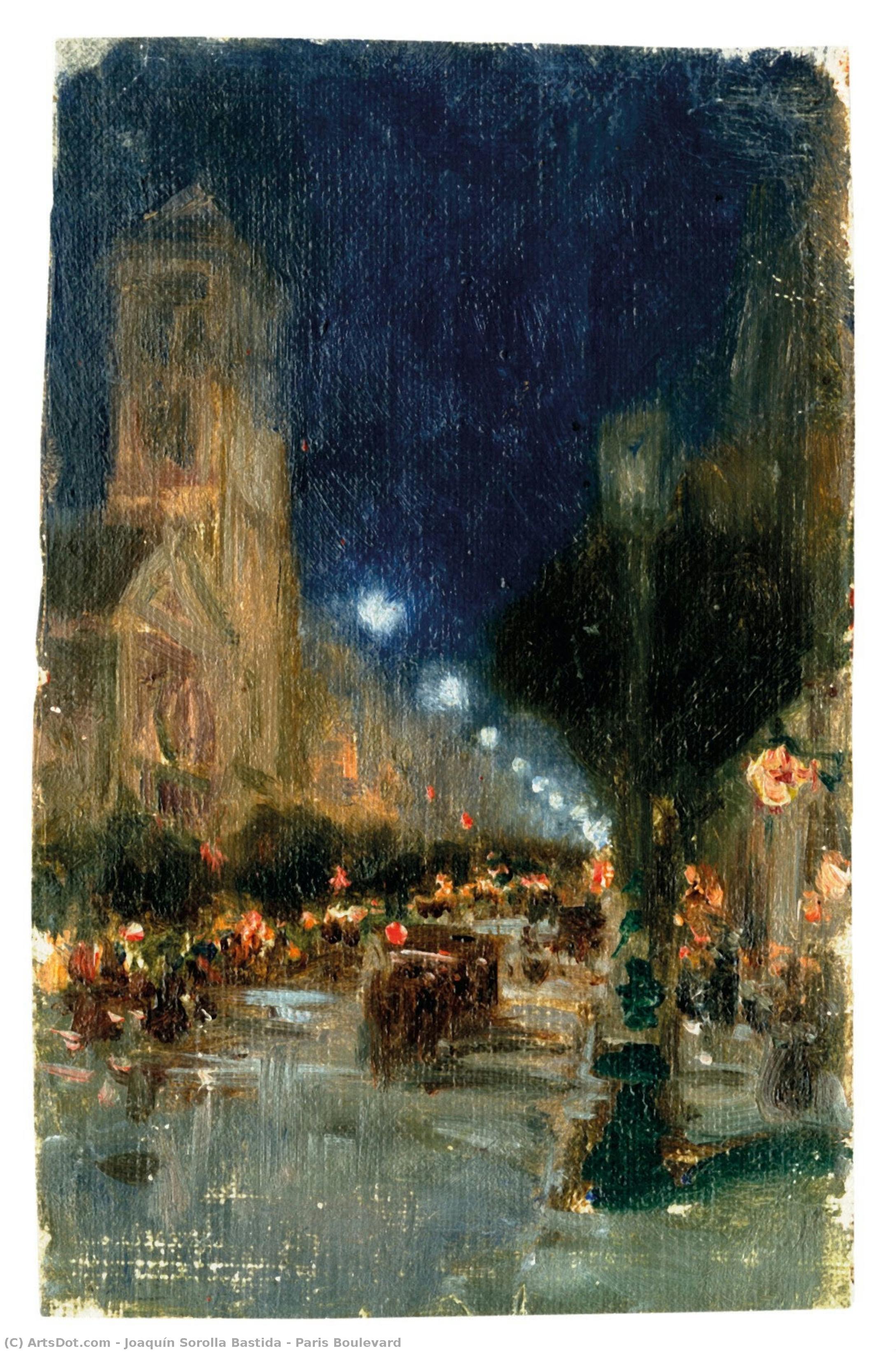
A Glimpse into Parisian Dusk: The Essence of Sorolla's "Paris Boulevard"
Joaquin Sorolla y Bastida’s “Paris Boulevard,” painted in 1885, isn’t merely a depiction of a city street at night; it’s an immersive experience. Captured during his formative years in Paris, a period of intense artistic exploration and experimentation, the painting vibrates with the energy of a bustling urban landscape bathed in the evocative glow of gaslight and automobile headlights. Sorolla, already demonstrating a remarkable sensitivity to light – a hallmark that would define his entire career – masterfully translates this fleeting moment into a canvas brimming with warmth and movement. The scene unfolds with an immediacy that draws the viewer directly into the heart of Parisian life, offering a glimpse into the rhythms and textures of a city on the cusp of modernity.

(Image courtesy of Google Arts & Culture)
The Language of Light and Color – Sorolla’s Impressionistic Technique
Sorolla's genius lies not just in his subject matter, but in the way he renders it. He employs a vibrant, almost feverish palette—a deliberate departure from the muted tones often associated with nocturnal scenes—to capture the dynamism of the evening. Thick, broken brushstrokes create an illusion of shimmering light reflecting off wet pavement and the metallic surfaces of carriages. The artist’s technique is remarkably loose and expressive, prioritizing capturing the *impression* of light rather than a photographic representation. Notice how he uses short, rapid strokes to depict the movement of pedestrians and vehicles, while simultaneously blending colors to suggest the hazy atmosphere of a Parisian night. This masterful manipulation of color and texture creates a sense of immediacy and vitality that is truly captivating.
The painting’s composition is equally deliberate. The diagonal thrust of the street guides the eye through the scene, leading us along with the flow of traffic. Sorolla skillfully utilizes atmospheric perspective – darker tones in the background suggesting distance – to create a sense of depth and spatial awareness. The figures themselves are rendered with remarkable detail, each individual possessing a unique presence within the larger tableau.
Historical Context: Sorolla’s Parisian Awakening
Sorolla's time in Paris was pivotal in his artistic development. He sought to immerse himself in the burgeoning Impressionist movement, studying the works of artists like Monet and Pissarro. However, he didn’t simply mimic their techniques; instead, he absorbed their spirit of experimentation and embraced a distinctly Spanish sensibility. “Paris Boulevard” exemplifies this synthesis – it's a Parisian scene painted through a uniquely Sorollan lens. The painting reflects the rapid modernization of Paris during the late 19th century, a period marked by technological advancements (the rise of electric lighting and automobiles) and social change. Sorolla captures not just the visual appearance of the city but also its underlying energy and dynamism.
Symbolism and Emotional Resonance – A Moment Frozen in Time
Beyond its technical brilliance, “Paris Boulevard” resonates with a profound sense of nostalgia and fleeting beauty. The painting evokes a feeling of urban romance—a quiet intimacy amidst the hustle and bustle of city life. The warm glow of the gaslights creates an atmosphere of mystery and intrigue, while the figures strolling along the street suggest a shared experience, a moment of connection in a rapidly changing world. Sorolla’s choice to depict a nighttime scene – often associated with darkness and solitude – is particularly poignant, transforming it into a celebration of light and human interaction. It's a testament to his ability to find beauty and vitality even in the most ordinary moments.