A Symphony of Light and Intellect
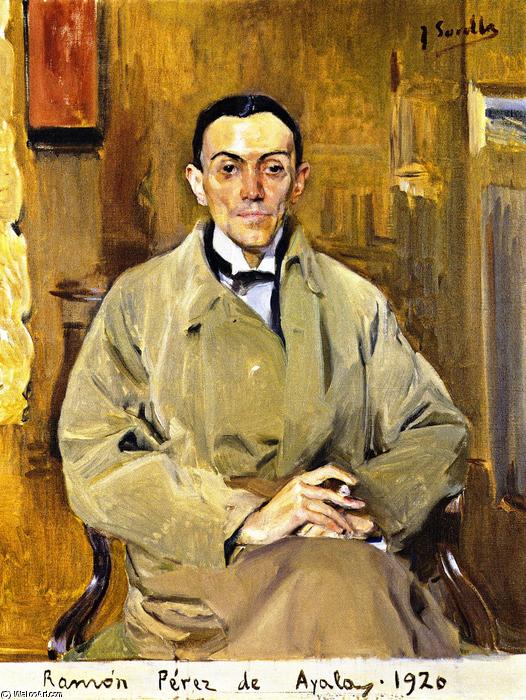
In the luminous realm of Spanish Impressionism, few works capture the intersection of human character and atmospheric brilliance as profoundly as Joaquín Sorolla y Bastida’s 1920 masterpiece, Ramón Pérez de Ayala. This portrait is far more than a mere recording of a face; it is an evocative study of a soul caught in the transformative glow of the Mediterranean spirit. As the viewer encounters this oil on canvas, they are immediately struck by the palpable sense of confidence and cultivated intellect radiating from the subject. Ramón Pérez de Ayala, a prominent Valencian poet and intellectual, is presented not just as a man of letters, but as a figure of quiet authority, his presence anchored by a gaze that meets the observer with both warmth and piercing intelligence.
The painting serves as a breathtaking testament to Sorolla’s unparalleled ability to manipulate light. While many of his contemporaries focused on the stark realities of social commentary, Sorolla sought the ephemeral—the way a single ray of sun might dance across a silk lapel or soften the contours of a cheekbone. In this portrait, light acts as a primary protagonist, sculpting the subject’s features and breathing life into the very fabric of the composition. The atmosphere is one of sophisticated elegance, where the shimmering brilliance of the Spanish sun seems to permeate even the indoor setting, creating an illusion of depth that invites the eye to linger on every subtle gradation of tone.
Mastery of Technique and Impressionistic Soul
To behold this work is to witness the revolutionary technique that defined Sorolla’s career. Moving beyond the rigid boundaries of traditional Realism, he employed a sophisticated layering process, applying thin, translucent glazes over textured underpaintings. This method allowed him to capture the flickering, transient effects of light with astonishing precision. One can observe how the artist utilizes reflected light to illuminate Ayala's face and clothing from unseen sources, a deliberate choice that underscores the importance of perception in the artistic experience. His brushstrokes, though rooted in a certain structural realism, possess an Impressionistic fluidity that lends the portrait a sense of movement and vitality.
The emotional impact of the piece lies in this delicate balance between the tangible and the ethereal. The subject’s attire—a well-tailored suit and tie—speaks to the formal dignity of his station, yet the way the light dissolves the edges of his silhouette suggests a man deeply connected to the natural world around him. For collectors and interior designers alike, this painting offers a profound sense of prestige and warmth. It is a piece that does not merely occupy space on a wall but transforms the environment, bringing with it an aura of historical depth and a luminous, sun-drenched tranquility that can anchor even the most modern of interiors.
A Legacy Captured in Color
Historically, this portrait emerged during a period of significant cultural metamorphosis in Spain. As the nation navigated the rise of republican ideals and the burgeoning influence of avant-garde movements, Sorolla’s work remained a beacon of light and tradition. By capturing a figure as culturally significant as Pérez de Ayala, Sorolla bridged the gap between the classical portraiture of the past and the vibrant, sensory-driven modernism of the early 20th century. The painting stands as a window into an era of intellectual flourishing, preserved through the lens of an artist who saw the world not just as it was, but as it glowed.
For those seeking to surround themselves with art that inspires contemplation and joy, a high-quality reproduction of this masterpiece offers an unparalleled opportunity. It brings into the home the very essence of Valencia’s Mediterranean sun and the dignified spirit of Spanish intellectualism. Whether placed in a grand study or a contemporary living space, Ramón Pérez de Ayala remains a timeless celebration of light, life, and the enduring power of the human spirit.