A Sun-Drenched Chronicle of Valencia’s Streets
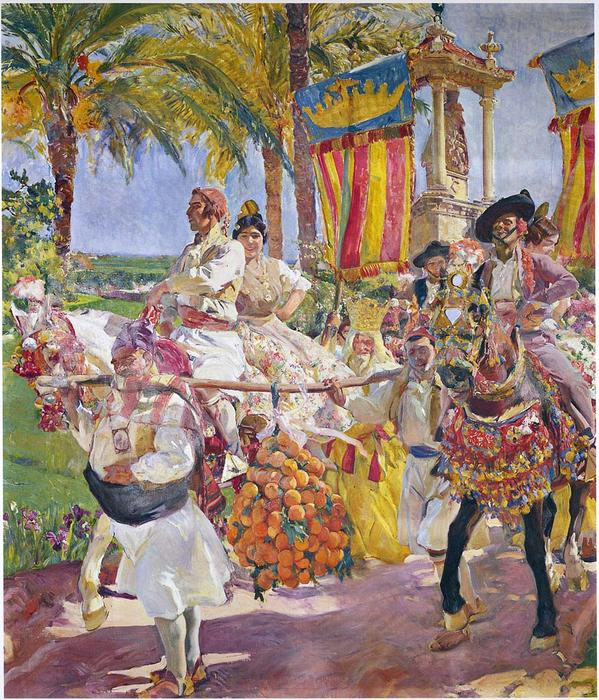
Joaquín Sorolla y Bastida's “Riding en Croupe, Valencia” isn’t merely a painting; it’s a vibrant snapshot of 1916 Valencia, captured with an almost palpable sense of warmth and movement. The scene unfolds on a bustling street, alive with the energy of daily life – a kaleidoscope of figures navigating their routines amidst the city's architectural backdrop. Sorolla masterfully employs his signature *luminismo*, a technique that prioritizes capturing the effects of light and atmosphere, bathing the entire composition in a golden, honeyed glow. This isn’t a static representation; it feels as though you’re standing right there, inhaling the scent of dust and sun-baked stone, hearing the chatter of voices and the clip-clop of horses’ hooves.
The painting's style firmly resides within the Impressionist movement, yet Sorolla transcends simple replication. He utilizes loose brushstrokes and broken color to create a shimmering effect, particularly noticeable in the reflections on the cobblestones and the dappled sunlight filtering through the buildings. This deliberate lack of detail forces the viewer’s eye to wander, absorbing the nuances of the scene – the individual expressions on the riders' faces, the folds of their clothing, the intricate patterns of the street itself. Sorolla wasn’t interested in photographic realism; he sought to convey an *impression* of Valencia, a feeling rather than a precise depiction.
The Heart of Valencian Life
Valencia in 1916 was a city undergoing transformation – a burgeoning port and industrial center grappling with the challenges of modernity while fiercely clinging to its rich cultural heritage. Sorolla’s painting offers a glimpse into this dynamic period, portraying a scene that is both familiar and subtly imbued with historical significance. The presence of horse-drawn carriages speaks to the enduring importance of traditional transportation methods alongside the emerging influence of automobiles. The figures themselves – men in traditional Spanish attire, women carrying handbags, children playing – represent the diverse tapestry of Valencian society.
Interestingly, the painting’s subject matter—a street scene filled with everyday activity—was a deliberate departure for Sorolla. He had previously focused on grand historical and mythological subjects, but this work reflects his growing interest in capturing the beauty of ordinary life. This shift is particularly poignant considering the context of Spain at the time – a nation still recovering from the turmoil of the Spanish-American War and grappling with political instability.
Symbolism Woven into the Light
Beyond its immediate depiction, “Riding en Croupe, Valencia” is rich in symbolic elements. The sunlight itself acts as a dominant motif, representing not just illumination but also vitality, joy, and optimism – qualities that Sorolla sought to imbue his art with. The vibrant colors—the deep blues of the sky, the ochre tones of the buildings, the warm yellows of the sun—create a sense of harmony and abundance. The positioning of the figures within the composition subtly guides the viewer’s eye, drawing attention to key elements of the scene while maintaining a dynamic flow.
Furthermore, the painting can be interpreted as an homage to Valencia itself – a city that Sorolla deeply loved and frequently depicted in his work. The bustling street, the familiar architecture, and the everyday activities all contribute to a sense of place, evoking a powerful connection between the artist and his hometown. The inclusion of figures carrying handbags subtly references the burgeoning consumer culture of the early 20th century, adding another layer of complexity to the scene.
A Legacy of Light and Color
“Riding en Croupe, Valencia” stands as a testament to Joaquín Sorolla’s extraordinary talent and his ability to capture the essence of Spanish life. It's more than just a painting; it’s an invitation to step back in time and experience the vibrant energy of a city at a pivotal moment in its history. Reproductions of this work, particularly in large-scale formats, can bring a touch of Mediterranean warmth and authenticity to any interior space, reminding us of the enduring beauty of light, color, and human connection.