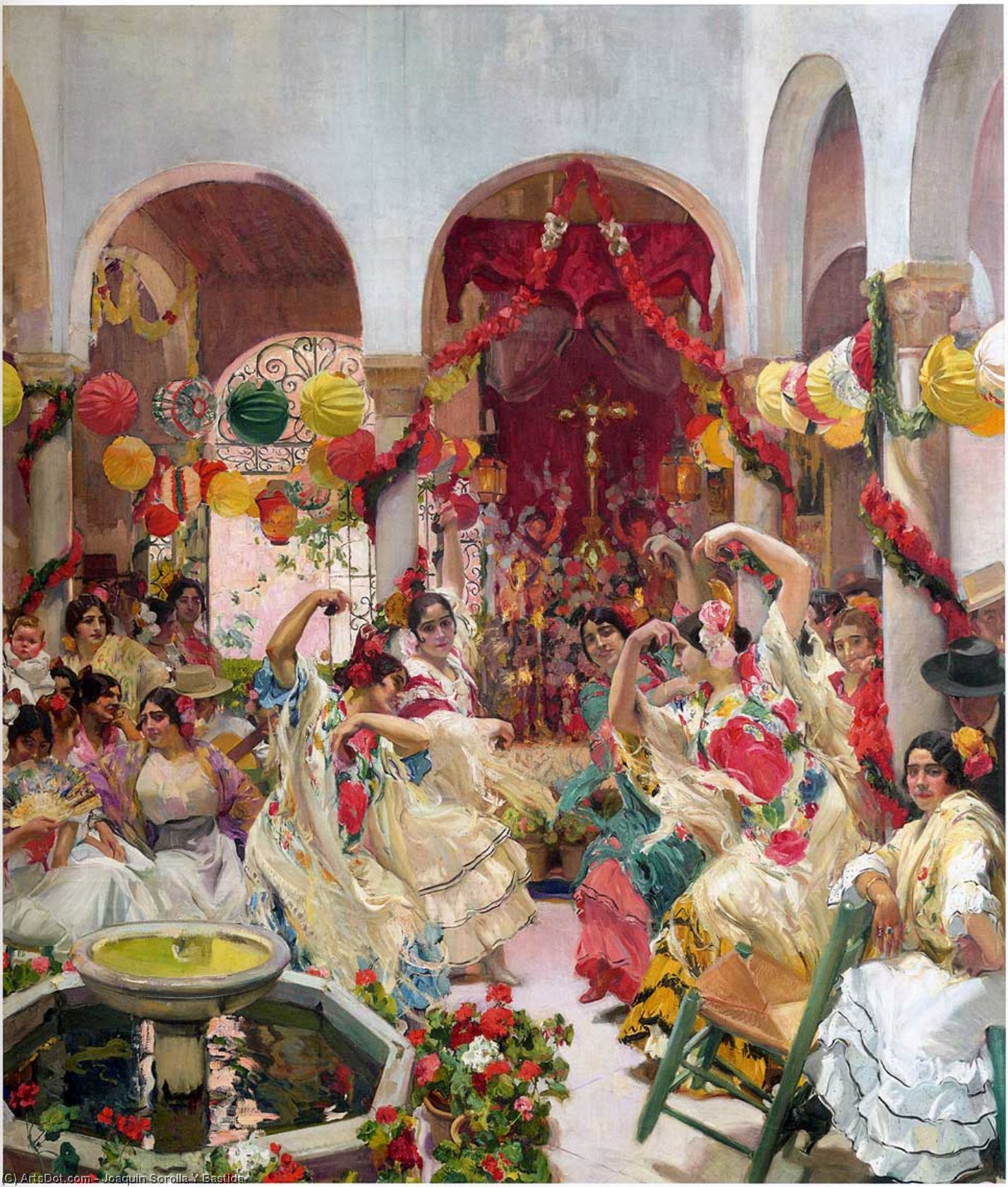
Seville, the Dance: A Celebration of Spanish Culture
Joaquin Sorolla Y Bastida's "Seville, the Dance," created in 1915, is a vibrant and captivating example of early 20th-century Spanish art. This large oil on canvas transports viewers to a lively scene within a traditional Spanish courtyard or ballroom, brimming with energy and cultural expression. The painting depicts a gathering of people, including dancers and onlookers, immersed in the joy of flamenco – a dance form deeply rooted in Spanish heritage.
The Artist and His Impressionistic Style
"Seville, the Dance" exemplifies Sorolla's signature style, characterized by his masterful use of light and color to evoke emotion and movement. He was renowned for capturing fleeting moments with bold, confident brushstrokes that convey a sense of immediacy. Sorolla’s work is often associated with Impressionism, though he developed a unique approach that emphasized the brilliance of Spanish sunlight and its effect on people and landscapes. His ability to depict light's interaction with surfaces—the shimmer on fabric, the glow on skin—is particularly striking in this piece.
Composition and Key Features
The composition is dynamic and crowded, featuring at least twelve figures arranged within a space adorned with decorative elements like potted plants, vases, and a bowl. Two chairs are strategically placed – one to the right and another closer to the left—adding depth and visual interest. Key features of the painting include:
- Warm Color Palette: The use of warm colors creates an intimate atmosphere and amplifies the energy of the scene.
- Dynamic Brushstrokes: Bold brushstrokes capture movement and emotion, bringing the dancers to life.
- Traditional Spanish Elements: Flamenco attire, architectural details, and the overall setting evoke a strong sense of Spanish culture.
- Symbolic Red Fabric: The red fabric draped across the background adds drama and represents passion.
Historical Context and Emotional Impact
Painted in 1915, "Seville, the Dance" reflects a period of cultural flourishing in Spain. The painting captures not just a scene but also a feeling—the exuberance and joy associated with flamenco dance and Spanish celebrations. Sorolla’s ability to convey this emotional atmosphere is what makes the piece so compelling. The work currently resides within the collection of the Hispanic Society of America Museum and Library in New York City, an institution dedicated to preserving and promoting Spanish arts and cultures.