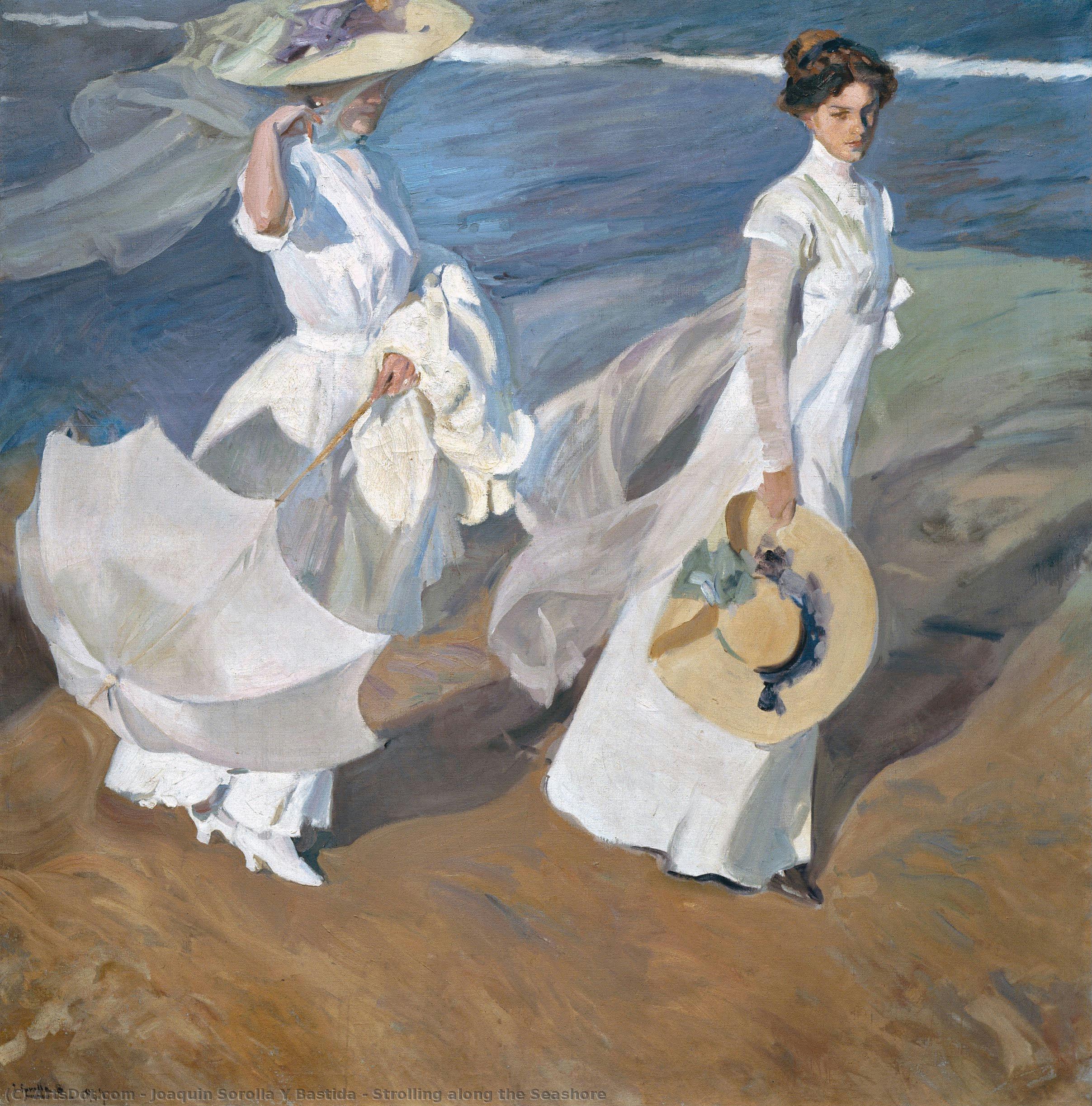
A Moment Frozen in Sunlight: Joaquín Sorolla’s “Strolling Along the Seashore”
Joaquín Sorolla y Bastida's "Strolling Along the Seashore," painted in 1909, isn’t merely a depiction of a summer afternoon; it’s an exquisite distillation of light, movement, and the fleeting beauty of everyday life. Created during a period of immense artistic success for the Spanish painter – following his celebrated exhibitions in America – this work represents a pivotal shift in Sorolla's style, moving towards a more impressionistic and evocative approach while retaining his signature mastery of capturing vibrant color and atmospheric depth. The painting transports us to a sun-drenched Valencian beach, not as passive observers but as participants in a scene brimming with relaxed elegance and quiet joy. It’s a testament to Sorolla's ability to imbue even the simplest subject matter – a leisurely stroll along the shore – with profound emotional resonance.
The Dance of Light and Color
Sorolla was renowned for his dedication to painting *en plein air* (outdoors), directly observing and capturing the effects of natural light on his subjects. “Strolling Along the Seashore” exemplifies this commitment, showcasing a remarkable control over color and brushwork. The artist employs long, fluid strokes of turquoise, purple, and blue to depict the shimmering expanse of the Mediterranean Sea, creating an almost palpable sense of movement and depth. These colors aren’t blended smoothly; instead, they are applied in distinct, visible layers, mimicking the way sunlight reflects off the water's surface. The sandy shore is rendered with a warm ochre palette, punctuated by brighter highlights where the sun catches the grains. Notice how Sorolla uses broken color – small dabs of contrasting hues – to suggest the play of light and shadow on the figures’ clothing and skin, adding a remarkable sense of realism and vibrancy. The photograph-like frame cutting through Clotilde's hat is not just a compositional device; it subtly isolates the women, drawing our attention to their graceful movements and expressions.
A Portrait of an Era: Bourgeois Elegance
The painting’s subject matter – a bourgeois family enjoying a seaside promenade – offers a fascinating glimpse into Spanish society at the turn of the 20th century. Sorolla masterfully captures the refined elegance of the era, depicting his wife, Clothilde, and daughter Maria in fashionable attire, complete with wide-brimmed straw hats and parasols. The scene is not one of rustic simplicity; rather, it’s a carefully orchestrated tableau of social grace and leisure. The presence of well-dressed figures strolling along the beach speaks to the growing prosperity and cultural sophistication of Valencia at that time. Sorolla wasn't simply painting a pretty picture; he was documenting a specific moment in history, capturing the spirit of a particular social class and their appreciation for beauty and pleasure.
Symbolism and Emotional Resonance
Beyond its surface depiction, “Strolling Along the Seashore” is rich with symbolic meaning. The suggestion of a gentle breeze rustling through the women’s draperies evokes a sense of freedom and lightness, while the distant horizon hints at an endless expanse of possibilities. The painting's overall mood is one of tranquility and contentment – a celebration of family, beauty, and the simple joys of life. Sorolla’s masterful use of light and color creates a feeling of warmth and optimism, inviting the viewer to share in this idyllic moment. The photograph-like frame adds an element of detachment, as if capturing a fleeting memory or a cherished snapshot of time.
A Legacy of Light: Sorolla's Enduring Appeal
Joaquín Sorolla’s “Strolling Along the Seashore” remains one of his most beloved and enduring works. Its luminous colors, dynamic composition, and evocative atmosphere continue to captivate audiences today. Reproductions of this masterpiece offer a wonderful opportunity to bring a touch of Spanish sunshine into any space, reminding us of the beauty and serenity that can be found in even the simplest moments of life. It’s a painting that speaks to our innate desire for connection, joy, and appreciation for the fleeting wonders of the natural world – a timeless testament to the genius of Joaquín Sorolla y Bastida.