A Symphony of Sunlight: Exploring Joaquín Sorolla’s “The Wounded Foot”
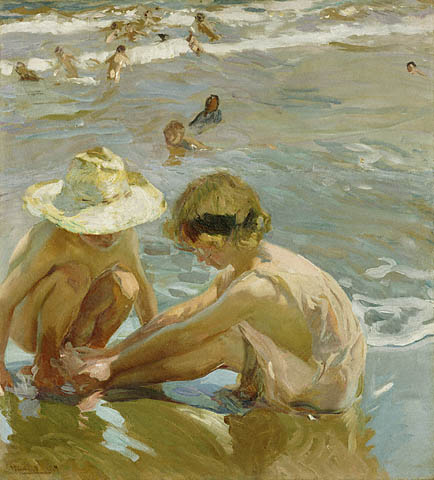
Joaquín Sorolla y Bastida's "The Wounded Foot" is more than just a depiction of two young girls building sandcastles; it’s an immersion into the very essence of Spanish summer, rendered with a masterful understanding of light and atmosphere. Painted in 1896, this vibrant oil on canvas captures a fleeting moment of childhood joy against the backdrop of Valencia's sun-drenched coastline – a scene that speaks to the artist’s profound connection with his homeland and its people.
- Impressionistic Brilliance: Sorolla was a key figure in the Spanish Impressionist movement, deeply influenced by artists like Monet and Renoir. His work is characterized by loose brushstrokes, an emphasis on capturing the ephemeral qualities of light, and a vibrant palette that explodes with color.
- A Masterful Technique: The painting’s remarkable luminosity stems from Sorolla's innovative technique – layering paint in thick impasto to build up texture and create a sense of depth. This approach allows the light to bounce off the wet sand and shimmering water, creating an almost tangible illusion of warmth and movement.
- Valencia’s Soul: The scene itself is quintessentially Valencian. The beach depicted here is likely from one of the many coastal areas surrounding Valencia, a region that played a crucial role in Sorolla's life and artistic inspiration.
Symbolism Woven into Light
Beyond its surface beauty, “The Wounded Foot” carries significant symbolic weight. The title itself – "The Wounded Foot" – is intriguing and open to interpretation. Some scholars suggest it alludes to the artist’s own childhood trauma, his early loss of parents due to illness, subtly embedded within the painting's optimistic portrayal of childhood innocence. The girls’ activity—building sandcastles—represents a temporary construction of joy and beauty, mirroring the fleeting nature of life itself. The bright sunlight, a constant presence in Sorolla’s work, symbolizes hope, vitality, and the enduring power of memory.
Historical Context: A Golden Age
Sorolla's career flourished during Spain’s “Golden Age” (around 1890-1920), a period of remarkable artistic and cultural achievement. This era saw a renewed interest in Spanish history, mythology, and landscape painting, fueled by a desire to reclaim national identity after centuries of foreign rule. Sorolla's work perfectly embodies this spirit, celebrating the beauty of Spain’s natural heritage and its vibrant culture.
Emotional Resonance: A Timeless Appeal
"The Wounded Foot" possesses an enduring emotional appeal that transcends time. It evokes a sense of nostalgia for simpler times, capturing the unadulterated joy of childhood and the restorative power of nature. The painting’s luminous quality and dynamic composition invite viewers to step into the scene, experiencing firsthand the warmth of the Spanish sun and the carefree spirit of these young girls. This piece is not merely a representation of a beach scene; it's an invitation to reconnect with our own memories of summer, light, and the boundless possibilities of youth.