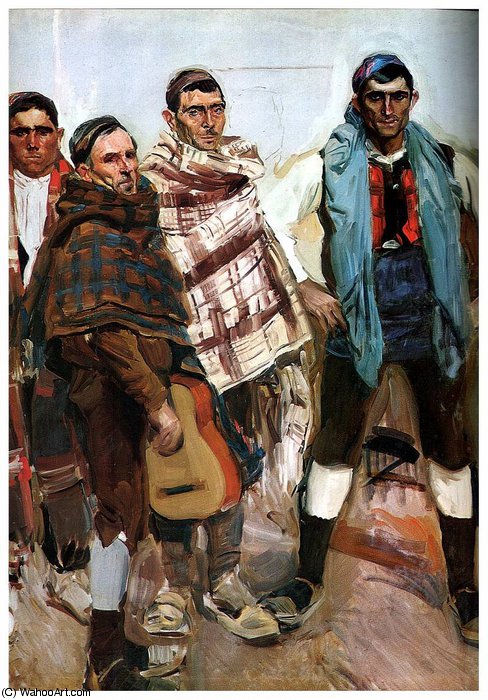
Experience the radiant light and vibrant energy of Joaquín Sorolla’s ‘Tipos Aragoneses,’ a captivating 1914 painting depicting a group of men in traditional attire, capturing camaraderie and a bygone era. Discover this stunning hand-painted reproduction and bring a touch of Spanish brilliance into your home.
A Moment of Aragonian Life Captured in Light
Joaquín Sorolla’s “Tipos Aragoneses” (Types of Aragonese Men) offers a captivating glimpse into the heart of early 20th-century Spain, specifically the vibrant social life of the region. Painted in 1914, this work transcends a simple depiction of men; it's an embodiment of camaraderie, regional identity, and Sorolla’s masterful command of light – a hallmark of his artistic signature. The scene unfolds with a remarkable naturalism, portraying six figures standing together in what appears to be a dusty rural setting. Their attire, meticulously rendered in the traditional clothing of the Aragonese people—long coats, ties, and even a guitar slung across one man’s back—immediately anchors the viewer in a specific time and place. The inclusion of an umbrella adds a touch of whimsy and suggests a leisurely afternoon gathering.
Sorolla's Revolutionary Technique: Light as Subject
Sorolla was renowned for his innovative approach to light, influenced heavily by Impressionism and Post-Impressionism but uniquely adapted to the Spanish landscape. “Tipos Aragoneses” exemplifies this technique perfectly. He employed a rapid, almost alla prima (wet-on-wet) painting method, applying thick layers of paint with loose brushstrokes to capture the fleeting effects of sunlight. Notice how the light seems to literally radiate from the figures, bathing them in a warm, golden glow. This isn’t merely about realistic representation; it's about conveying an *impression* of warmth, vitality, and human connection. The use of color is equally significant – vibrant blues, greens, and ochres are juxtaposed with the lighter tones to create depth and dynamism. His technique allowed him to capture a sense of movement and spontaneity rarely seen in academic painting of the time.
Historical Context: A Nation Reimagining Itself
Painted in 1914, just before the outbreak of World War I, “Tipos Aragoneses” reflects a period of significant social and cultural change in Spain. The rise of regional identities was becoming increasingly prominent, and artists like Sorolla were keen to document these diverse aspects of Spanish life. The painting speaks to the enduring traditions of rural Aragon, a region known for its proud heritage and distinctive customs. It’s important to note that Sorolla's work often depicted scenes of everyday life – fishermen, farmers, and laborers – offering a counterpoint to the grand historical narratives favored by many contemporary artists. This focus on the ordinary elevated these figures to subjects worthy of artistic attention.
Symbolism and Emotional Impact
Beyond its technical brilliance, “Tipos Aragoneses” possesses a profound emotional resonance. The relaxed posture of the men, their animated conversation (implied rather than explicitly shown), and the overall sense of jovial camaraderie evoke feelings of warmth, nostalgia, and belonging. The painting isn’t just about depicting individuals; it's about capturing a shared moment of human connection – a timeless theme that continues to resonate with viewers today. The scene invites us to contemplate the beauty of simple pleasures and the importance of community. This reproduction offers an opportunity to bring this evocative image into your home, allowing you to experience Sorolla’s masterful artistry and appreciate a significant moment in Spanish art history.