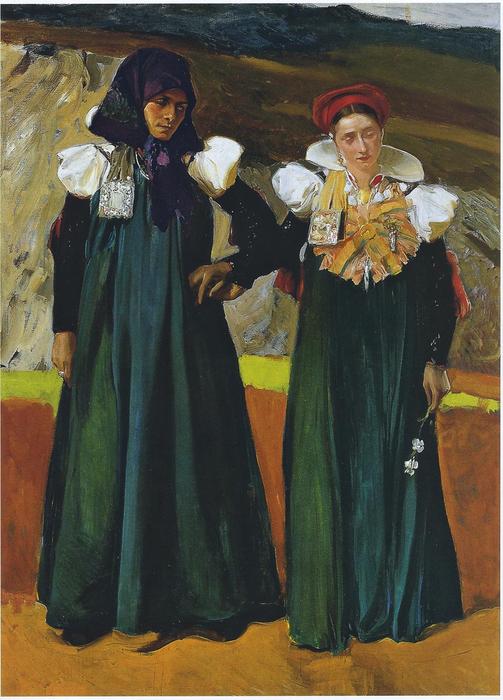
Experience the radiant light and vibrant energy of Joaquín Sorolla’s ‘Types from the Anso Valley,’ a captivating portrait of two women in traditional dress, capturing a moment of connection and friendship. This stunning 1914 painting evokes Spain's soul – discover or own this masterpiece.
A Moment of Spanish Sunlight: Sorolla’s “Types from the Anso Valley”
Joaquín Sorolla y Bastida's "Types from the Anso Valley," painted in 1914, is more than a simple portrait; it’s an exquisite distillation of light, warmth, and human connection. This captivating work transports us to the heart of Spain, specifically the Anso Valley region, where Sorolla sought to capture the essence of rural life – embodied here by two striking women.
- Subject Matter: The painting depicts a pair of women standing together against a gently sloping hillside. Their relaxed posture and shared gaze immediately establish a sense of intimacy and camaraderie.
- Clothing & Accessories: Their traditional attire, featuring long green dresses accented with vibrant purple and orange scarves, speaks to the region’s cultural heritage. The delicate earrings further enhance their beauty and add a touch of elegance. A handbag, subtly placed near the left figure, suggests practicality and perhaps a journey.
- Composition & Light: Sorolla's masterful use of light is immediately apparent. Bathed in a golden glow, reminiscent of his beloved Mediterranean landscapes, the figures are rendered with remarkable clarity and vibrancy. The hillside recedes into soft focus, drawing the viewer’s eye to the central subjects.
The Radiant Style of Joaquín Sorolla
Sorolla was a leading figure in the Spanish *luminista* movement, renowned for his ability to capture fleeting moments of light and color with breathtaking immediacy. His technique involved rapid brushstrokes applied in short, broken layers – a method known as *alla prima* – which allowed him to build up form and luminosity quickly. This approach is particularly evident in “Types from the Anso Valley,” where the surfaces shimmer with reflected light, creating an almost palpable sense of warmth.
- Technique: Sorolla’s signature technique—characterized by loose, expressive brushwork and a focus on capturing the effects of sunlight—is fully realized in this piece. The paint appears to dance across the canvas, conveying movement and vitality.
- Color Palette: The painting's palette is dominated by warm earth tones – ochres, greens, and yellows – punctuated by the vibrant hues of the scarves. This careful selection of colors contributes significantly to the overall sense of warmth and optimism.
Historical Context & Symbolism
Painted in 1914, “Types from the Anso Valley” reflects a period of significant artistic innovation in Spain. Sorolla was deeply influenced by Impressionism and Post-Impressionism, yet he retained a distinctly Spanish sensibility. The painting can be interpreted as a celebration of rural life and traditional values – themes that were increasingly under threat during this era of rapid industrialization.
- Regional Identity: The depiction of these “types” – local women representing the region’s character – speaks to Sorolla's interest in portraying authentic Spanish scenes.
- Human Connection: The two women holding hands symbolize a bond, friendship, or perhaps even familial connection. This simple gesture adds an emotional depth to the composition.
Emotional Impact & Artistic Legacy
"Types from the Anso Valley" is a testament to Sorolla’s ability to evoke emotion through light and color. The painting's serene atmosphere, combined with its captivating subject matter, creates a powerful sense of warmth and connection. It’s a timeless image that continues to resonate with viewers today. A hand-painted reproduction offers an unparalleled opportunity to experience the full brilliance of Sorolla’s vision – a truly exceptional addition to any art collection or interior space.