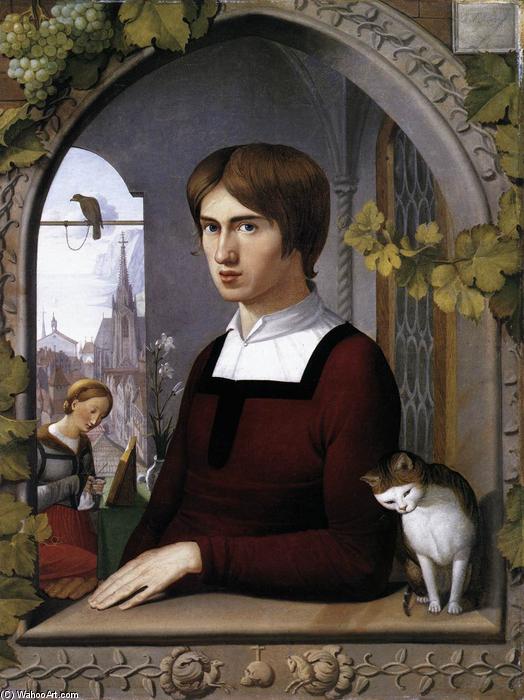
Johann Friedrich Overbeck’s ‘Portrait of the Painter Franz Pforr’ captures a young man in a dramatic chiaroscuro style reflecting the Nazarene movement's medieval ideals. Admire this 1810 oil painting and discover its spiritual depth.
Explore the art of Johann Friedrich Overbeck (1789-1869), a key figure in German Romanticism & founder of the Nazarene movement! Discover his religious frescoes and Renaissance revival style.
Explore modern art at the Neue Nationalgalerie in Berlin! Designed by Mies van der Rohe, this iconic building houses masterpieces from Picasso & Kirchner amidst stunning minimalist architecture.
Portrait of the Painter Franz Pforr - A Window Into Medieval Idealism
The Portrait of the Painter Franz Pforr by Johann Friedrich Overbeck is more than just a depiction of two friends; it’s a carefully constructed meditation on faith, tradition, and the enduring allure of the medieval past. Created in Rome in 1810 during the height of the Nazarene movement—a reaction against the perceived excesses of Enlightenment rationalism—this oil painting embodies the spiritual convictions of its artists and offers a glimpse into their worldview. As a professional art expert and salesman at https://ArtsDot.com, I can attest that this artwork stands as a testament to Overbeck’s masterful technique and profound artistic vision.
### Artistic Style and Technique: Embracing Medieval Echoes
Overbeck's stylistic choices deliberately hark back to the grandeur of Gothic cathedral architecture and medieval art. He eschewed the prevailing trends of neoclassical painting, prioritizing instead the luminous chiaroscuro—the dramatic interplay of light and shadow—characteristic of artists like Michelangelo and Raphael. This technique is skillfully employed throughout the canvas, highlighting the contours of Franz Pforr’s face and clothing with meticulous precision. The artist's attention to detail extends beyond mere representation; it aims to evoke a sense of solemn contemplation and spiritual reverence. Notice how Overbeck uses subtle gradations of color to create depth and atmosphere—a deliberate departure from the flat surfaces favored by earlier artistic movements. Furthermore, the inclusion of architectural elements like arched windows and ribbed vaulting reinforces this connection to medieval tradition.
### Historical Context: The Nazarene Movement and Its Ideals
The painting emerged during a period of significant intellectual upheaval in Europe. The Enlightenment championed reason and scientific inquiry, challenging established religious dogma and questioning monarchical authority. In response, artists like Overbeck sought refuge in the idealized beauty and moral integrity of medieval art—a realm perceived as untouched by corruption and imbued with spiritual significance. This fascination stemmed from a belief that art should serve as a conduit for divine inspiration and promote virtuous behavior. The Nazarene movement’s core ethos was rooted in the conviction that true artistic excellence resided in honoring God through meticulous craftsmanship and stylistic imitation of earlier masters—a deliberate rejection of the perceived frivolity of neoclassical aesthetics.
### Symbolism: Layers of Meaning Within the Gothic Frame
The composition itself is laden with symbolic references. The arched window dominating the scene represents the sacred space of a medieval cathedral, symbolizing divine illumination and transcendence. Beyond the window lies a vista of an Italianate coastline—a deliberate contrast to the idealized medieval world depicted within. However, Overbeck doesn’t simply present opposing forces; he subtly integrates elements from both eras into a harmonious whole. The inclusion of a hawk perched on the windowsill serves as a reminder of God's watchful gaze and dominion over creation. Similarly, the cat nestled amongst Pforr’s wife embodies domestic tranquility and familial piety—values central to medieval social life. Finally, the skull topped with a crucifix—a prominent carving above the window—represents mortality and the promise of eternal salvation—a poignant acknowledgment of humanity's vulnerability in the face of divine judgment.
### Emotional Impact: A Vision of Spiritual Harmony
Ultimately, *Portrait of the Painter Franz Pforr* transcends mere visual representation; it aspires to convey a profound emotional resonance. Overbeck’s masterful use of light and shadow creates an atmosphere of solemn contemplation—drawing the viewer into a contemplative space mirroring the spiritual ideals of his time. The painting's serene beauty speaks to a yearning for moral integrity and a belief in the transformative power of faith—themes that continue to inspire audiences today. As a beautifully crafted reproduction available on https://ArtsDot.com, this artwork offers an opportunity to experience firsthand the artistic legacy of the Nazarene movement and its enduring fascination with medieval spirituality.