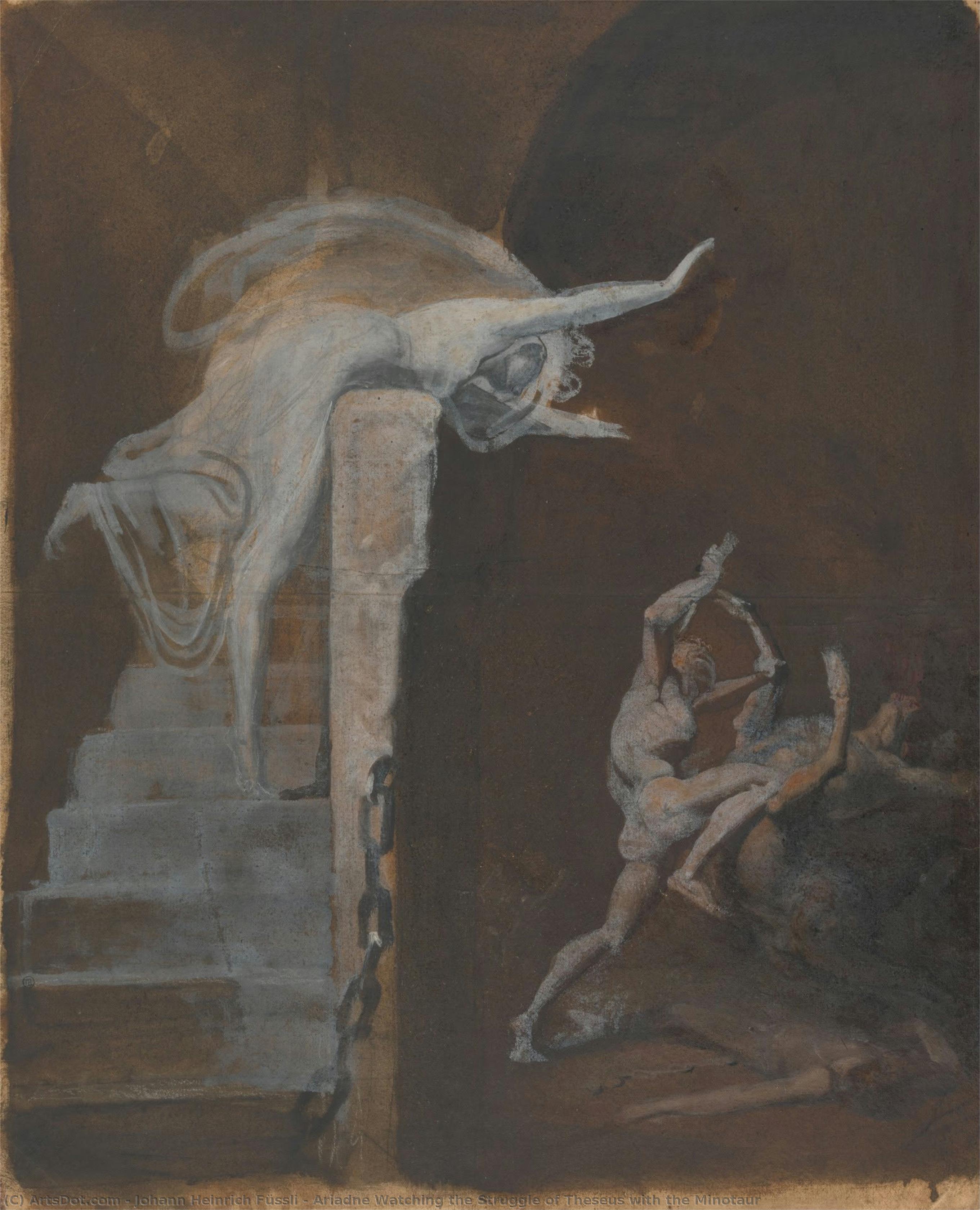
Experience the haunting beauty of Johann Heinrich Füssl's 'Ariadne Watching the Struggle,' a Romantic masterpiece capturing Greek myth with dramatic composition and unsettling color palettes.
Explore the haunting world of Henry Fuseli! Master of supernatural art & Shakespearean scenes. Influenced Blake & captivated audiences with 'The Nightmare'. #Fuseli #RomanticArt
Explore British art's evolution at the Yale Center for British Art! From Hogarth to Turner, discover masterpieces in a Louis Kahn-designed space—a hub for scholarship and vibrant exhibitions.
A Descent Into Darkness: Johann Heinrich Füssl's "Ariadne Watching the Struggle of Theseus with the Minotaur"
Johann Heinrich Füssl’s “Ariadne Watching the Struggle of Theseus with the Minotaur,” completed in 1820, stands as a haunting testament to Romantic artistic sensibilities and a masterful exploration of mythic drama. More than just a depiction of classical legend, this monumental canvas delves into profound psychological anxieties and embodies the era’s fascination with the sublime—that unsettling blend of beauty and terror that confronts us with the immensity of nature and the fragility of human existence.
Composition and Dramatic Tension
The painting's central achievement lies in its masterful composition. Füssl employs a triangular arrangement, anchoring the viewer’s gaze on Ariadne perched atop a staircase or platform—a deliberate gesture elevating her position as an observer above the brutal confrontation unfolding below. Theseus and the Minotaur engage in a visceral struggle at the base of the frame, creating a palpable sense of depth and perspective that draws us into the labyrinthine scene. Diagonal lines dominate the composition, mirroring the movement of figures and amplifying the dramatic tension inherent in the narrative. The architectonic elements—columns and stairs—further contribute to the oppressive atmosphere of confinement and underscore the perilous nature of Theseus’s quest.
Color Palette and Atmospheric Mood
Füssli eschews vibrant hues, opting instead for a deliberately muted color palette dominated by browns, grays, and blacks. This somber tonal scheme isn't merely aesthetically restrained; it actively reinforces the painting’s emotional core—a pervasive sense of dread and unease. Subtle highlights in flesh tones provide fleeting glimpses of humanity amidst the darkness, while creamy whites illuminate key areas, emphasizing musculature and conveying a glimmer of hope against overwhelming odds. The overall effect is akin to peering into a shadowed abyss, mirroring the psychological turmoil explored within the artwork.
Technique: Impasto and Expressionistic Brushwork
Füssli’s technique—primarily oil on canvas—is characterized by impasto, a bold application of thick brushstrokes that imbues the surface with textural richness and dynamism. This method isn't simply about replicating visual detail; it serves as an expressive tool, channeling Füssl’s emotional intensity onto the canvas. The artist’s brushwork is deliberately loose and energetic, capturing the frenetic movement of combat and conveying a palpable sense of urgency. These strokes create a dramatic interplay of light and shadow, enhancing the painting's psychological impact and immersing the viewer in the scene’s turbulent atmosphere.
Mythic Symbolism and Psychological Insight
“Ariadne Watching” transcends its narrative origins—the tale of Theseus slaying the Minotaur—to grapple with universal themes of courage, vulnerability, and the confrontation between reason and instinct. Ariadne represents divine intervention or perhaps a beacon of resilience amidst despair; her gaze directs our attention toward the central conflict, prompting contemplation on the human condition. The labyrinth itself symbolizes not merely physical entrapment but also the complexities of life’s journey—the disorientation and uncertainty inherent in pursuing noble goals. Füssl's masterful depiction captures the psychological drama of witnessing a struggle for survival, mirroring anxieties prevalent during the Romantic period regarding mortality and the sublime terror of confronting forces beyond human control.
Concluding Impression: A Vision of Darkness Illuminated
Ultimately, “Ariadne Watching” is more than just a beautiful painting; it’s an emotionally resonant exploration of darkness illuminated by fleeting moments of grace. Füssl's stylistic choices—his dramatic composition, muted color palette, expressive impasto technique—combine to create an unforgettable experience for the viewer, cementing his place as a pivotal figure in Romantic art and reminding us that even amidst profound terror, beauty can endure.