Henry Fuseli's Enchanting Vision of Shakespeare’s Dreamscape
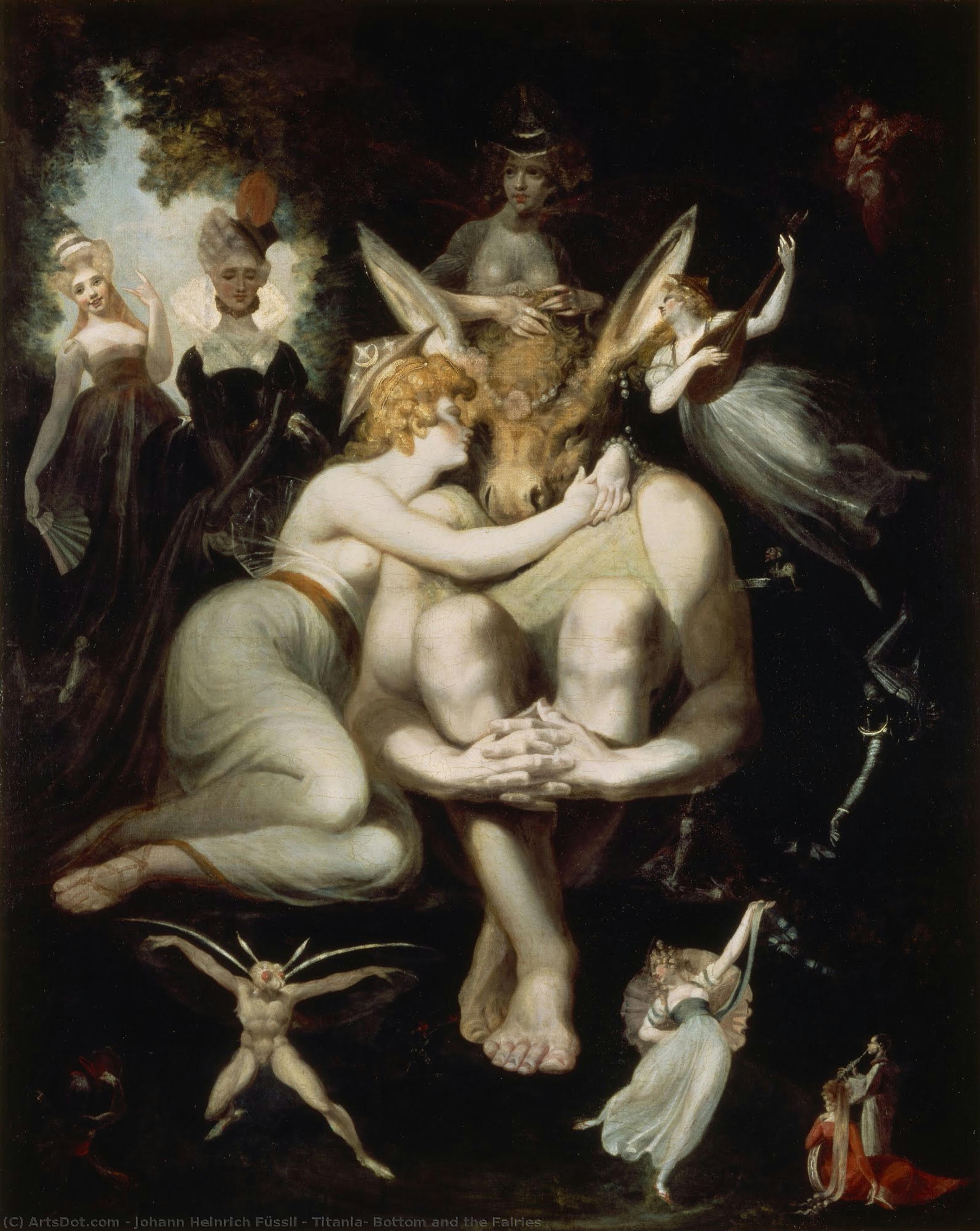
Henry Fuseli’s “Titania, Bottom and the Fairies” stands as an emblem of Romantic art—a mesmerizing tableau that transcends mere depiction to embody a profound exploration of the human psyche and the realm of imagination. Painted in 1794, this monumental canvas captures a pivotal moment from Shakespeare's "A Midsummer Night’s Dream," transforming the Bard’s fantastical tale into a visual feast for the senses. Fuseli, deeply influenced by Blake and captivated by the theatrical spirit of London’s Royal Academy, eschewed academic conventions in favor of conveying raw emotion and psychological complexity—a stylistic choice that cemented his legacy as one of Britain's foremost artists of his era.
- Subject Matter: The painting portrays Queen Titania, ruler of the fairies, utterly consumed by desire for Bottom, a donkey-headed weaver who has been transformed by Puck’s mischievous magic potion. This improbable pairing symbolizes the collision between rationality and fantasy, mirroring the anxieties surrounding societal change during the Romantic period.
- Style & Technique: Fuseli's signature style is characterized by dramatic chiaroscuro—the masterful manipulation of light and shadow—which intensifies the emotional impact of the scene. Thick brushstrokes contribute to a palpable sense of movement and texture, conveying the frenetic energy of the fairy court and highlighting the grotesque beauty of Bottom’s hybrid form.
- Historical Context: Fuseli's work emerged during a time of intellectual ferment in Europe, fueled by Enlightenment ideals yet yearning for spiritual renewal. Shakespeare’s play itself resonated deeply with Romantic sensibilities—a preoccupation with emotion, imagination, and the sublime—and Fuseli skillfully translated these themes into visual form.
- Symbolism: The painting is laden with symbolic significance. Titania's passionate embrace of Bottom represents the irresistible allure of irrational impulses and desires. Puck’s presence embodies mischievousness and disruption, challenging conventional notions of order and reason. Furthermore, the donkey-headed Bottom serves as a potent emblem of deformity and transformation—a visual metaphor for overcoming limitations and embracing unconventional beauty.
- Emotional Impact: Fuseli's masterpiece evokes a visceral response in viewers—a feeling of unease mingled with fascination. The painting’s unsettling juxtaposition of figures and its dramatic lighting create an atmosphere of heightened emotion, prompting contemplation on themes of love, desire, illusion, and the power of dreams.
The Kunsthaus Zürich holds the world's foremost collection of works by Henry Fuseli—a testament to the museum’s pioneering role in championing Romantic art. This remarkable achievement owes much to Dr. Wilhelm Wartmann, the museum’s inaugural director, who undertook a systematic effort to amass paintings and drawings by Fuseli and mounted two groundbreaking exhibitions devoted to his oeuvre. These presentations underscored Fuseli's singular artistic vision—a rejection of academic precision in favor of conveying profound psychological truths through inventive imagery.
Fuseli’s enduring influence can be seen in the works of subsequent artists, including William Blake, who similarly explored themes of mythology and imagination.
## Artistic Innovation & Romantic Sensibility
Fuseli's artistic approach distinguishes him from his contemporaries by prioritizing emotional resonance over technical accuracy. Unlike many painters of the time who meticulously replicated classical forms or adhered to strict rules of perspective, Fuseli deliberately embraced expressive brushwork and dramatic lighting—techniques that prioritized conveying feeling above all else. This stylistic decision reflects the broader Romantic movement’s rejection of Enlightenment rationalism and its embrace of intuition and imagination as pathways to understanding the human condition.
- Rejection of Academic Conventions: Fuseli deliberately eschewed academic standards, prioritizing emotional impact over meticulous representation.
- Influence of Blake: His artistic sensibilities mirrored those of William Blake, who similarly explored mythological themes and utilized imaginative imagery.
- Dramatic Lighting & Brushwork: Fuseli’s masterful use of chiaroscuro—the interplay of light and shadow—created a palpable sense of drama and heightened emotion. Thick brushstrokes conveyed movement and texture, capturing the frenetic energy of the fairy court.
## The Kunsthaus Zürich's Legacy & Fuseli's Recognition
The Kunsthaus Zürich’s dedication to preserving and showcasing Henry Fuseli’s artistic legacy exemplifies a pivotal moment in art history—the museum’s first director, Dr. Wilhelm Wartmann, spearheaded an ambitious project to assemble the world’s largest collection of Fuseli’s paintings and drawings. This initiative resulted in two monumental exhibitions that captivated audiences worldwide and solidified Fuseli's position as one of Britain’s most celebrated artists. Wartmann recognized Fuseli’s artistic genius not merely for his technical skill but, crucially, for his ability to tap into the deepest recesses of human psychology—a feat achieved through inventive imagery and a profound engagement with Romantic ideals.
Fuseli's enduring influence continues to inspire artists today.