Johannes Simon Hölzbecher’s *Acanthus mollis*: A Window into 17th-Century Botanical Observation
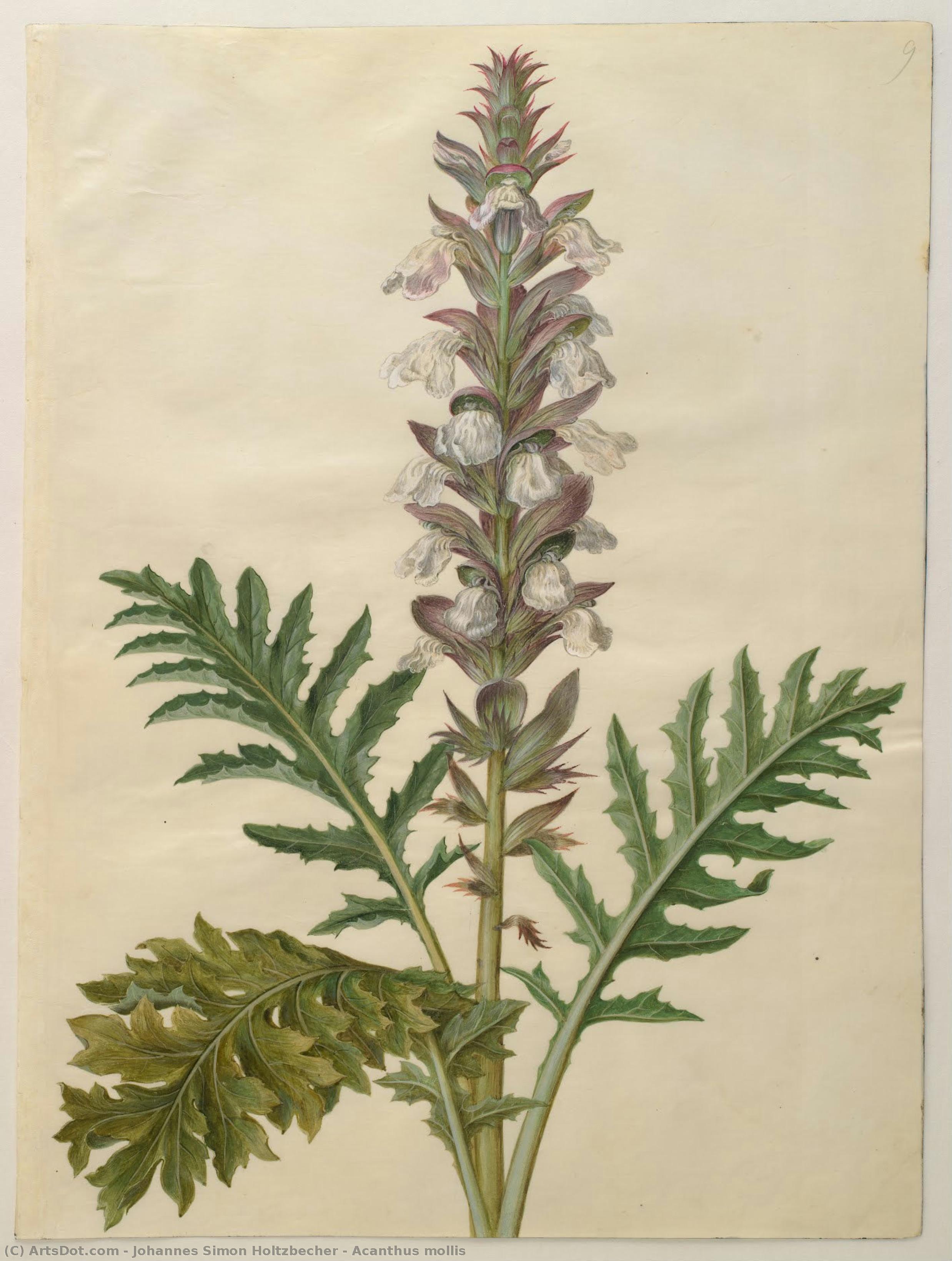
This exquisite hand-painted reproduction of Johannes Simon Hölzbecher's *Acanthus mollis* offers a captivating glimpse into the meticulous world of scientific illustration during the mid-17th century. Executed in 1659, this piece transcends mere botanical depiction; it’s a testament to Hölzbecher’s skill and a poignant reminder of a time when detailed observation and accurate representation were paramount. Measuring 38 x 50 cm, the artwork invites viewers into a serene space dominated by the delicate beauty of the oxeye thistle, a plant celebrated for its resilience and symbolic associations with protection and healing.
A Masterclass in Gouache Technique
Hölzbecher’s mastery is immediately apparent in the execution. The work employs the traditional gouache technique – a pigment ground in gum arabic – renowned for its opacity, rich colors, and ability to achieve subtle gradations. The artist's precise hand guides the brush across the paper, utilizing hatching and cross-hatching with remarkable control. This layering of tones creates an astonishing sense of depth and volume within the foliage, mimicking the play of light and shadow that would have been observed in a carefully lit studio setting. The linear precision speaks to Hölzbecher’s training as both a painter and engraver, skills honed through meticulous study and practice. The muted greens and whites, punctuated by delicate pinkish-purple hues within the flower spikes, evoke a sense of quiet contemplation – a far cry from the dramatic color palettes favored in some contemporary still lifes.
Historical Context & Dutch Influences
Hölzbecher’s work is firmly rooted in the artistic landscape of Nuremberg during the 17th century. His style reflects the significant influence of the Dutch and Flemish traditions, particularly their advancements in still life painting. These northern masters prioritized realism and detailed observation, often depicting commonplace subjects – flowers, fruits, and everyday objects – with an unprecedented level of accuracy. This emphasis on naturalism aligns perfectly with the burgeoning scientific interest in botany during this period, as artists began to collaborate with naturalists, producing illustrations for herbals and other scholarly works. The shallow perspective, a hallmark of botanical illustration, further emphasizes the subject matter, directing the viewer’s attention to the intricate details of the *Acanthus mollis* itself.
Symbolism & Emotional Resonance
Beyond its scientific value, *Acanthus mollis* carries subtle symbolic weight. The plant's association with protection and healing – rooted in ancient Greek mythology – adds another layer of meaning to this serene composition. The meticulous rendering invites a meditative response, encouraging viewers to appreciate the quiet beauty of nature and the patient observation required to capture its essence. This reproduction offers more than just an image; it’s a portal into a specific moment in art history, allowing us to connect with the artistic vision and technical skill of Johannes Simon Hölzbecher.