A Moment of Quiet Intimacy: Delving into Vermeer’s “A Lady and Two Gentlemen”
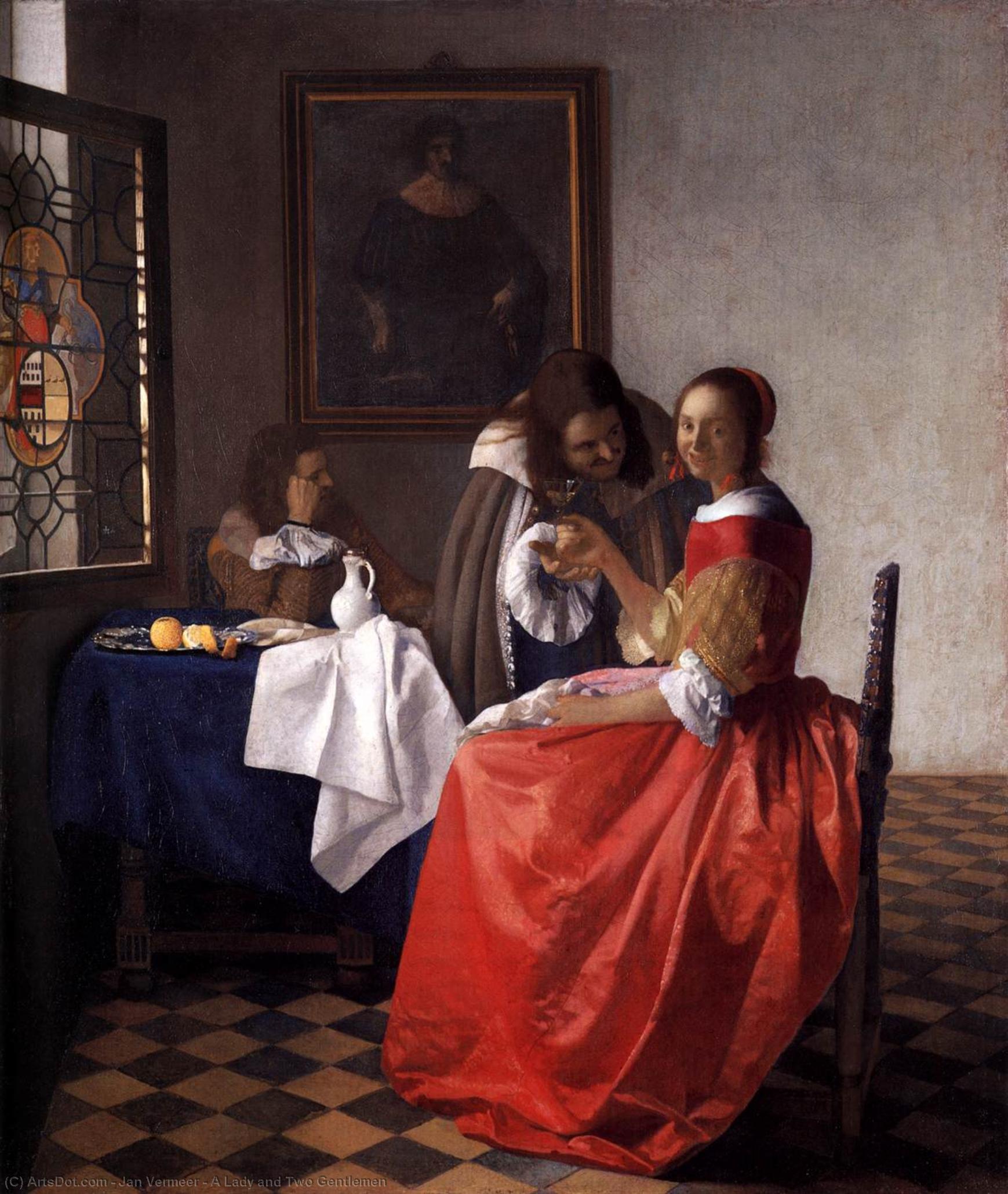
This captivating oil painting by Johannes Vermeer offers a rare and intimate glimpse into 17th-century Dutch domestic life. Completed in 1659, the artwork radiates an atmosphere of serene contemplation and subtle elegance, showcasing Vermeer's mastery of light, composition, and psychological nuance. It’s a scene that invites viewers to pause and consider the complexities of human interaction within a carefully constructed world.
Decoding the Scene & Its Participants
The composition centers around a lady seated at a table, gracefully offering a drink – likely wine or another refreshment – towards a young girl delicately holding an orange. A gentleman stands attentively behind them, his gaze directed toward the pair with a reserved yet interested expression. Their elaborate attire—luxurious fabrics, delicate lace detailing, and subtle jewelry—immediately signals their social standing and affluence. This isn’t a depiction of boisterous activity; rather, it's a carefully orchestrated tableau that hints at established societal norms and restrained emotion.
Notice the meticulous detail in the rendering of hands; they are not merely appendages but expressive elements conveying interaction, relationship, and social grace.
A Masterclass in Dutch Golden Age Realism
Vermeer was a leading figure of the Dutch Golden Age, and this painting embodies its defining characteristics. His dedication to realism is breathtaking – from the textures of the fabrics and skin to the precise depiction of objects on the table (oranges, pitcher, folded cloth). He achieves this through the painstaking technique of layering thin glazes of oil paint, building up color and form with remarkable subtlety. This glazing creates a luminous quality, allowing light to seem to emanate *from* within the painting itself. The realistic perspective grounds the viewer in the scene, creating an immersive experience that feels remarkably present.
Light & Symbolism: Unveiling Vermeer’s Language
Light is arguably the most crucial element of this work. Streaming in from a window on the left, it illuminates specific areas while casting shadows that define form and create depth. This isn't merely about visual accuracy; light carries symbolic weight. In Vermeer’s paintings, light often represents clarity, knowledge, or even divine grace. The oranges, frequently appearing in his works, were considered luxury items at the time, symbolizing wealth and prosperity – a subtle indication of the family’s status. The portrait hanging on the wall behind the figures adds another layer of depth—a visual reminder of lineage and social identity. Even the stained-glass window contributes to the overall richness and symbolic complexity.
Historical Context & Vermeer’s Enduring Legacy
Johannes Vermeer lived during a period of immense economic and cultural flourishing in the Netherlands. The Dutch Golden Age saw a rise in mercantile wealth, which fueled a demand for art that reflected everyday life and domestic comfort. Unlike many artists who focused on historical or religious themes, Vermeer dedicated himself to capturing the beauty and quiet dignity of ordinary moments. His relatively small *oeuvre* (only around 34 paintings are attributed to him) contributes to the exceptional value and enduring appeal of his work. He was largely forgotten after his death but rediscovered in the 19th century, becoming one of the most beloved and studied artists in history.
Emotional Resonance & Interior Design Considerations
This painting evokes a sense of peaceful intimacy and restrained elegance. It’s not a scene of dramatic action, but rather a moment suspended in time—an invitation to contemplate the complexities of human relationships and the beauty of everyday life.
For interior design, this artwork would be stunning in a study, library, or dining room. Its muted palette complements both traditional and contemporary settings. The painting’s size (78 x 68 cm) makes it versatile enough for various wall spaces. A high-quality reproduction will capture the subtle nuances of light and texture that define Vermeer's genius, bringing a touch of timeless sophistication to any home.
Consider pairing this artwork with warm neutral tones and classic furnishings to enhance its inherent elegance.
Key Features at a Glance
- Artist: Johannes Vermeer
- Date: 1659
- Size: 78 x 68 cm
- Style: Dutch Golden Age Realism
- Medium: Oil on Canvas