A Moment Frozen in Delft Light: Vermeer’s “A Lady Writing”
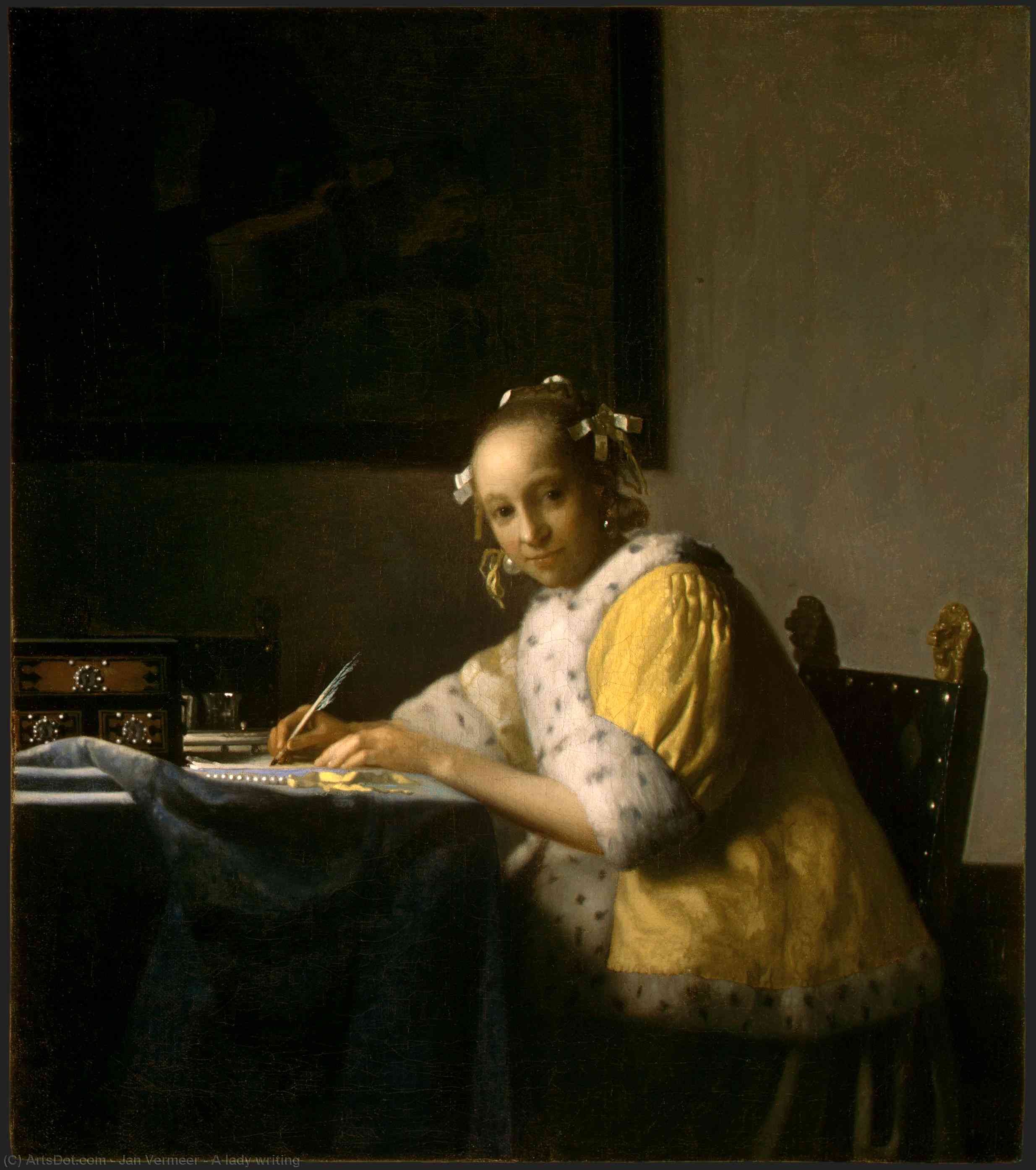
Johannes Vermeer's "A Lady Writing," painted in 1666, isn’t merely a portrait; it’s a carefully constructed tableau of domestic tranquility and intellectual pursuit. This intimate scene, rendered with the artist’s signature mastery of light and shadow, offers a rare glimpse into the private world of a Dutch burgher's home during the Golden Age. The painting immediately draws the eye to its central figure – a woman absorbed in her writing, a book open before her, suggesting a mind engaged in contemplation or perhaps scholarly work. Her yellow dress, adorned with delicate white polka dots, is a striking element, injecting a subtle vibrancy into the otherwise muted palette of the room. This choice of color isn’t arbitrary; yellow was associated with intellect and learning during this period, subtly reinforcing the subject's intellectual activity.
The Vermeer Technique: Light, Color, and Detail
Vermeer’s genius lay not in grand historical narratives or dramatic scenes, but in his ability to capture the ephemeral qualities of light and atmosphere. “A Lady Writing” exemplifies this perfectly. He employs a technique known as *sfumato*, a subtle blurring of edges and contours that creates an almost dreamlike quality. Notice how Vermeer uses diffused light – likely originating from a window unseen – to softly illuminate the woman’s face and hands, while leaving other areas in shadow. This masterful manipulation of light isn't just aesthetic; it contributes significantly to the painting’s sense of depth and realism. The meticulous detail with which he renders the textures of the fabric, the wood grain of the furniture, and even the delicate folds of the book speaks volumes about Vermeer’s painstaking approach. He builds up layers of thin paint – *glazes* – creating a luminous surface that seems to shimmer with an inner light.
A Window into 17th-Century Dutch Life
To understand “A Lady Writing,” we must consider the social and cultural context in which it was created. The mid-17th century was a period of immense prosperity for the Netherlands, fueled by trade and maritime expansion. The rise of the merchant class brought with it an increased emphasis on domestic comfort and refinement. This painting reflects this shift – depicting a woman engaged in intellectual pursuits within a well-appointed room. The presence of the chair positioned near the right side, the vase holding flowers, and the clock on the wall all contribute to a sense of ordered elegance, indicative of a comfortable and prosperous household. The inclusion of these details offers a valuable window into the daily lives and aspirations of Dutch burghers during this vibrant era.
Symbolism and Emotional Resonance
Beyond its realistic depiction of a domestic scene, “A Lady Writing” is rich in subtle symbolism. The act of writing itself represents knowledge, learning, and the cultivation of the mind – qualities highly valued during the Renaissance and Baroque periods. The woman’s posture, absorbed in her task, conveys a sense of quiet contemplation and inner focus. There's an almost meditative quality to the scene, inviting the viewer to share in her intellectual journey. The painting doesn’t shout for attention; instead, it whispers with a profound sense of intimacy and serenity – a testament to Vermeer’s ability to capture the essence of human experience through deceptively simple means. It is this quiet power that continues to resonate with audiences centuries later.
ArtsDot offers exquisite, hand-painted reproductions of “A Lady Writing,” meticulously crafted to faithfully recreate Vermeer's masterful technique and evocative atmosphere. Each reproduction captures the subtle nuances of light and color, allowing you to bring this iconic work of art into your home or office with confidence and pride.