A Moment Frozen in Delft Light
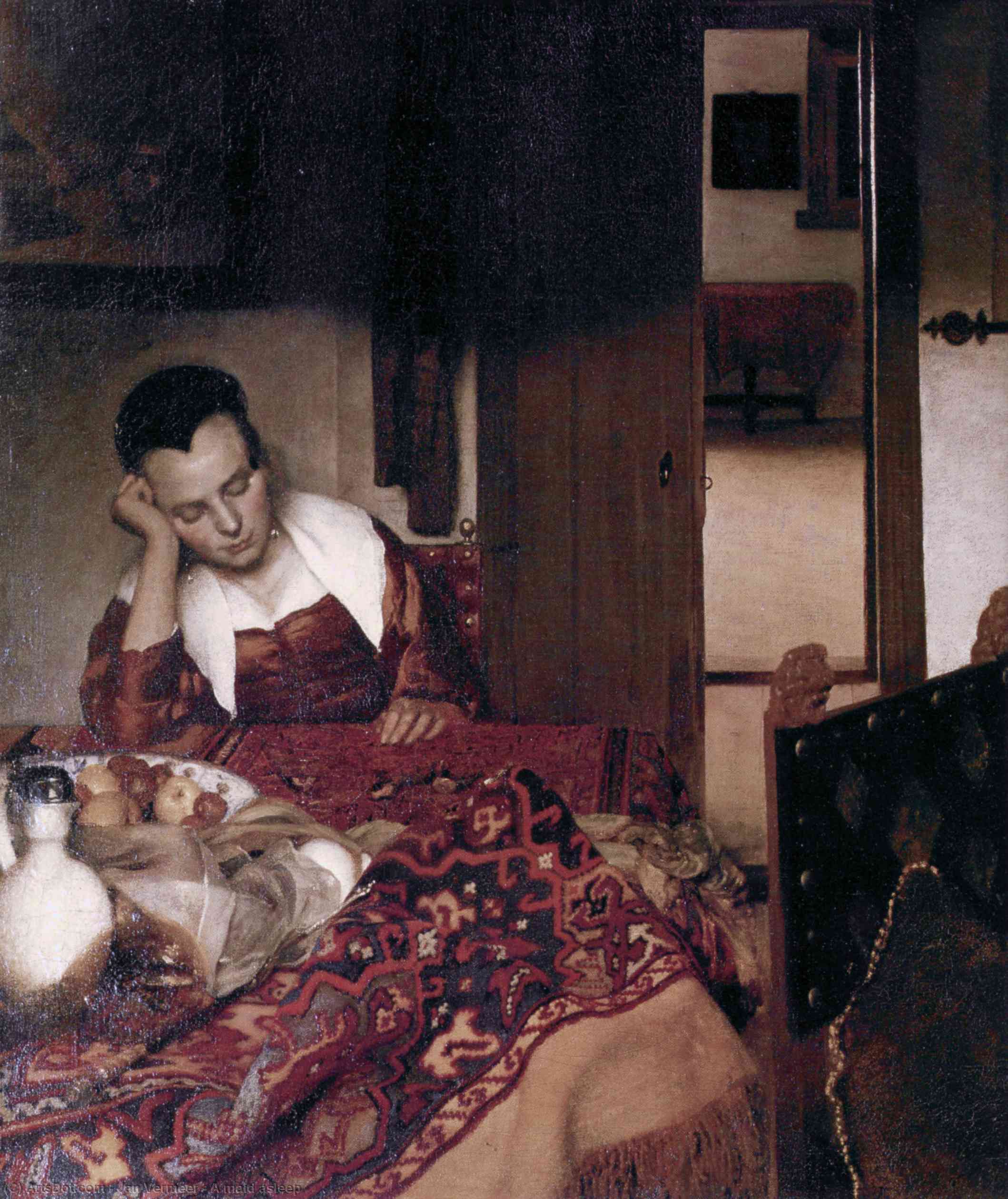
In the quiet corners of the Dutch Golden Age, few moments possess the profound stillness found in Johannes Vermeer’s “A Maid Asleep.” Painted circa 1657, this masterpiece transcends a simple genre scene to become a meditative study on vulnerability and the ephemeral nature of peace. As one gazes upon the sleeping figure, there is an immediate sense of entering a private sanctuary, a space where time itself seems to decelerate. The painting does not merely depict a woman in repose; it captures the very essence of a breath held in anticipation, inviting the viewer to share in this intimate, domestic tranquility.
The composition unfolds within a modestly furnished bedroom that reflects the burgeoning prosperity of 17th-century Delft. Vermeer masterfully arranges the elements of the room—the chair positioned near the bed, the two dining tables, and the scattered remnants of daily life—to create a sense of lived-in reality. The presence of a bowl and cup on the table, alongside the subtle placement of apples, suggests a narrative interrupted by slumber. There is a quiet symbolism in this arrangement; the fruit and vessels represent the material comforts of the Dutch merchant class, yet they are rendered with such soft, atmospheric light that they feel secondary to the emotional weight of the sleeping subject.
The Alchemy of Light and Technique
To behold a Vermeer is to witness a masterclass in the manipulation of light. The artist’s technique, characterized by painstaking layering and the use of alla prima, allows for an unparalleled responsiveness to subtle tonal shifts. He does not rely on harsh outlines; instead, he employs a delicate blending of pigments to achieve a velvety smoothness that mimics the softest gradations of natural light filtering into the room. This luminous quality is further enhanced by his expert use of glazing—applying thin, translucent layers of paint over dried underlayers to create an illusionistic depth that feels remarkably palpable.
This technical brilliance is most evident in the rendering of the maid’s skin and the textures surrounding her. The way the light catches the edge of a ceramic bowl or the soft fabric of her clothing demonstrates Vermeer's ability to transform ordinary objects into vessels of beauty. For the collector or interior designer, this mastery of light offers a unique opportunity; a high-quality reproduction of such a work brings not just color, but a sophisticated atmospheric quality to a room, acting as a window into a serene, historical world.
A Timeless Legacy for the Modern Interior
Beyond its technical merits, “A Maid Asleep” resonates deeply due to its emotional accessibility. It avoids the grandiosity of mythological or religious narratives, choosing instead to find the extraordinary within the ordinary. This focus on the beauty of everyday life makes the piece incredibly versatile for contemporary decor. Whether placed in a sun-drenched morning room or a moody, library-style study, the painting serves as an anchor of calm and contemplation.
For those seeking to curate a space filled with soul and history, this work offers more than mere decoration. It provides a connection to the Dutch Golden Age—a period defined by mercantile prowess and artistic innovation. Owning or displaying a reproduction of this caliber allows one to surround themselves with the quiet dignity of Vermeer’s vision, turning any interior into a gallery of profound, silent storytelling.