A Moment Frozen in Delft Light: Vermeer’s ‘Girl with the Red Hat’
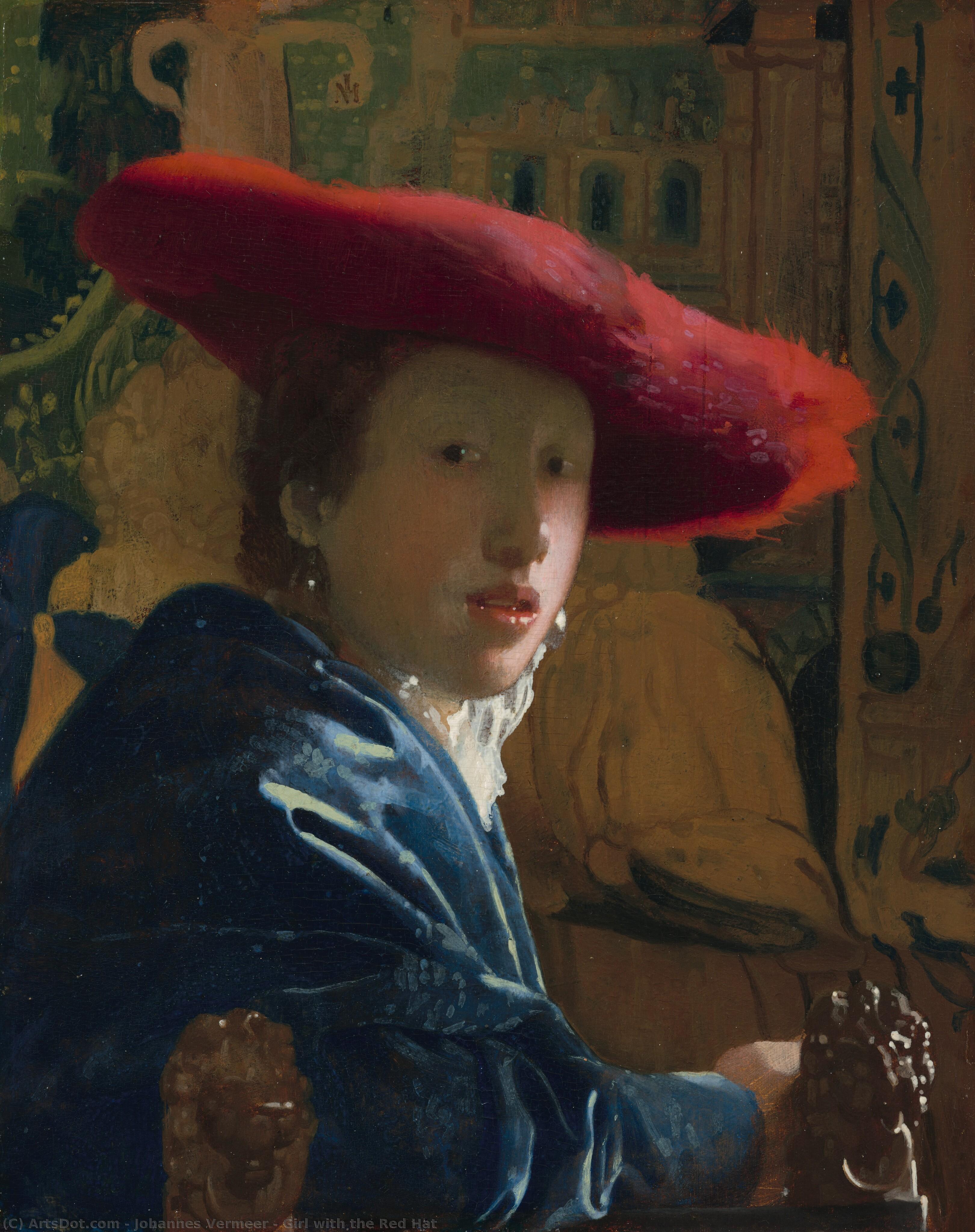
Johannes Vermeer's “Girl with the Red Hat,” painted in 1669, isn’t merely a portrait; it’s a carefully constructed distillation of Dutch domesticity and an exquisite exploration of light and shadow. This intimate scene, rendered in a remarkably soft and hazy manner characteristic of Vermeer’s mature style, transports us to a quiet corner of Delft, a city brimming with mercantile activity yet deeply rooted in traditional values. The painting's diminutive size – just 40 x 36 cm – belies the profound depth of its observation and the artist’s masterful control over his medium. It’s a testament to Vermeer’s ability to capture not just appearances, but also an elusive sense of mood and character within a remarkably contained space.
The Subject: A Glimpse into Dutch Life
The young woman herself is the focal point, presented from the elbows up – a deliberate choice that draws immediate attention to her face. Her pale skin, framed by dark brown hair, and the subtle curve of her nose and lips invite close scrutiny. The crimson red hat, an arresting element against the muted tones of the background, isn’t simply decorative; it commands attention, suggesting perhaps a moment of youthful exuberance or even a hint of defiance within this otherwise serene setting. The sliver of teeth visible through her parted coral-pink lips adds to the painting's captivating realism – a detail that speaks volumes about Vermeer’s meticulous approach to capturing human expression.
Technique and Materiality: The Alchemy of Light
Vermeer’s technique is nothing short of revolutionary for his time. He employed a layering method, applying thin glazes of paint – often translucent – over multiple layers, creating an astonishingly luminous effect. This is particularly evident in the pearl earrings, which shimmer with bright white specks, and the tip of her nose, catching the light like polished marble. The tapestry behind her, rendered in delicate shades of pale caramel brown and pine green, serves as a subtle backdrop, its muted tones emphasizing the vibrancy of the subject’s attire. The use of a soft, almost feathery material for the hat's brim suggests a luxurious texture, hinting at the wealth and comfort enjoyed by some within Delft society. The carved lion finials beneath her arm subtly anchor the scene to a domestic setting – perhaps a chair or a table, grounding the portrait in everyday reality.
Symbolism and Context: A Portrait of an Era
“Girl with the Red Hat” is more than just a likeness; it’s a window into 17th-century Dutch life. Vermeer was deeply attuned to the nuances of his time, capturing not only physical appearances but also social customs and values. The high-collared white garment, possibly velvet, speaks to status and refinement, while the royal blue robe or overcoat further reinforces this impression. The painting’s overall atmosphere evokes a sense of quiet contemplation – a moment suspended in time. It's been suggested that Vermeer was interested in capturing fleeting moments of beauty and domestic tranquility, reflecting a broader shift in artistic focus away from grand historical narratives towards more intimate scenes of everyday life. The red hat itself could be interpreted as a symbol of youthful vitality or even a subtle challenge to established norms – a small rebellion within the confines of a highly structured society.
ArtsDot offers exquisite, hand-painted reproductions of Vermeer’s “Girl with the Red Hat,” allowing you to bring this captivating masterpiece into your home or office. Each reproduction is meticulously crafted by skilled artists using traditional techniques, ensuring that you receive an authentic representation of Vermeer's unparalleled artistry and a tangible connection to one of the most beloved paintings in art history.